


Exploring the world of vegan French cuisine is a delightful journey into garden-fresh flavors. From the comforting aroma of Ratatouille to the rich notes of Mushroom Bourguignon, these recipes are a celebration of flavor and creativity. Join me as we uncover 12 plant-based dishes that truly capture the essence of France. I’m sure you’ll find a new favorite to try. Let’s get cooking!
Ratatouille
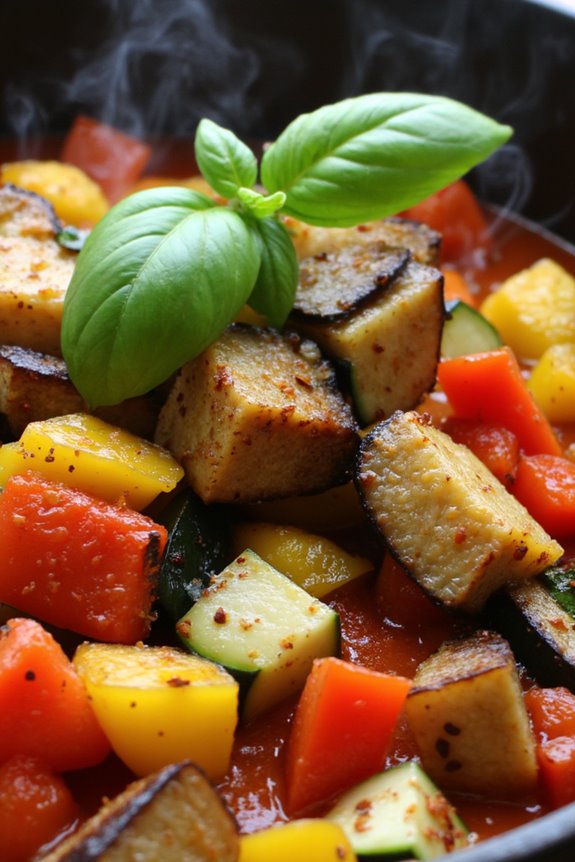
Ratatouille is a classic French dish that brings together the vibrant flavors of summer vegetables in a colorful and aromatic medley. Originating from the Provence region, this dish showcases the beauty of fresh produce, allowing the natural flavors to shine. Traditionally, ratatouille is a rustic dish that can be served hot or cold, making it a versatile option for any meal.
With its rich history and delightful presentation, ratatouille isn’t only a feast for the palate but also for the eyes.
This vegan version of ratatouille is simple to prepare and can be served as a main course or a side dish. The combination of eggplant, zucchini, bell peppers, and tomatoes creates a harmonious blend of tastes and textures.
With just a few ingredients and some patience in layering and simmering, you can create a dish that will impress both vegans and non-vegans alike. So gather your ingredients and let’s bring a taste of Provencal cuisine to your kitchen!
Ingredients (Serves 4-6)
- 1 medium eggplant, diced
- 2 medium zucchinis, sliced
- 2 bell peppers (any color), chopped
- 1 large onion, diced
- 4 cloves of garlic, minced
- 4 medium tomatoes, chopped
- 2 tablespoons olive oil
- 1 teaspoon dried thyme
- 1 teaspoon dried basil
- Salt and pepper to taste
- Fresh basil leaves for garnish (optional)
Cooking Instructions
- Prepare the Vegetables: Begin by washing and chopping all your vegetables. Dice the eggplant into small cubes, slice the zucchinis into rounds, chop the bell peppers, dice the onion, and chop the tomatoes. Mince the garlic cloves. Having all your vegetables ready before you start cooking will streamline the process.
- Sauté the Onions and Garlic: In a large skillet or Dutch oven, heat the olive oil over medium heat. Add the diced onion and sauté for about 5 minutes until it becomes translucent. Add the minced garlic and continue to sauté for another minute, stirring frequently to guarantee the garlic doesn’t burn.
- Cook the Eggplant: Add the diced eggplant to the skillet, stirring well to combine with the onions and garlic. Cook for about 5-7 minutes until the eggplant starts to soften. This step is essential as it helps to reduce the bitterness of the eggplant and enhances its flavor.
- Add the Bell Peppers and Zucchini: Next, add the chopped bell peppers and sliced zucchini to the skillet. Stir everything together and cook for an additional 5 minutes, allowing the vegetables to soften and meld their flavors.
- Incorporate the Tomatoes and Season: Once the bell peppers and zucchini are tender, add the chopped tomatoes to the mix along with dried thyme, dried basil, salt, and pepper. Stir well to combine all the ingredients. The tomatoes will provide moisture and help to create a sauce as the ratatouille cooks.
- Simmer the Ratatouille: Reduce the heat to low and cover the skillet. Allow the ratatouille to simmer for about 30 minutes, stirring occasionally. This step is important as it allows all the flavors to develop and meld together beautifully. If the mixture seems too dry, you can add a splash of water or vegetable broth.
- Adjust Seasoning and Serve: After 30 minutes, taste the ratatouille and adjust the seasoning with more salt, pepper, or herbs if needed. Once everything is well combined and the vegetables are tender, remove from heat. Serve hot, or allow it to cool and serve at room temperature, garnished with fresh basil leaves if desired.
Extra Tips
For an added layer of flavor, consider roasting the eggplant and zucchini in the oven before adding them to the skillet. This will give the vegetables a nice caramelization and enhance their sweetness.
Additionally, feel free to customize the recipe by adding other vegetables like squash or mushrooms, or include a splash of balsamic vinegar for a tangy twist. Ratatouille is also excellent as leftovers, as the flavors continue to develop overnight, making it a perfect dish for meal prep or entertaining.
Vegan Coq Au Vin
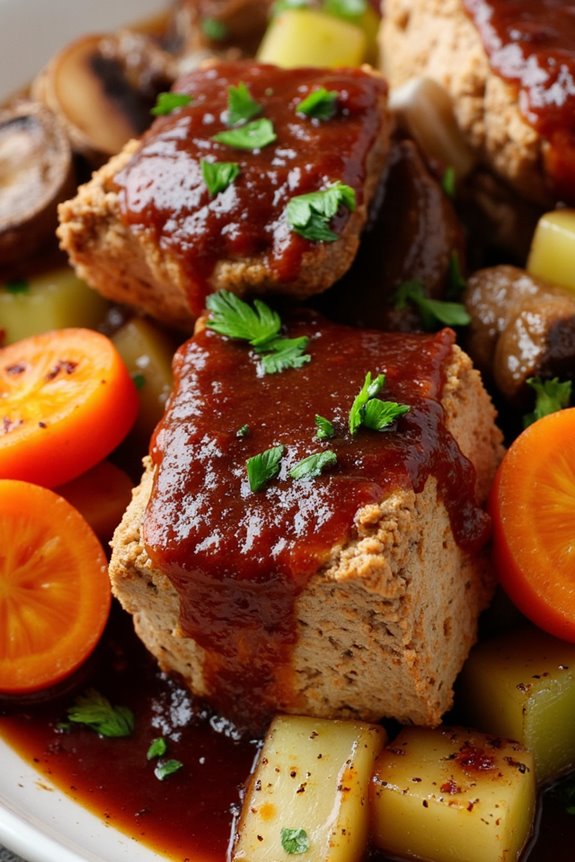
Vegan Coq Au Vin is a delightful twist on the traditional French dish that celebrates the rich flavors of wine and herbs. This plant-based version maintains the essence of the classic recipe while using hearty vegetables, mushrooms, and tofu or seitan to replicate the texture and substance of chicken. Perfect for impressing your guests at a dinner party or enjoying a cozy meal at home, this dish is both comforting and elegant.
By simmering these ingredients in a robust red wine sauce, you’ll create a dish that’s deeply flavorful and satisfying. Serve it with a side of mashed potatoes, crusty bread, or a fresh green salad for a complete meal. The aromatic herbs and the vibrant colors of the vegetables won’t only please the palate but also make for a beautiful presentation.
Ingredients (Serves 4-6):
- 1 pound of seitan or firm tofu, cubed
- 2 tablespoons olive oil
- 1 large onion, diced
- 3 cloves garlic, minced
- 2 cups cremini or button mushrooms, halved
- 2 large carrots, sliced
- 2 stalks celery, diced
- 1 cup red wine (preferably a dry variety)
- 2 cups vegetable broth
- 2 tablespoons tomato paste
- 1 teaspoon dried thyme
- 1 teaspoon dried rosemary
- 2 bay leaves
- Salt and pepper to taste
- Fresh parsley, chopped (for garnish)
Cooking Instructions:
- Prepare the Ingredients: Begin by cubing the seitan or tofu into bite-sized pieces. Dice the onion, mince the garlic, and slice the carrots and celery. Halve the mushrooms and set all the prepared ingredients aside.
- Sauté the Vegetables: In a large skillet or Dutch oven, heat the olive oil over medium heat. Add the diced onion and sauté until translucent, about 5 minutes. Stir in the minced garlic and cook for an additional minute until fragrant.
- Add the Mushrooms and Vegetables: Incorporate the halved mushrooms, sliced carrots, and diced celery into the skillet. Cook for about 5-7 minutes, stirring occasionally, until the mushrooms have released their moisture and the vegetables have softened.
- Add the Protein: Gently fold in the cubed seitan or tofu, allowing it to absorb the flavors of the sautéed vegetables. Cook for another 2-3 minutes until the protein is heated through.
- Create the Sauce: Pour in the red wine and vegetable broth, then add the tomato paste, dried thyme, dried rosemary, bay leaves, salt, and pepper. Stir well to combine all the ingredients.
- Simmer the Dish: Increase the heat and bring the mixture to a gentle boil. Once boiling, reduce the heat to low, cover the skillet, and let it simmer for 30-40 minutes. This will allow the flavors to meld together beautifully.
- Finish and Serve: After simmering, taste the sauce and adjust the seasoning if necessary. Discard the bay leaves before serving. Garnish the Vegan Coq Au Vin with freshly chopped parsley and serve hot alongside your favorite sides.
Extra Tips:
When making Vegan Coq Au Vin, feel free to experiment with different vegetables based on your preferences or what you have on hand. Adding ingredients like pearl onions, parsnips, or even green beans can enhance the dish’s texture and flavor profile.
Additionally, if you prefer a thicker sauce, you can stir in a cornstarch slurry (1 tablespoon cornstarch mixed with 2 tablespoons of cold water) during the last few minutes of cooking. Enjoy this hearty dish with a glass of the same red wine used in the recipe for the ultimate dining experience!
Mushroom Bourguignon
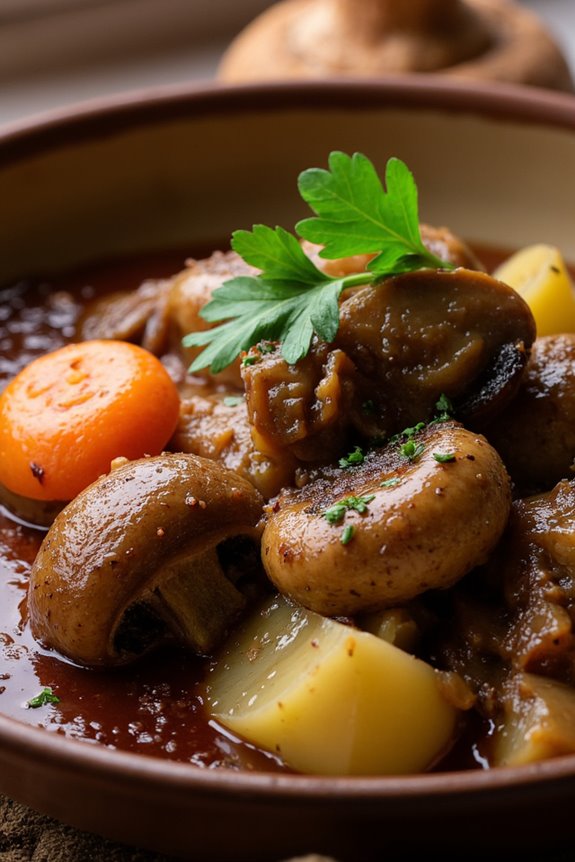
Mushroom Bourguignon is a delightful vegan twist on the classic French dish, Beef Bourguignon. This hearty stew is rich in flavor and showcases the earthiness of mushrooms, complemented by a medley of vegetables and a luscious red wine sauce. Perfect for a cozy dinner, this dish isn’t only vegan-friendly but also packed with nutrients, making it a wholesome meal for everyone at the table.
The combination of herbs and spices enhances the natural umami of the mushrooms, creating a satisfying and comforting experience that’s sure to impress. This dish is perfect for gatherings or a family dinner, as it serves 4-6 people. The slow-cooked mushrooms and vegetables absorb all the flavors of the wine and broth, resulting in a wonderfully aromatic dish that pairs perfectly with crusty bread or creamy mashed potatoes.
Whether you’re a seasoned vegan or just looking to incorporate more plant-based meals into your diet, Mushroom Bourguignon is a recipe you won’t want to miss.
Ingredients (Serves 4-6):
- 1 pound of mixed mushrooms (such as cremini, shiitake, and button), cleaned and sliced
- 2 tablespoons olive oil
- 1 large onion, diced
- 3 cloves garlic, minced
- 2 carrots, diced
- 2 celery stalks, diced
- 1 cup red wine (preferably a dry variety)
- 2 cups vegetable broth
- 2 tablespoons tomato paste
- 1 tablespoon soy sauce or tamari
- 1 teaspoon dried thyme
- 2 bay leaves
- Salt and pepper to taste
- Fresh parsley, chopped (for garnish)
Cooking Instructions:
- Sauté the Vegetables: In a large pot or Dutch oven, heat the olive oil over medium heat. Add the diced onion, carrots, and celery. Sauté for about 5-7 minutes, or until the onions become translucent and the vegetables are tender. This step builds the foundation of flavors for your stew.
- Add the Garlic and Mushrooms: Stir in the minced garlic and sliced mushrooms, cooking for an additional 8-10 minutes. The mushrooms will release their moisture, allowing them to brown slightly and deepen their flavor. Stir frequently to guarantee even cooking.
- Deglaze the Pot: Pour in the red wine, scraping any browned bits from the bottom of the pot. This process, known as deglazing, adds depth to the dish. Let the wine simmer for about 3-5 minutes until slightly reduced.
- Incorporate Remaining Ingredients: Add the vegetable broth, tomato paste, soy sauce, dried thyme, and bay leaves to the pot. Stir well to combine all the ingredients. Season with salt and pepper to taste.
- Simmer the Stew: Bring the mixture to a gentle boil, then reduce the heat to low. Cover and let it simmer for about 30-40 minutes, stirring occasionally. This allows the flavors to meld and the sauce to thicken.
- Finish and Serve: After simmering, taste the Mushroom Bourguignon and adjust seasoning if necessary. Remove the bay leaves before serving. Garnish with freshly chopped parsley for a burst of color and flavor. Serve hot with your choice of sides.
Extra Tips:
For the best results, use a good quality red wine that you enjoy drinking, as it will considerably impact the flavor of the dish. Feel free to experiment with the types of mushrooms used; a variety of textures and flavors can elevate the dish even further.
Additionally, if you have extra time, let the Mushroom Bourguignon sit for a few hours or overnight in the fridge; the flavors will continue to develop and deepen, making it even more delicious when reheated. Enjoy this comforting dish with a side of crusty bread or over your favorite grain for a complete meal!
French Onion Soup

French Onion Soup is a classic dish that warms the heart and soul, especially on chilly evenings. Traditionally made with beef broth and topped with melted cheese, this vegan rendition maintains all the rich flavors and comforting qualities of the original while being completely plant-based. Caramelized onions bring a deep sweetness to the soup, while fresh herbs and a splash of white wine enhance its complexity. Served with crusty bread, this Vegan French Onion Soup is sure to impress whether you’re hosting a dinner party or enjoying a cozy night in.
What makes this vegan version stand out is the use of high-quality vegetable broth and a clever blend of seasonings that mimic the savory depth of traditional recipes. Topped with crispy toasted bread and a sprinkle of vegan cheese, this dish captures the essence of French cuisine in a way that respects both dietary preferences and flavor. Get ready to indulge in a bowl of heartwarming goodness that’s both satisfying and nourishing.
Ingredients (Serves 4-6):
- 4 large onions, thinly sliced
- 4 tablespoons olive oil
- 1 teaspoon salt
- 1 teaspoon sugar (optional, for caramelization)
- 4 cloves garlic, minced
- 1/2 cup dry white wine (optional)
- 6 cups vegetable broth
- 2 teaspoons fresh thyme (or 1 teaspoon dried thyme)
- 1 bay leaf
- Freshly ground black pepper, to taste
- 1 baguette or crusty bread, sliced
- 1 cup vegan cheese shreds (optional, for topping)
- Fresh parsley, chopped (for garnish)
Cooking Instructions:
- Caramelize the Onions: In a large pot, heat the olive oil over medium heat. Add the sliced onions and sprinkle with salt. Cook the onions for about 20-30 minutes, stirring occasionally, until they become deep golden brown and caramelized. If desired, add sugar halfway through cooking to aid in caramelization.
- Add Garlic and Wine: Once the onions are caramelized, add the minced garlic and cook for an additional 1-2 minutes until fragrant. Next, pour in the dry white wine (if using) and scrape the bottom of the pot to deglaze, allowing the wine to reduce slightly.
- Pour in the Broth: Add the vegetable broth, thyme, bay leaf, and a generous amount of freshly ground black pepper. Bring the mixture to a boil, then reduce the heat and let it simmer for about 20 minutes, allowing the flavors to meld together.
- Prepare the Bread: While the soup is simmering, preheat your oven to 400°F (200°C). Arrange the sliced baguette on a baking sheet and toast in the oven for about 5-7 minutes, or until crispy and golden brown.
- Finish the Soup: After simmering, taste the soup and adjust seasoning if necessary, removing the bay leaf before serving. Ladle the soup into bowls, and top each with a few slices of toasted bread and a sprinkle of vegan cheese, if desired.
- Melt the Cheese (Optional): If using vegan cheese, you can place the bowls under the broiler for a couple of minutes until the cheese is melted and bubbly. Watch closely to prevent burning.
- Garnish and Serve: Remove the soup from the oven, garnish with chopped fresh parsley, and serve hot.
Extra Tips:
For an added depth of flavor, consider using a combination of different types of onions, such as yellow, red, and sweet onions. Additionally, feel free to experiment with other herbs like rosemary or a splash of balsamic vinegar for a unique twist.
If you want to make the soup ahead of time, it can be stored in the refrigerator for up to 3 days and reheated, making it a perfect choice for meal prep. Enjoy your delicious Vegan French Onion Soup!
Provencal Stuffed Peppers
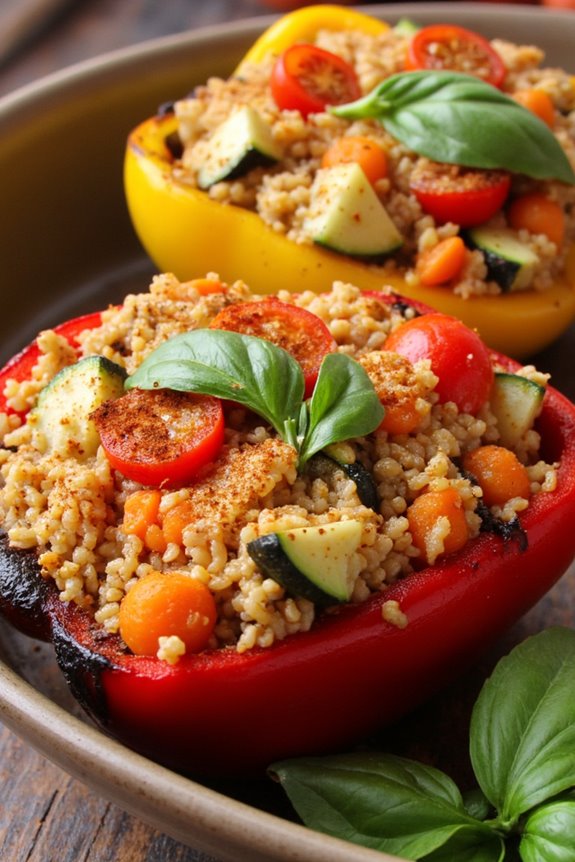
Provencal Stuffed Peppers are a vibrant and delicious dish that embodies the flavors of the Mediterranean. This recipe features bell peppers filled with a savory mixture of quinoa, vegetables, and aromatic herbs, all influenced by the traditional cuisine of the Provence region in France. Not only are these stuffed peppers visually appealing, but they’re also packed with nutrients, making them a wholesome meal option for vegans and non-vegans alike.
The combination of fresh ingredients and bold flavors in this dish makes it a great centerpiece for any dinner gathering. The stuffing can be easily customized to suit your taste preferences, allowing you to play with different vegetables and grains. Serve these Provencal Stuffed Peppers warm, alongside a light salad or crusty bread, for a satisfying and hearty meal that everyone will enjoy.
Ingredients (Serves 4-6)
- 4 large bell peppers (any color)
- 1 cup quinoa, rinsed
- 2 cups vegetable broth
- 1 medium onion, diced
- 2 cloves garlic, minced
- 1 medium zucchini, diced
- 1 medium carrot, diced
- 1 cup cherry tomatoes, halved
- 1 teaspoon dried oregano
- 1 teaspoon dried thyme
- 1 teaspoon smoked paprika
- Salt and pepper to taste
- 2 tablespoons olive oil
- Fresh basil or parsley for garnish (optional)
Cooking Instructions
- Prepare the peppers: Preheat your oven to 375°F (190°C). While the oven is heating, carefully slice the tops off the bell peppers and remove the seeds and membranes. Set the hollowed peppers aside.
- Cook the quinoa: In a medium saucepan, bring the vegetable broth to a boil. Add the rinsed quinoa, reduce the heat to low, cover, and let it simmer for about 15 minutes, or until the quinoa is fluffy and the liquid is absorbed. Remove from heat and let it cool slightly.
- Sauté the vegetables: In a large skillet, heat the olive oil over medium heat. Add the diced onion and garlic, and sauté until the onion becomes translucent, about 3-4 minutes. Then add the diced zucchini and carrot and continue to cook for another 5 minutes until the vegetables are tender.
- Combine the filling: Stir in the cooked quinoa, cherry tomatoes, oregano, thyme, smoked paprika, salt, and pepper into the skillet with the sautéed vegetables. Mix everything well and let it cook for an additional 2-3 minutes to allow the flavors to meld together.
- Stuff the peppers: Spoon the quinoa mixture into each hollowed bell pepper, packing it in gently until they’re filled to the brim. Place the stuffed peppers upright in a baking dish.
- Bake the peppers: Cover the baking dish with aluminum foil and bake in the preheated oven for 25-30 minutes. Remove the foil and bake for an additional 10 minutes, or until the peppers are tender and slightly charred on top.
- Serve: Once done, remove the stuffed peppers from the oven and let them cool for a few minutes. Garnish with fresh basil or parsley if desired, and serve warm.
Extra Tips
When preparing Provencal Stuffed Peppers, feel free to experiment with different grains such as couscous or farro instead of quinoa for a unique twist on the dish. Additionally, you can add beans or lentils to the filling for extra protein.
If you prefer a spicier kick, consider adding diced jalapeños or a sprinkle of red pepper flakes to the stuffing. Finally, make sure to choose firm bell peppers to guarantee they hold their shape during baking. Enjoy your culinary adventure in vegan French cuisine!
Tarte Tatin With Seasonal Vegetables
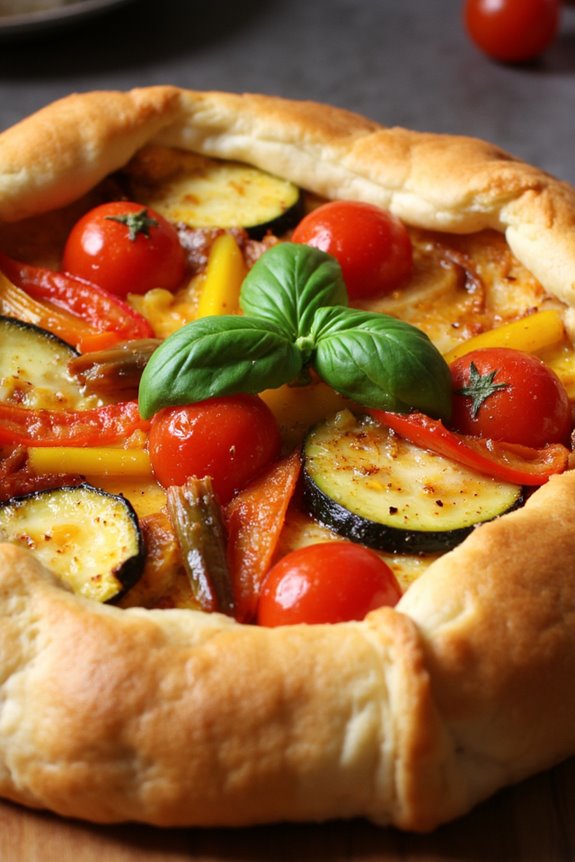
Tarte Tatin is traditionally a French dessert that features caramelized fruit baked upside down, but this vegan version takes a savory twist by incorporating seasonal vegetables. This dish isn’t only visually stunning with its golden crust and vibrant veggies, but it also brings a medley of flavors that celebrate the bounty of the season.
Perfect for a cozy dinner or a special occasion, this Tarte Tatin can also be served as a delightful centerpiece for a vegan feast.
To make this dish, you’ll need fresh seasonal vegetables such as zucchini, bell peppers, and cherry tomatoes, enhanced with aromatic herbs and spices. The flaky pastry crust provides a satisfying contrast to the tender, caramelized vegetables, making each bite a delightful experience. This recipe serves 4-6 people, making it an ideal choice for sharing with family and friends.
Ingredients (Serves 4-6)
- 1 sheet of vegan puff pastry
- 2 medium zucchinis, sliced
- 1 red bell pepper, sliced
- 1 yellow bell pepper, sliced
- 1 cup cherry tomatoes, halved
- 1 onion, thinly sliced
- 3 tablespoons olive oil
- 2 tablespoons balsamic vinegar
- 1 teaspoon dried thyme
- 1 teaspoon dried oregano
- Salt and pepper to taste
- Fresh basil leaves for garnish (optional)
Cooking Instructions
1. Preheat the Oven: Begin by preheating your oven to 400°F (200°C). This guarantees that the pastry will cook evenly and become beautifully golden and crispy.
2. Prepare the Vegetables: In a large skillet, heat the olive oil over medium heat. Add the sliced onions and sauté for about 5 minutes until they’re softened.
Next, add the zucchini and bell peppers, cooking until they begin to soften, about another 5 minutes. Finally, stir in the cherry tomatoes, balsamic vinegar, thyme, oregano, salt, and pepper. Cook for an additional 2-3 minutes until everything is well combined and heated through.
3. Caramelize the Vegetables: Continue to cook the vegetable mixture for another 5-7 minutes, allowing them to caramelize slightly. Stir occasionally to prevent sticking.
Once done, remove from heat and let it cool slightly.
4. Assemble the Tarte Tatin: In a round, oven-safe skillet (or a tart pan), spread the caramelized vegetable mixture evenly at the bottom. Carefully unroll the vegan puff pastry and place it over the vegetables, tucking the edges down around the sides.
Make a few slits in the pastry to allow steam to escape.
5. Bake: Place the skillet in the preheated oven and Bake for 25-30 minutes or until the pastry is golden brown and puffed up.
6. Invert and Serve: Once baked, remove the tarte from the oven and let it cool for about 5 minutes. Carefully invert the tart onto a serving plate, so the vegetables are on top.
Garnish with fresh basil leaves if desired.
Extra Tips
For an added depth of flavor, consider seasoning the vegetables with a splash of lemon juice or a pinch of red pepper flakes for a bit of heat.
You can also experiment with different seasonal vegetables, such as asparagus or mushrooms, depending on what you have available.
When inverting the Tarte Tatin, make sure to do so carefully to prevent any spills. Serve it warm with a side salad or a light dressing to complement the dish beautifully. Enjoy your culinary creation!
Creamy Vegan Risotto
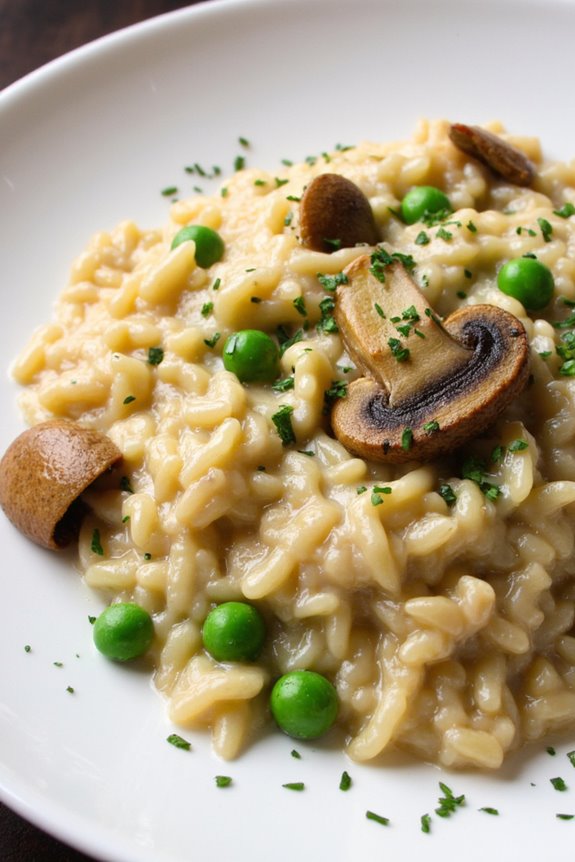
Creamy Vegan Risotto is a delightful dish that brings the comforting flavors of traditional risotto to the vegan table. This Italian classic is known for its richness and creaminess, which is achieved here without any dairy. Instead, we use a combination of vegetable broth, coconut milk, and nutritional yeast to create a luscious and fulfilling meal that everyone will enjoy, regardless of their dietary preferences.
Perfect for a cozy dinner party or a special occasion, this risotto is sure to impress your guests with its creamy texture and delicious flavor profile.
Cooking risotto requires a bit of patience, but the process is rewarding and allows for a deep appreciation of the ingredients. The key to achieving that perfect creamy consistency lies in the slow addition of broth and constant stirring. This method releases the starches from the arborio rice, creating the iconic creaminess that risotto is known for.
Pair this dish with a fresh salad or some roasted vegetables for a complete meal that’s both satisfying and nourishing.
Ingredients (Serves 4-6):
- 1 ½ cups arborio rice
- 5 cups vegetable broth
- 1 cup coconut milk
- 1 medium onion, finely chopped
- 3 cloves garlic, minced
- 1 cup mushrooms, sliced (such as cremini or button)
- 1 cup frozen peas
- ½ cup nutritional yeast
- 2 tablespoons olive oil
- 1 tablespoon vegan butter
- Salt and pepper to taste
- Fresh parsley, chopped (for garnish)
Cooking Instructions:
- Prepare the Broth: In a medium saucepan, bring the vegetable broth to a simmer over low heat. Keeping it warm will help the rice cook evenly and absorb the flavors.
- Sauté Aromatics: In a large, heavy-bottomed skillet or saucepan, heat the olive oil over medium heat. Add the chopped onion and sauté for about 5 minutes until translucent. Then add the minced garlic and sliced mushrooms, cooking for an additional 3-4 minutes until the mushrooms have released their moisture and become tender.
- Toast the Rice: Add the arborio rice to the skillet with the sautéed vegetables. Stir the rice for about 2 minutes until it becomes slightly translucent around the edges. This step helps to toast the rice, enhancing its flavor.
- Add Broth Gradually: Begin adding the warm vegetable broth to the rice one ladle at a time, stirring frequently. Allow the rice to absorb most of the broth before adding more. This process should take about 20-25 minutes, until the rice is al dente and creamy.
- Incorporate Coconut Milk and Nutritional Yeast: Once the rice is cooked to your desired texture, stir in the coconut milk and nutritional yeast. Mix well to combine, creating a rich and creamy consistency. Cook for an additional 3-4 minutes to heat through.
- Add Peas and Season: Gently fold in the frozen peas and vegan butter, allowing them to warm through. Season with salt and pepper to taste, adjusting the flavors as needed.
- Serve and Garnish: Remove the risotto from heat and let it sit for a minute. Serve hot, garnished with fresh chopped parsley for a pop of color and freshness.
Extra Tips:
For an even more flavorful risotto, experiment with adding different vegetables or herbs based on the season. You can include asparagus, zucchini, or sun-dried tomatoes for a unique twist.
Additionally, stirring in a splash of white wine before adding the broth can elevate the dish with extra depth. Remember to constantly stir to keep the risotto creamy and watch the liquid levels so it doesn’t dry out. Enjoy your cooking adventure in creating this vegan delight!
Niçoise Salad
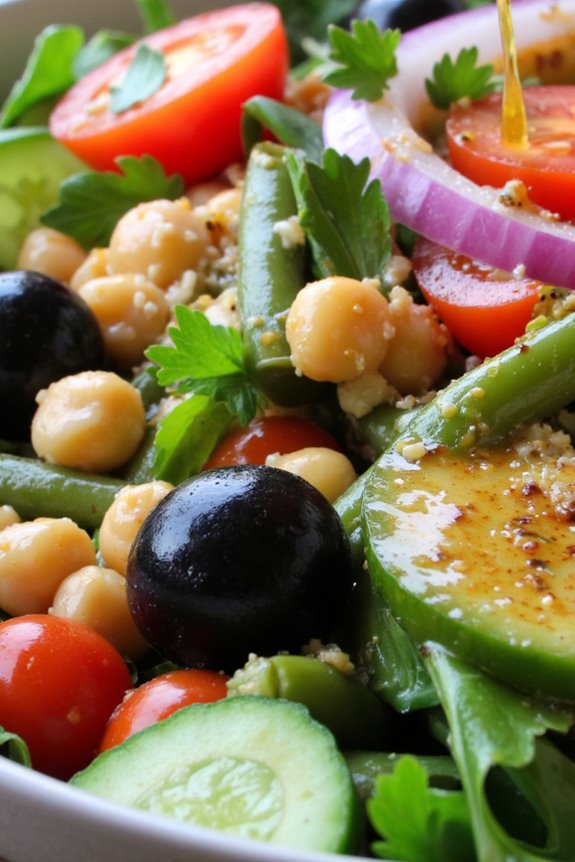
Niçoise Salad is a classic French dish that embodies the essence of Mediterranean cuisine. Traditionally packed with fresh vegetables, olives, and protein, this vegan version substitutes the usual ingredients with plant-based options while maintaining the vibrant flavors and textures that make this salad a delight.
The combination of crisp greens, juicy tomatoes, and savory olives creates a revitalizing dish that’s perfect for a light dinner or lunch. Furthermore, this recipe isn’t only delicious but also nutritious, making it an excellent addition to your vegan repertoire.
Preparing this Vegan Niçoise Salad is straightforward and allows for customization based on your preferences. By using ingredients such as chickpeas for protein and adding a zesty dressing, you can create a satisfying meal that will impress your guests.
Whether served as a main dish or as a side, this salad brings the flavors of Provence to your table, making it a delightful treat for any occasion.
Ingredients (Serves 4-6):
- 1 can (15 oz) chickpeas, drained and rinsed
- 8 oz green beans, trimmed
- 4 medium-sized tomatoes, diced
- 1 medium cucumber, diced
- 1 red bell pepper, diced
- 1 cup black olives, pitted and sliced
- 4 cups mixed salad greens (such as arugula and spinach)
- 1/4 cup red onion, thinly sliced
- 1/4 cup fresh parsley, chopped
- Salt and pepper, to taste
For the dressing:
- 1/4 cup olive oil
- 2 tablespoons red wine vinegar
- 1 teaspoon Dijon mustard
- 1 clove garlic, minced
- 1 teaspoon dried oregano
- Salt and pepper, to taste
Cooking Instructions:
- Prepare the Green Beans: In a pot of boiling salted water, blanch the green beans for about 3-4 minutes until they’re bright green and tender-crisp. Immediately transfer them to an ice bath using a slotted spoon to stop the cooking process. Once cooled, drain and set aside.
- Make the Dressing: In a small bowl, whisk together the olive oil, red wine vinegar, Dijon mustard, minced garlic, dried oregano, salt, and pepper until well combined. Adjust the seasoning according to your taste, then set aside.
- Combine the Salad Ingredients: In a large mixing bowl, combine the chickpeas, blanched green beans, diced tomatoes, cucumber, bell pepper, black olives, red onion, and parsley. Toss gently to mix all the ingredients evenly.
- Dress the Salad: Drizzle the prepared dressing over the salad mixture. Toss gently to verify all the ingredients are coated with the dressing. Taste and adjust seasoning with additional salt and pepper if needed.
- Serve: Arrange a bed of mixed salad greens on a large serving platter or individual plates. Spoon the Niçoise mixture over the greens, then serve immediately.
Extra Tips:
For added flavor, consider marinating the chickpeas in the dressing for about 30 minutes before adding them to the salad. This will enhance the taste and make the salad even more delicious.
You can also mix in other vegetables like artichokes or radishes for additional crunch. Feel free to adjust the ingredients based on what’s in season or what you have on hand, as the beauty of a salad lies in its versatility.
Enjoy your Vegan Niçoise Salad as a fresh, satisfying meal!
Herb-Infused Vegetable Galette
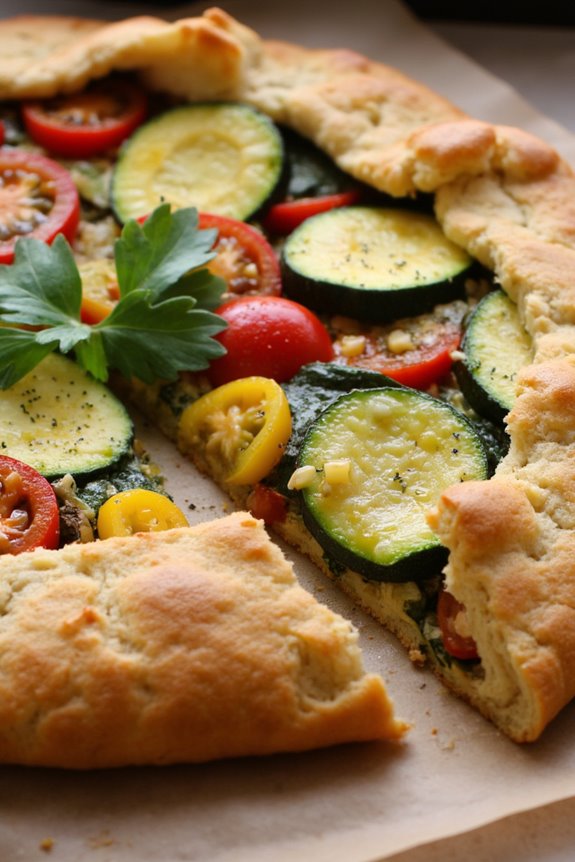
The Herb-Infused Vegetable Galette is a delicious, rustic dish that embodies the essence of French cooking while being entirely plant-based. This savory tart is filled with a delightful medley of seasonal vegetables, all enveloped in a flaky and buttery crust infused with fragrant herbs.
This dish not only serves as a stunning centerpiece for any vegan dinner but also allows for versatility in ingredient choices, making it perfect for using up leftover vegetables or whatever is in season.
Creating this galette is a wonderful way to explore the flavors and textures of fresh produce while celebrating the art of pastry-making. The method of folding the crust over the filling gives it a charming, homemade feel, and the herb infusion elevates the flavors to new heights.
Whether served warm or at room temperature, this galette is sure to impress your guests and leave them craving more.
Ingredients (serving size: 4-6 people)
- 1 ½ cups all-purpose flour
- ½ teaspoon salt
- ½ cup cold vegan butter, cubed
- 4-5 tablespoons ice water
- 2 cups mixed seasonal vegetables (e.g., zucchini, bell peppers, cherry tomatoes, and spinach)
- 1 tablespoon olive oil
- 1 teaspoon dried thyme
- 1 teaspoon dried oregano
- 1 garlic clove, minced
- Salt and pepper to taste
- 1 tablespoon fresh parsley, chopped (for garnish)
Cooking Instructions
1. Make the Dough: In a large mixing bowl, combine the all-purpose flour and salt. Add the cold vegan butter cubes and use a pastry cutter or your fingers to mix until the mixture resembles coarse crumbs. Gradually add the ice water, one tablespoon at a time, mixing until the dough comes together.
Form the dough into a disk, wrap it in plastic wrap, and refrigerate for at least 30 minutes.
2. Prepare the Filling: While the dough is chilling, preheat your oven to 400°F (200°C). In a skillet over medium heat, add olive oil and minced garlic. Sauté for about 1 minute until fragrant.
Add the mixed seasonal vegetables, dried thyme, dried oregano, and season with salt and pepper. Cook for about 5-7 minutes until the vegetables are slightly tender but still vibrant.
3. Roll Out the Dough: Once the dough has chilled, lightly flour your work surface and roll out the dough into a large circle, about 12 inches in diameter.
Transfer the rolled dough onto a parchment-lined baking sheet.
4. Assemble the Galette: Spoon the sautéed vegetable mixture onto the center of the dough, leaving a 2-inch border around the edges.
Fold the edges of the dough over the filling, pleating as you go to create a rustic look. Brush the exposed crust with a little olive oil for added flavor.
5. Bake: Place the galette in the preheated oven and bake for 30-35 minutes, or until the crust is golden brown and flaky.
Remove from the oven and let it cool slightly before slicing it into wedges.
6. Garnish and Serve: Sprinkle the chopped fresh parsley over the top for a touch of color and added flavor.
Serve warm or at room temperature.
Extra Tips
When preparing the Herb-Infused Vegetable Galette, feel free to experiment with different herbs and vegetables based on your preferences and what’s available.
For a creamier filling, consider adding a layer of vegan cheese or a spread made from blended nuts. If you’re short on time, you can also use store-bought pastry dough to simplify the process.
Additionally, serving the galette with a side salad or a light vinaigrette can enhance the overall dining experience. Enjoy your culinary creation!
Vegan Quiche Lorraine

Vegan Quiche Lorraine is a delightful twist on the classic French dish, offering a savory and satisfying option without any animal products. This quiche is packed with flavor, featuring a creamy tofu-based filling that mimics the richness of traditional quiche, combined with smoky vegan bacon, onions, and a hint of nutmeg. Perfect for brunch, lunch, or even a light dinner, this dish is versatile and bound to impress both vegans and non-vegans alike.
Making this Vegan Quiche Lorraine isn’t only simple but also allows for plenty of creativity. You can customize the filling with your favorite vegetables or add different spices to suit your taste. With a flaky, homemade crust that serves as the perfect base, this quiche is bound to become a staple in your vegan cooking repertoire.
Serve it warm or at room temperature alongside a fresh salad for a complete meal that everyone will love.
Ingredients (Serves 4-6)
- 1 pre-made vegan pie crust (or homemade)
- 1 block (14 oz) firm tofu, drained
- 1/4 cup nutritional yeast
- 1/4 cup unsweetened plant-based milk (almond, soy, or oat)
- 2 tablespoons olive oil
- 1 teaspoon garlic powder
- 1/2 teaspoon onion powder
- 1/4 teaspoon ground nutmeg
- Salt and pepper to taste
- 1 cup vegan bacon, chopped (store-bought or homemade)
- 1 small onion, finely chopped
- 1 cup spinach, chopped (optional)
- Fresh chives or parsley for garnish (optional)
Cooking Instructions
- Preheat the Oven: Begin by preheating your oven to 375°F (190°C). This guarantees that the quiche will cook evenly and thoroughly.
- Prepare the Crust: If you’re using a store-bought pie crust, place it in a 9-inch pie dish and prick the bottom with a fork to prevent bubbling. If making a homemade crust, roll it out and fit it into the pie dish. Pre-bake the crust for about 10 minutes, until lightly golden. Remove from the oven and set aside.
- Sauté the Vegetables: In a skillet over medium heat, add the olive oil and chopped onion. Sauté for about 3-4 minutes, or until the onion is translucent. If using spinach, add it to the skillet and cook for another 2 minutes until wilted. Stir in the chopped vegan bacon and cook for an additional 2-3 minutes. Remove from heat and let the mixture cool slightly.
- Prepare the Filling: In a food processor, combine the drained tofu, nutritional yeast, plant-based milk, garlic powder, onion powder, nutmeg, salt, and pepper. Blend until the mixture is smooth and creamy. You may need to scrape down the sides a few times to confirm everything is well combined.
- Combine and Fill: Once the vegetable mixture has cooled, fold it into the tofu filling. Mix until everything is evenly distributed, then pour the filling into the pre-baked pie crust, spreading it out evenly.
- Bake the Quiche: Place the filled quiche in the preheated oven and bake for 35-40 minutes, or until the top is golden brown and the filling is set. You can check for doneness by inserting a knife into the center; it should come out clean.
- Cool and Serve: Once baked, remove the quiche from the oven and let it cool for about 10 minutes before slicing. This will help it set further and make serving easier. Garnish with fresh chives or parsley if desired.
Extra Tips
When preparing your Vegan Quiche Lorraine, consider using silken tofu for a creamier texture if preferred. Additionally, feel free to experiment with different vegetables such as bell peppers, mushrooms, or even artichokes to add more flavor and nutrition to your quiche.
For a crunchier crust, you can also sprinkle some breadcrumbs on the crust before pouring in the filling. Finally, this quiche keeps well in the refrigerator for a few days, making it a great make-ahead meal option. Enjoy your delicious and hearty dish!
Gratin Dauphinois With Cauliflower

Gratin Dauphinois is a classic French dish typically made with layers of potatoes, cream, and cheese, baked to perfection. However, for a delightful vegan twist, we substitute the dairy with creamy cashew sauce and add cauliflower for a unique texture and flavor. This dish not only satisfies with its rich, indulgent taste but also brings a healthy element to the table, making it a perfect addition to any vegan French dinner.
This Gratin Dauphinois With Cauliflower is a wonderful side dish that pairs well with a variety of main courses. It’s creamy, cheesy (without the cheese!), and has just the right amount of seasoning to elevate the flavors. Plus, it’s an impressive dish that will have your guests asking for seconds. Let’s explore how to prepare this delectable vegan version of a French classic!
Ingredients (Serves 4-6):
- 1 medium head of cauliflower, cut into florets
- 4 medium potatoes, thinly sliced
- 1 cup raw cashews (soaked in water for at least 4 hours)
- 1 cup unsweetened almond milk
- 2 tablespoons nutritional yeast
- 2 cloves garlic, minced
- 1 teaspoon onion powder
- 1 teaspoon salt
- 1/2 teaspoon black pepper
- 1 tablespoon olive oil
- Fresh parsley, chopped for garnish (optional)
Cooking Instructions:
- Prepare the Cauliflower and Potatoes: Begin by preheating your oven to 375°F (190°C). While the oven is heating, wash and cut the cauliflower into small florets and slice the potatoes thinly using a mandoline or a sharp knife. Set aside.
- Make the Cashew Cream: Drain the soaked cashews and place them in a blender. Add the almond milk, nutritional yeast, minced garlic, onion powder, salt, and black pepper. Blend until you achieve a smooth and creamy consistency. If the mixture is too thick, add a little more almond milk to reach your desired texture.
- Prepare the Baking Dish: Lightly grease a 9×13 inch baking dish with olive oil. Begin layering the potatoes and cauliflower in the dish, alternating between the two. Start with a layer of potatoes, followed by a layer of cauliflower, and repeat until all the vegetables are used.
- Add the Cashew Cream: Once the layering is complete, pour the cashew cream evenly over the top of the layered vegetables, ensuring they’re well covered. Gently press down to submerge the vegetables slightly in the cream.
- Bake the Gratin: Cover the baking dish with aluminum foil and place it in the preheated oven. Bake for 30 minutes. After 30 minutes, remove the foil and bake for an additional 15-20 minutes, or until the top is golden brown and the potatoes are tender when pierced with a fork.
- Serve and Garnish: Once done, remove the gratin from the oven and allow it to cool for a few minutes. Garnish with freshly chopped parsley if desired, and serve warm as a delightful side dish.
Extra Tips: For an added depth of flavor, consider incorporating herbs such as thyme or rosemary into the cashew cream mixture. You can also experiment with adding other vegetables, like leeks or spinach, for a twist on the traditional recipe.
Make sure to soak the cashews properly for a creamy texture, and for a crispier top, broil the gratin for the last few minutes of cooking. Enjoy your delicious vegan take on this classic French dish!
Lavender Lemonade With Fresh Herbs

Lavender Lemonade is a revitalizing and aromatic beverage that perfectly complements a vegan French dinner. The floral notes of lavender paired with the tartness of fresh lemons create a delightful drink that’s both soothing and invigorating. This recipe incorporates fresh herbs, enhancing the flavor profile and giving it an extra touch of sophistication, making it an ideal choice for a special occasion or a simple gathering with friends.
Making Lavender Lemonade is a straightforward process that requires just a few ingredients and a little time to let the flavors meld together. The result is a beautifully colored drink that not only tastes fantastic but also looks stunning when served. Whether you’re hosting a dinner party or simply enjoying a quiet evening at home, this Lavender Lemonade will transport you to a sunny French garden with every sip.
Ingredients (serving size: 4-6 people)
- 1 cup fresh lemon juice (about 4-6 lemons)
- 1 cup granulated sugar
- 4 cups water
- 2 tablespoons dried culinary lavender
- 1/4 cup fresh mint leaves (or other fresh herbs like thyme or basil)
- Lemon slices and lavender sprigs for garnish (optional)
Cooking Instructions
- Prepare the Lavender Simple Syrup: In a small saucepan, combine 1 cup of water, granulated sugar, and dried lavender. Heat the mixture over medium heat, stirring occasionally until the sugar dissolves completely. Once the sugar is dissolved, bring the mixture to a gentle boil. Reduce the heat and let it simmer for about 5 minutes. This allows the lavender to infuse its flavor into the syrup. Once done, remove from heat and let it cool for about 15 minutes.
- Strain the Syrup: After the syrup has cooled, strain it through a fine-mesh sieve or cheesecloth into a clean jar or bowl. This will remove the lavender buds, leaving you with a smooth syrup. Set the lavender syrup aside.
- Mix the Lemonade: In a large pitcher, combine the fresh lemon juice and the remaining 3 cups of cold water. Once combined, add the strained lavender syrup to the lemonade mixture. Stir well to make sure everything is well integrated.
- Add Fresh Herbs: Gently muddle the fresh mint leaves or your chosen herbs in the pitcher to release their essential oils and flavor. This step adds a revitalizing herbal note to the lemonade. Adjust the amount of herbs based on your taste preference.
- Chill and Serve: Refrigerate the lemonade for at least 30 minutes to allow the flavors to meld and to serve it chilled. Before serving, stir the lemonade again and taste it to see if you’d like to adjust the sweetness or tartness. Pour the Lavender Lemonade over ice in glasses and garnish with lemon slices and sprigs of lavender or fresh herbs, if desired.
Extra Tips
To enhance the flavor of your Lavender Lemonade, consider experimenting with different herbs or adding a splash of sparkling water for a fizzy twist. If you prefer a less sweet drink, reduce the amount of sugar in the syrup, or substitute with a natural sweetener like agave or maple syrup.
For an adult version, a splash of gin or vodka pairs wonderfully with the lavender and lemon flavors. Enjoy this delightful beverage as a revitalizing treat during warm evenings or as a unique addition to your vegan French dinner!
