

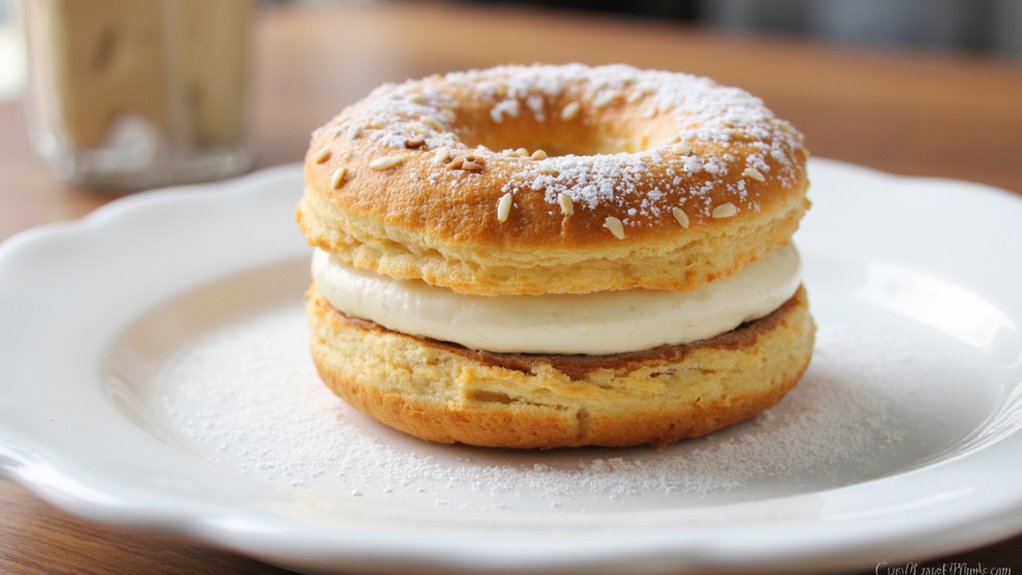
As a fan of all things sweet, I just have to share my latest adventure in the world of French desserts. Think of the crackle of a perfect Crème Brûlée or the buttery layers of a Tarte Tatin. These classic recipes aren’t just desserts. They’re experiences that bring a piece of France to your plate. Curious about which treat is next?
Crème Brûlée: The Quintessential French Custard
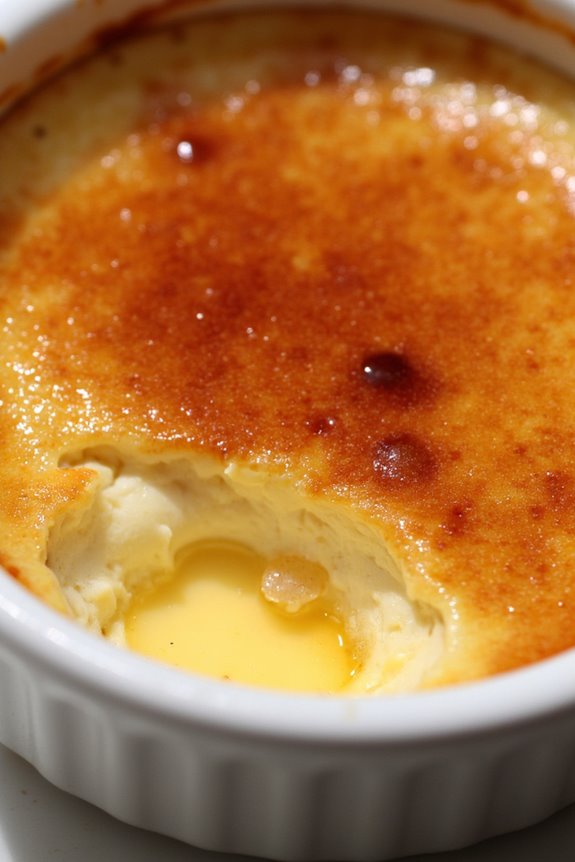
Crème Brûlée is an iconic French dessert known for its rich and creamy custard base topped with a contrasting layer of hard caramel. This elegant dessert, often served in individual ramekins, is a delightful way to conclude a meal, offering a perfect balance of flavors and textures. The creaminess of the custard, infused with vanilla, complements the crunchy caramelized sugar on top, creating a symphony of sensations with every bite.
The origins of Crème Brûlée can be traced back to France in the 17th century, and it has since become a beloved classic in French cuisine. Preparing Crème Brûlée at home might seem intimidating, but with a few simple ingredients and careful attention to detail, you can achieve a dessert that mirrors the quality of a French patisserie. Below is a tried-and-tested recipe for Crème Brûlée that serves 4-6 people.
Ingredients:
- 2 cups heavy cream
- 1 vanilla bean or 1 teaspoon vanilla extract
- 5 large egg yolks
- 1/2 cup granulated sugar (plus extra for caramelizing)
- A pinch of salt
Instructions:
- Preheat the Oven: Begin by preheating your oven to 325°F (160°C) to guarantee a gentle and even baking process.
- Prepare the Vanilla Cream: In a medium saucepan, combine the heavy cream and vanilla bean (split and seeds scraped) or vanilla extract. Heat the mixture over medium heat until it’s hot but not boiling, then remove from heat and let it sit to infuse the vanilla flavors, approximately 10-15 minutes.
- Mix the Egg Yolks and Sugar: In a mixing bowl, whisk together the egg yolks, 1/2 cup sugar, and a pinch of salt until the mixture is pale and slightly thickened.
- Combine the Mixtures: Slowly pour the warm cream into the egg yolk mixture, whisking constantly to guarantee the eggs don’t cook prematurely. Strain the mixture through a fine sieve into a clean bowl to remove any cooked egg bits or vanilla bean remnants.
- Pour into Ramekins: Divide the custard mixture evenly among 4-6 ramekins, placing them in a large baking dish or roasting pan.
- Bake the Custard: Pour hot water into the baking dish until it reaches halfway up the sides of the ramekins. Bake in the preheated oven for 30-40 minutes, or until the custard is set but still slightly jiggly in the center.
- Cool and Refrigerate: Remove the ramekins from the water bath and let them cool to room temperature. Then, cover with plastic wrap and refrigerate for at least 2 hours or overnight.
- Caramelize the Sugar: Just before serving, sprinkle a thin layer of granulated sugar over each custard. Using a kitchen torch, carefully caramelize the sugar by moving the flame evenly across the surface until it’s melted and golden brown.
Extra Tips:
When making Crème Brûlée, patience is key. Allowing the custard to infuse with vanilla and cool adequately enhances the flavor and texture.
Guarantee the sugar layer is even and thin for the best caramelization results. If you don’t have a kitchen torch, you can caramelize the sugar under a broiler, but be vigilant to prevent burning.
Serve the Crème Brûlée immediately after caramelizing to enjoy the contrast between the warm, crisp top and the cool, creamy custard.
Tarte Tatin: A Caramelized Apple Masterpiece
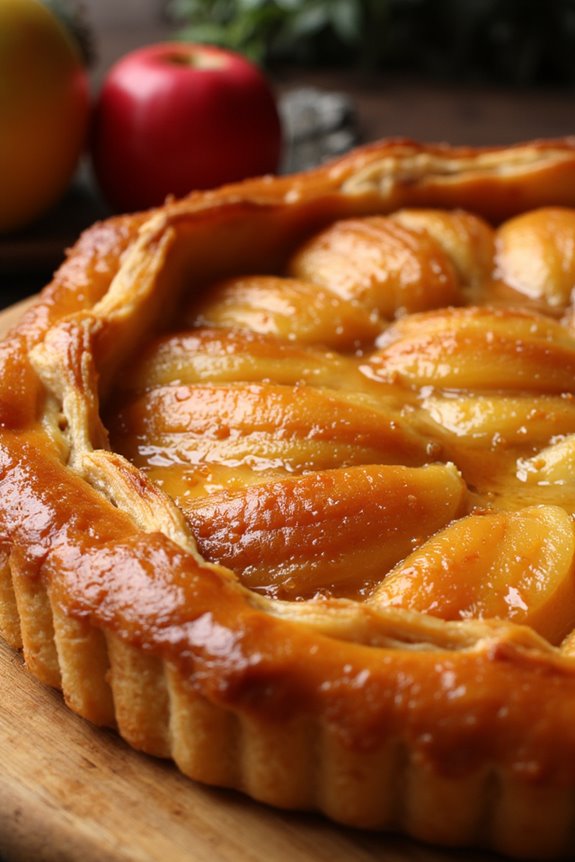
Tarte Tatin is a classic French dessert that showcases the beauty of simplicity and the magic of caramelization. This upside-down tart, originating from the Loire Valley, is made with caramelized apples and buttery pastry. The story goes that it was created by accident by the Tatin sisters in the late 19th century, and it has since become a beloved staple in French cuisine.
The dessert combines the sweetness of caramel with the tartness of apples, all encased in a flaky, buttery crust. It’s a perfect treat that can be enjoyed with a dollop of crème fraîche or a scoop of vanilla ice cream.
The beauty of Tarte Tatin lies in its straightforward preparation and the way it transforms basic ingredients into a decadent dish. This recipe serves 4-6 people, making it ideal for a family gathering or a cozy dinner party. The key to a perfect Tarte Tatin is patience, as the apples need time to caramelize to a rich, golden brown.
The pastry, traditionally a puff pastry, should be light and crisp. With the right technique, you can create a Tarte Tatin that balances flavors and textures beautifully, providing a memorable ending to any meal.
Ingredients (Serves 4-6):
- 6-8 medium-sized apples (Granny Smith or Golden Delicious)
- 1 cup granulated sugar
- 1/2 cup unsalted butter, divided
- 1 tablespoon lemon juice
- 1 teaspoon vanilla extract
- 1 sheet of puff pastry (store-bought or homemade)
- Flour, for dusting
- Whipped cream or vanilla ice cream, for serving (optional)
Cooking Instructions:
- Prepare the Apples:
- Peel and core the apples. Cut them into halves or quarters, depending on their size. Toss the apple pieces in a bowl with lemon juice to prevent browning.
- Make the Caramel:
- In a heavy, ovenproof skillet or cast-iron pan (about 9-10 inches in diameter), melt 1/2 cup of the unsalted butter over medium heat. Add the granulated sugar evenly over the melted butter. Cook until the mixture turns a deep amber color, stirring occasionally to prevent burning. This should take about 10-15 minutes.
- Caramelize the Apples:
- Preheat your oven to 375°F (190°C). Arrange the apple pieces in the skillet over the caramel in a circular pattern, making sure they’re tightly packed. Pour any remaining lemon juice and the vanilla extract over the apples. Cook the apples over medium heat, basting them with the caramel, until they become tender and the caramel thickens, about 15 minutes.
- Prepare the Pastry:
- On a lightly floured surface, roll out the puff pastry to about 1/8 inch thick. Cut the pastry into a circle slightly larger than the skillet. Carefully place the pastry over the apples, tucking the edges down between the apples and the skillet.
- Bake the Tart:
- Transfer the skillet to the preheated oven and bake for 25-30 minutes, or until the pastry is golden brown and puffed. Remove from the oven and let it cool for about 5 minutes.
- Invert and Serve:
- Carefully place a large serving plate over the skillet. Using oven mitts, quickly and confidently invert the skillet to release the tart onto the plate. Serve the Tarte Tatin warm, with a dollop of whipped cream or a scoop of vanilla ice cream if desired.
Extra Tips:
When selecting apples for Tarte Tatin, choose varieties that hold their shape well during cooking, such as Granny Smith or Golden Delicious.
It’s crucial to verify the caramel reaches a deep color before adding the apples, as this adds depth of flavor to the tart. If you’re using store-bought puff pastry, let it thaw completely in the fridge before rolling it out.
Don’t rush the caramelization process; patience is key to achieving that beautiful golden color that characterizes a perfect Tarte Tatin.
Profiteroles: Cream-Filled Choux Pastry Delight
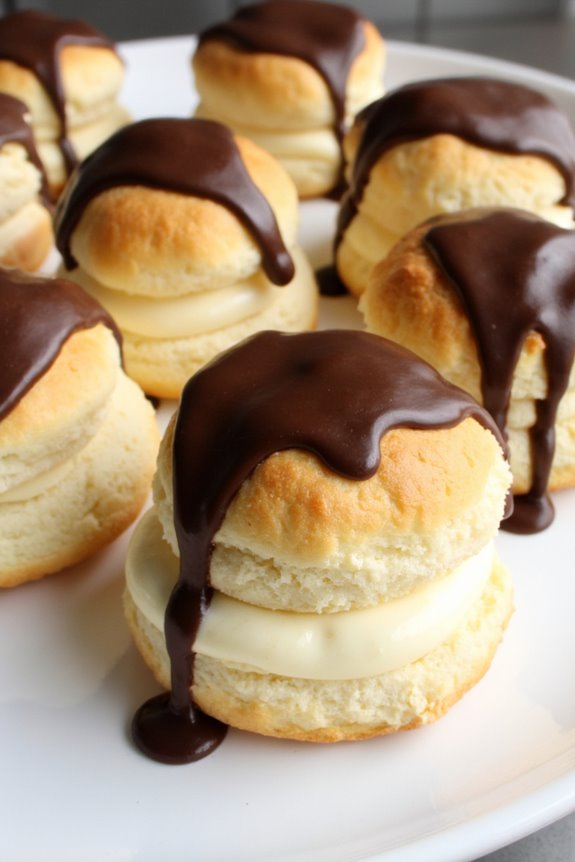
Profiteroles are a classic French dessert that combines light and airy choux pastry with a decadent cream filling, often topped with a glossy chocolate sauce. This delightful treat is a favorite in French patisseries and is perfect for impressing guests at a dinner party. The contrast between the crisp pastry shell and the creamy interior makes each bite a heavenly experience.
Although the process of making profiteroles may seem intimidating at first, it’s a rewarding endeavor that results in an exquisite dessert.
The key to successful profiteroles lies in the preparation of the choux pastry, also known as pâte à choux. This pastry forms the base of many French desserts and is unique due to its high moisture content, which causes it to puff up dramatically in the oven.
Once baked, the hollow pastry shells are filled with a rich vanilla pastry cream or whipped cream and finished with a drizzle of chocolate ganache. Follow this detailed recipe to create 4-6 servings of these delightful profiteroles, and enjoy the taste of France in your own kitchen.
Ingredients:
*For the Choux Pastry:*
- 1 cup water
- 1/2 cup unsalted butter
- 1 cup all-purpose flour
- 1/4 teaspoon salt
- 4 large eggs
For the Pastry Cream Filling:
- 2 cups whole milk
- 1/2 cup granulated sugar
- 1 vanilla bean, split and seeds scraped (or 1 teaspoon vanilla extract)
- 4 large egg yolks
- 1/4 cup cornstarch
- 2 tablespoons unsalted butter
For the Chocolate Ganache:
- 1/2 cup heavy cream
- 4 ounces dark chocolate, finely chopped
Instructions:
- Prepare the Choux Pastry:
- Preheat your oven to 400°F (200°C) and line a baking sheet with parchment paper.
- In a medium saucepan, bring the water, butter, and salt to a boil over medium heat. Once boiling, remove from heat and add the flour all at once, stirring vigorously with a wooden spoon until the mixture forms a ball and pulls away from the sides of the pan.
- Return the pan to low heat and cook the dough for about 2 minutes, stirring constantly, to dry it out slightly.
- Transfer the dough to a mixing bowl and let it cool for a few minutes. Add the eggs one at a time, beating well after each addition until the dough is smooth and glossy.
- Using a piping bag with a large round tip, pipe small mounds of dough (about 1 1/2 inches in diameter) onto the prepared baking sheet, leaving space between each.
- Bake in the preheated oven for 20-25 minutes or until the profiteroles are puffed and golden brown. Turn off the oven and let them dry out in the oven with the door slightly ajar for 10 minutes. Cool completely on a wire rack.
- Make the Pastry Cream Filling:
- In a medium saucepan, heat the milk and vanilla bean seeds over medium heat until just boiling. Remove from heat and let it infuse for a few minutes.
- In a separate bowl, whisk together the sugar, egg yolks, and cornstarch until smooth. Gradually whisk the hot milk into the egg mixture, then return the mixture to the saucepan.
- Cook over medium heat, stirring constantly, until the mixture thickens and comes to a boil. Remove from heat and stir in the butter. Transfer to a bowl, cover with plastic wrap directly on the surface, and chill until set.
- Prepare the Chocolate Ganache:
- Heat the heavy cream in a small saucepan until it just begins to simmer. Remove from heat and pour over the chopped chocolate in a heatproof bowl.
- Let it sit for a minute, then stir until smooth and glossy.
- Assemble the Profiteroles:
- Once the pastry shells have cooled, use a small sharp knife to cut a small hole in the bottom of each one.
- Fill a piping bag fitted with a small tip with the pastry cream and pipe it into the hollow center of each choux shell.
- Drizzle each filled profiterole with the chocolate ganache and serve immediately.
Extra Tips:
For the best results, verify that your dough is cooled slightly before adding the eggs, as this prevents them from cooking prematurely.
When baking, avoid opening the oven door until the profiteroles are fully set to prevent them from collapsing.
If you prefer a lighter filling, whipped cream can be used as an alternative to pastry cream.
Additionally, you can prepare the choux pastry and pastry cream in advance, storing them separately, and assemble the profiteroles just before serving for maximum freshness.
Éclairs: The Classic Chocolate-Topped Treat
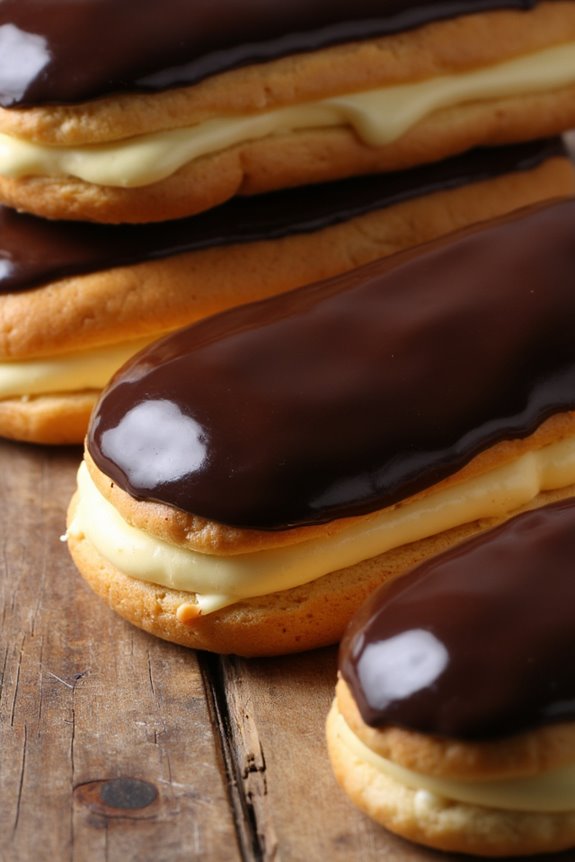
Éclairs are a quintessential French pastry that combines the airy lightness of choux pastry with a delectable cream filling and a rich chocolate glaze. These delicate pastries are perfect for impressing guests at a dinner party or indulging in a weekend baking project.
The key to perfecting éclairs lies in mastering the choux pastry, which, when baked, creates hollow shells ready to be filled with a luscious vanilla pastry cream. Topped with a glossy chocolate ganache, éclairs offer a delightful contrast of textures and flavors that are sure to satisfy any sweet tooth.
Creating éclairs from scratch may seem intimidating, but with the right ingredients and techniques, they’re entirely achievable for home bakers. This recipe yields 12-15 éclairs, serving 4-6 people, and includes steps for making the choux pastry, the pastry cream filling, and the chocolate glaze.
Be certain to read through the entire recipe and gather all ingredients before starting, as timing and preparation are essential for success.
Ingredients for 4-6 Servings:
*For the Choux Pastry:*
- 1 cup water
- 1/2 cup unsalted butter
- 1/4 teaspoon salt
- 1 cup all-purpose flour
- 4 large eggs
For the Pastry Cream Filling:
- 2 cups whole milk
- 1/2 cup granulated sugar
- 1/4 cup cornstarch
- 6 large egg yolks
- 1 teaspoon vanilla extract
- 2 tablespoons unsalted butter
For the Chocolate Glaze:
- 1/2 cup heavy cream
- 4 ounces semisweet chocolate, chopped
- 1 tablespoon unsalted butter
Cooking Instructions:
- Prepare the Choux Pastry Shells:
- Preheat your oven to 400°F (200°C). Line a baking sheet with parchment paper.
- In a medium saucepan over medium heat, combine water, butter, and salt. Bring to a boil.
- Add the flour all at once, stirring vigorously until the mixture forms a ball and pulls away from the sides of the pan.
- Remove from heat and let cool for 5 minutes. Then, add eggs one at a time, beating well after each addition until the dough is smooth and glossy.
- Transfer the dough to a piping bag fitted with a large round tip. Pipe 4-inch long strips onto the prepared baking sheet.
- Bake for 20-25 minutes until golden brown and puffed. Remove from oven and cool completely on a wire rack.
- Make the Pastry Cream Filling:
- In a medium saucepan, heat the milk until just boiling. Meanwhile, in a bowl, whisk together sugar, cornstarch, and egg yolks until smooth.
- Gradually pour the hot milk into the egg mixture, whisking constantly. Return the mixture to the saucepan and cook over medium heat, stirring constantly, until thickened.
- Remove from heat, stir in vanilla and butter, and transfer to a bowl. Cover with plastic wrap directly on the surface to prevent a skin from forming. Let cool completely.
- Prepare the Chocolate Glaze:
- In a small saucepan, heat the cream until just simmering. Remove from heat and add the chopped chocolate and butter. Let sit for 2 minutes, then stir until smooth.
- Assemble the Éclairs:
- Using a small sharp knife, make a small hole in the end of each pastry shell. Fill a piping bag with the pastry cream and pipe into each shell until filled.
- Dip the tops of the filled éclairs into the chocolate glaze, letting any excess drip off. Place on a wire rack to set.
Extra Tips:
For the best éclairs, make sure your oven is fully preheated before baking the choux pastry to achieve a good rise. Avoid opening the oven door during baking to prevent the pastry from collapsing.
When making the pastry cream, whisk constantly to avoid lumps and guarantee a smooth texture. If the chocolate glaze begins to set before you’re done dipping, gently reheat it over low heat to bring it back to the right consistency.
Enjoy your éclairs fresh, as they’re best consumed the day they’re made for peak taste and texture.
Soufflé Au Chocolat: Light and Fluffy Chocolate Indulgence
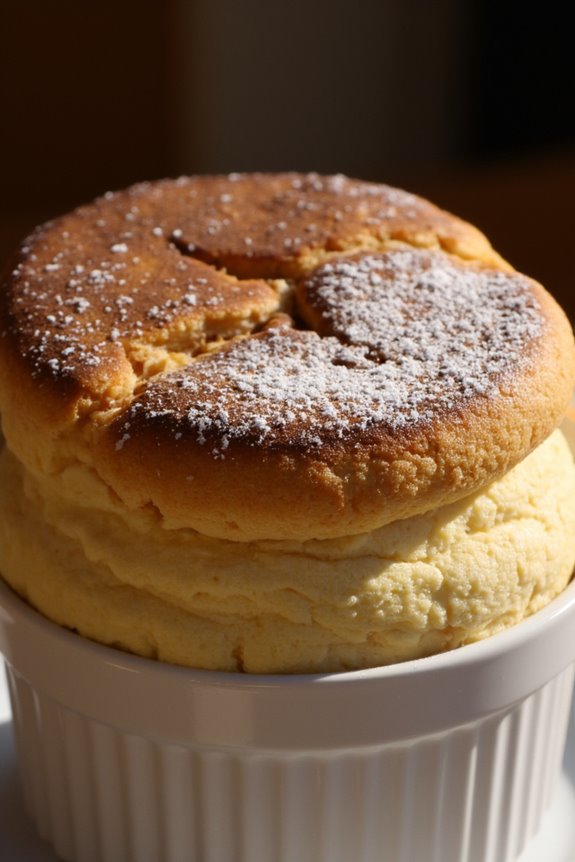
Soufflé Au Chocolat, a quintessentially classic French dessert, is the epitome of chocolate indulgence in its lightest form. This elegant dessert is known for its airy texture and rich chocolate flavor, which makes it a favorite among chocolate lovers. When prepared perfectly, a soufflé emerges from the oven with a delicate rise and a soft, molten center that’s sure to delight your senses.
The key to a successful soufflé is achieving the perfect balance of ingredients and techniques to guarantee a stable rise and a velvety texture. Creating this classic dessert requires a bit of finesse but is well worth the effort. The soufflé’s magic lies in the combination of a rich chocolate base and the incorporation of whipped egg whites, which provide the necessary lift.
For a serving size of 4-6 people, you’ll want to verify you have the freshest ingredients and the right equipment on hand, such as individual ramekins, to achieve the perfect presentation. Whether you’re serving it as a show-stopping end to a dinner party or a special treat for yourself, this chocolate soufflé is sure to impress.
Ingredients (for 4-6 servings):
- 200g dark chocolate (70% cocoa)
- 50g unsalted butter, plus extra for greasing
- 4 large eggs, separated
- 75g caster sugar, plus extra for dusting
- 1 teaspoon vanilla extract
- A pinch of salt
- Icing sugar, for dusting (optional)
Instructions:
- Preheat the Oven and Prepare Ramekins: Preheat your oven to 375°F (190°C). Generously butter four to six ramekins and dust them with caster sugar, making sure the sides are well-coated. This helps the soufflé to climb the sides for a better rise.
- Melt the Chocolate and Butter: In a heatproof bowl set over a pot of simmering water (double boiler method), melt the dark chocolate and butter together. Stir occasionally until smooth, then remove from heat and let it cool slightly.
- Prepare the Egg Yolks: In a large mixing bowl, whisk the egg yolks with 50g of caster sugar until pale and creamy. Add the vanilla extract and a pinch of salt. Gradually mix in the melted chocolate, ensuring it’s well incorporated.
- Whip the Egg Whites: In a separate, clean bowl, whisk the egg whites until soft peaks form. Gradually add the remaining 25g of caster sugar, continuing to whisk until you achieve stiff peaks. The egg whites should be glossy and hold their shape.
- Fold in the Egg Whites: Gently fold one-third of the whipped egg whites into the chocolate mixture to lighten it. Carefully fold in the remaining egg whites in two additions, using a spatula, ensuring not to deflate the mixture.
- Fill the Ramekins: Divide the mixture evenly among the prepared ramekins, filling them to just below the rim. Run your thumb around the edge of each ramekin to create a shallow channel, which encourages an even rise.
- Bake the Soufflés: Place the ramekins on a baking sheet and bake in the preheated oven for 12-15 minutes, or until the soufflés have risen and the tops are set but slightly wobbly in the center.
- Serve Immediately: Dust with icing sugar if desired and serve immediately for the best texture and flavor.
Extra Tips:
To achieve the perfect soufflé, verify that all equipment, especially the bowl and whisk for the egg whites, is clean and dry. Any grease or moisture can prevent the egg whites from reaching their full volume.
Additionally, using room temperature eggs can help achieve better results. Be careful when folding the egg whites into the chocolate mixture to maintain the airiness. Finally, timing is essential with soufflés; they should be served straight from the oven to enjoy their full height and delightful texture before they begin to deflate.
Mille-Feuille: Layered Pastry Perfection
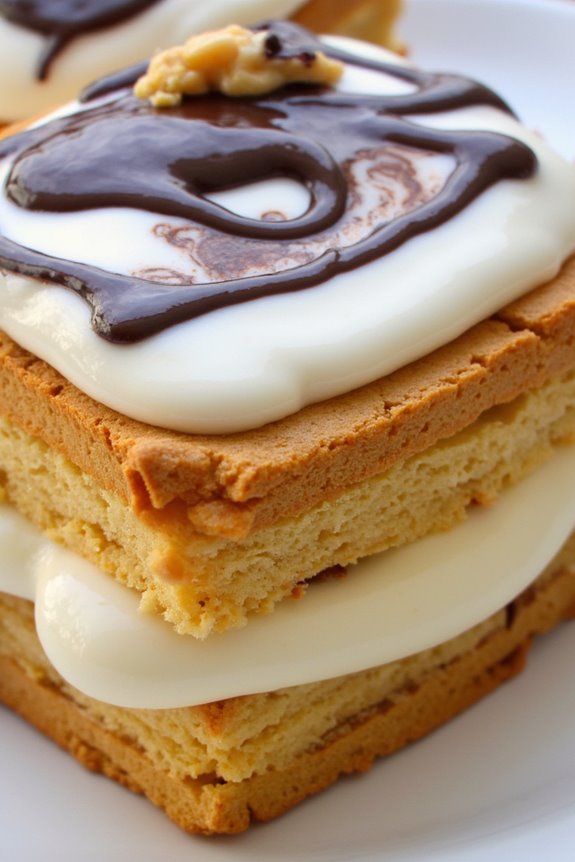
Mille-feuille, also known as Napoleon, is a classic French dessert that’s both elegant and indulgent. This exquisite pastry is composed of multiple layers of buttery puff pastry and rich pastry cream, topped off with a delicate glaze. The name “mille-feuille” translates to “a thousand leaves,” aptly describing the numerous layers of flaky pastry that make up this dessert. Perfect for special occasions or as a decadent treat, mille-feuille is sure to impress with its combination of textures and flavors.
Creating a mille-feuille requires a bit of patience and precision, but the results are well worth the effort. The key to a successful mille-feuille lies in its layers: the puff pastry should be golden and crisp, while the pastry cream should be smooth and creamy. The final layer of glaze can be customized with a pattern of chocolate or simply left as a glossy white finish. This recipe will guide you through assembling this French classic for 4-6 people, guaranteeing that each bite is a perfect blend of crunch and creaminess.
Ingredients:
- 1 package (400g) of puff pastry
- 500ml whole milk
- 1 vanilla bean or 1 tsp vanilla extract
- 5 large egg yolks
- 100g granulated sugar
- 40g cornstarch
- 50g unsalted butter
- 200g powdered sugar
- 2 tbsp water
- 50g dark chocolate (optional for decoration)
Instructions:
- Prepare the Puff Pastry:
- Preheat your oven to 200°C (390°F).
- Roll out the puff pastry on a lightly floured surface until it’s about 3mm thick. Cut into three equal-sized rectangles.
- Place the rectangles on a baking sheet lined with parchment paper. Prick the pastry all over with a fork to prevent it from puffing too much.
- Cover with another sheet of parchment paper and place a second baking sheet on top to weigh it down.
- Bake for 15-20 minutes until golden brown. Allow to cool completely on a wire rack.
- Make the Pastry Cream:
- In a saucepan, heat the milk and vanilla bean (split and scraped) or vanilla extract over medium heat until it just begins to simmer. Remove from heat and let it infuse for 10 minutes.
- In a bowl, whisk together egg yolks and sugar until pale. Add the cornstarch and mix until smooth.
- Gradually whisk the hot milk into the egg mixture, then return the mixture to the saucepan.
- Cook over medium heat, stirring constantly, until the mixture thickens and boils. Boil for 1-2 minutes.
- Remove from heat and stir in the butter until smooth. Cover with plastic wrap touching the surface to prevent a skin from forming. Cool completely.
- Assemble the Mille-Feuille:
- Spread half of the pastry cream evenly over one piece of baked puff pastry.
- Place a second piece of puff pastry on top, then spread the remaining pastry cream over it.
- Top with the final piece of puff pastry.
- Prepare the Glaze:
- Mix the powdered sugar with enough water to make a thick, spreadable glaze.
- Spread the glaze over the top layer of pastry.
- Decorate (Optional):
- Melt the dark chocolate and drizzle it over the glaze in a decorative pattern.
- Use a toothpick to create a marbled effect by dragging it through the chocolate and glaze.
- Chill:
- Refrigerate the mille-feuille for at least 1 hour to set before slicing.
Extra Tips:
When working with puff pastry, make certain it stays cold for the best results, as this helps achieve the desired flaky texture. If the pastry warms too much while you’re working with it, pop it back in the fridge for a bit.
Also, when making the pastry cream, be diligent in stirring continuously to prevent it from burning or becoming lumpy. Finally, use a serrated knife to cut the mille-feuille to avoid squashing the layers. Enjoy this classic French dessert with a cup of tea or coffee for the perfect indulgence.
Madeleines: Delightful Shell-Shaped Cakes
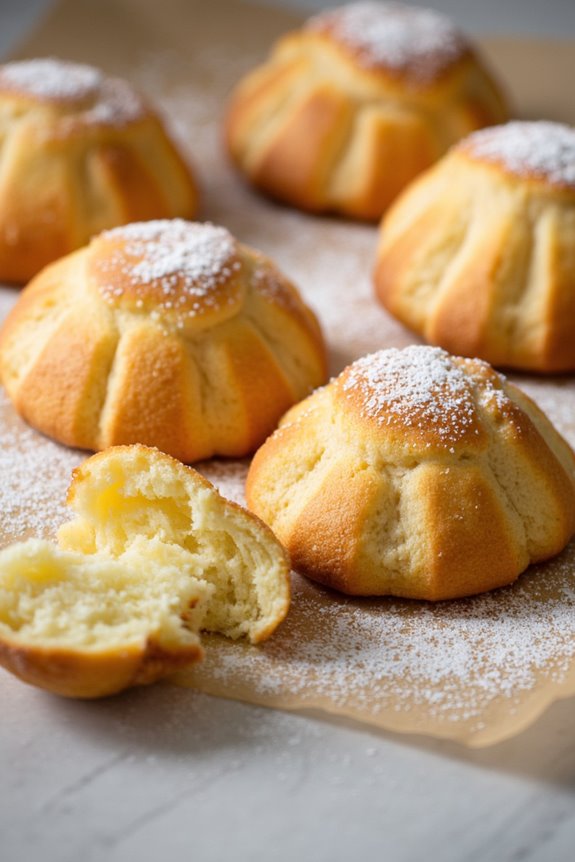
Madeleines are a quintessential French dessert that have captured the hearts of pastry lovers around the world with their delicate texture and unique shell-like shape. Often referred to as little cakes, these delightful treats are traditionally baked in a special pan with shell-shaped indentations, giving them their signature appearance. Madeleines are known for their buttery flavor, slight crispness on the outside, and a soft, spongy interior. Perfect for pairing with tea or coffee, these petite cakes are also a wonderful addition to any dessert spread.
Originating in the Lorraine region of France, Madeleines have become a beloved staple in both home baking and professional patisseries. The key to achieving the perfect Madeleine lies in the batter, which requires a careful balance of ingredients and proper resting time to guarantee the cakes rise with their characteristic hump. The following recipe will guide you through the process of making these delightful shell-shaped cakes at home, serving 4-6 people.
Ingredients for Madeleines (Serving Size: 4-6 People):
- 1 cup (125g) all-purpose flour
- 1/2 teaspoon baking powder
- 1/8 teaspoon salt
- 2 large eggs, at room temperature
- 1/2 cup (100g) granulated sugar
- 1 teaspoon pure vanilla extract
- Zest of 1 lemon
- 1/2 cup (115g) unsalted butter, melted and cooled
- Powdered sugar, for dusting (optional)
Cooking Instructions:
- Prepare the Dry Ingredients: In a medium bowl, whisk together the flour, baking powder, and salt. This guarantees the dry ingredients are evenly distributed and will help prevent clumping in the batter.
- Mix the Wet Ingredients: In a separate large bowl, beat the eggs and granulated sugar together using an electric mixer on medium-high speed until the mixture is thick, pale, and ribbons form when the beaters are lifted, about 3-4 minutes. Add in the vanilla extract and lemon zest, mixing until just combined.
- Combine the Ingredients: Gently fold the dry ingredients into the egg mixture using a spatula, being careful not to deflate the batter. Once incorporated, gradually fold in the melted and cooled butter until the batter is smooth and homogeneous.
- Rest the Batter: Cover the bowl with plastic wrap and refrigerate the batter for at least 30 minutes, or up to 1 hour. This resting period is vital as it allows the batter to thicken, resulting in the characteristic hump of the Madeleines.
- Preheat the Oven and Prepare the Pan: Preheat your oven to 375°F (190°C). Generously butter and flour a Madeleine pan, tapping out any excess flour to prevent sticking.
- Fill the Molds: Spoon the batter into the prepared Madeleine molds, filling each about three-quarters full. Avoid overfilling as the batter will rise during baking.
- Bake the Madeleines: Place the pan in the preheated oven and bake for 10-12 minutes, or until the edges are golden brown and the centers spring back slightly when touched.
- Cool and Serve: Remove the Madeleines from the oven and let them cool in the pan for a few minutes before transferring them to a wire rack to cool completely. Dust with powdered sugar before serving if desired.
Extra Tips:
To achieve the best results, make sure all your ingredients are at room temperature before starting the recipe. This helps with even mixing and a better rise.
Additionally, the resting time for the batter is essential for developing both the flavor and texture of the Madeleines, so resist the urge to skip this step.
If you don’t have a Madeleine pan, a mini muffin tin can be used as a substitute, though they won’t have the traditional shell shape.
Finally, Madeleines are best enjoyed fresh out of the oven, but they can be stored in an airtight container for up to a couple of days.
Clafoutis: The Rustic Cherry-Laden Dessert
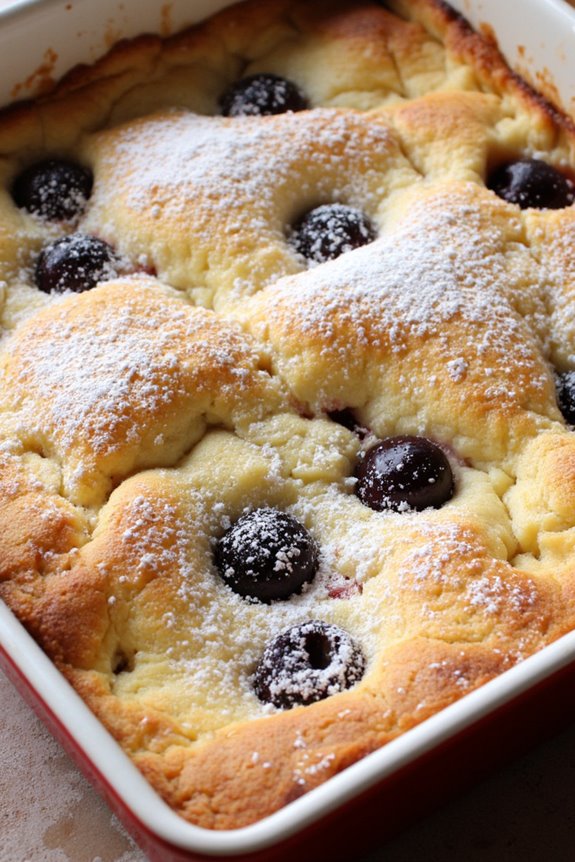
Clafoutis, a beloved classic in French cuisine, is a delightful dessert that beautifully combines simplicity with elegance. Originating from the Limousin region of France, this rustic dish is traditionally made with black cherries and a custard-like batter. The cherries are baked into the batter, and as it cooks, the batter puffs up around the juicy fruit, creating a creamy yet slightly cake-like texture. The natural sweetness of the cherries complements the rich, eggy custard, resulting in a dessert that’s both comforting and sophisticated.
This versatile dessert isn’t only easy to prepare but also adaptable to different fruits like plums, apricots, or berries if cherries are out of season. Clafoutis can be served warm or at room temperature, making it a perfect treat for any occasion, from a simple family meal to a more formal gathering. The following recipe serves 4-6 people and showcases the traditional cherry clafoutis, a reflection of the beauty of classic French baking.
Ingredients for Clafoutis (serving size: 4-6 people):
- 1 1/2 cups pitted black cherries
- 3 large eggs
- 1/2 cup granulated sugar
- 1 cup whole milk
- 1/2 cup all-purpose flour
- 1 teaspoon vanilla extract
- 1/4 teaspoon almond extract (optional)
- 1/4 teaspoon salt
- 2 tablespoons unsalted butter, melted
- Powdered sugar for dusting
- Butter for greasing the baking dish
Cooking Instructions:
- Prepare the Oven and Dish: Preheat your oven to 350°F (175°C). Generously butter a 9-inch round baking dish or a similar-sized ovenproof dish to prevent the clafoutis from sticking.
- Arrange the Cherries: Evenly spread the pitted cherries across the bottom of the greased baking dish. Confirm they’re distributed in a single layer for even baking.
- Mix the Batter: In a mixing bowl, whisk together the eggs and granulated sugar until the mixture is light and frothy. Add the milk, flour, vanilla extract, almond extract (if using), and salt. Whisk until the batter is smooth and well combined. Finally, stir in the melted butter.
- Pour the Batter: Carefully pour the batter over the cherries in the prepared baking dish, ensuring the cherries are evenly covered.
- Bake the Clafoutis: Place the dish in the preheated oven and bake for about 35-40 minutes, or until the clafoutis is set and golden brown on top. A toothpick inserted into the center should come out clean.
- Cool and Serve: Allow the clafoutis to cool slightly before serving. Dust with powdered sugar just before serving for an extra touch of sweetness. Serve warm or at room temperature.
Extra Tips:
For the best flavor, use ripe, sweet cherries, as they’ll enhance the overall taste of the clafoutis. If fresh cherries aren’t available, you can substitute with canned or frozen cherries, just make sure to drain them well.
Additionally, letting the batter rest for about 10-15 minutes before pouring it over the cherries can improve its texture. If you prefer a more pronounced almond flavor, increase the almond extract slightly, but be cautious, as it can easily overpower the dish.
Ultimately, clafoutis is best enjoyed on the day it’s made, but leftovers can be stored in the refrigerator for up to two days.
Galette Des Rois: the King’s Cake Celebration
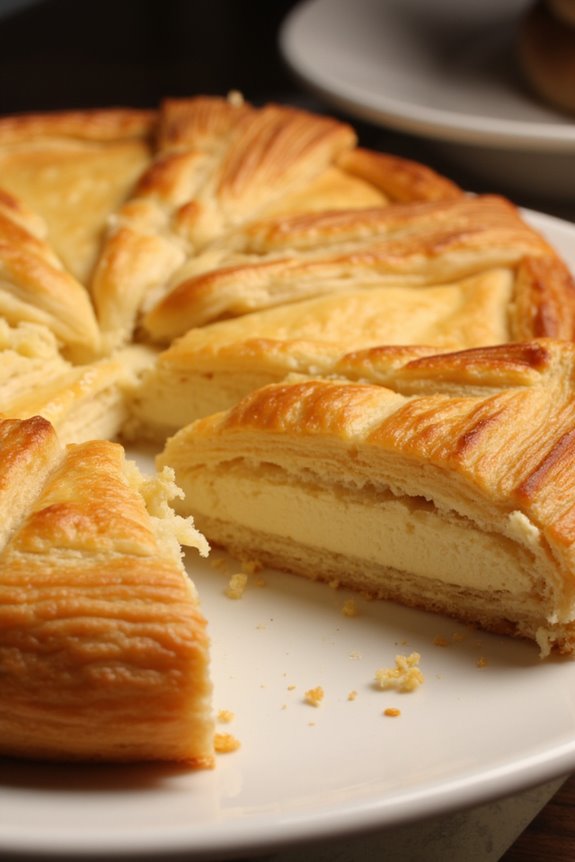
Galette Des Rois, or the King’s Cake, is a traditional French dessert that celebrates the Epiphany. This pastry is typically enjoyed on January 6th, marking the arrival of the Three Wise Men. The Galette Des Rois is made with layers of buttery puff pastry encasing a delicious almond cream filling known as frangipane.
It’s customary to hide a small figurine or fève inside the cake, and the person who finds it in their slice is crowned king or queen for the day. This delightful dessert isn’t only a festive treat but also a display of French culinary artistry with its golden, flaky crust and creamy, nutty interior.
The Galette Des Rois is perfect for sharing with family and friends, making it an ideal centerpiece for any celebratory gathering. Below is a recipe to make this classic cake, perfect for serving 4 to 6 people.
Ingredients
- 2 sheets of puff pastry
- 100g (1/2 cup) unsalted butter, softened
- 100g (1/2 cup) granulated sugar
- 100g (1 cup) almond meal
- 2 large eggs
- 1 teaspoon almond extract
- 1 teaspoon vanilla extract
- 1 egg yolk (for egg wash)
- 1 tablespoon milk
- 1 fève (small porcelain figurine) or dried bean
Cooking Instructions
- Prepare the Frangipane Filling: In a mixing bowl, cream together the softened butter and granulated sugar until light and fluffy. Add the almond meal and continue to mix. Then, incorporate the eggs one at a time, mixing well after each addition. Stir in the almond extract and vanilla extract until fully combined.
- Prepare the Puff Pastry: Roll out the two sheets of puff pastry on a lightly floured surface. Using a plate or a round template, cut each sheet into a circle approximately 9 inches in diameter. Place one circle on a baking sheet lined with parchment paper.
- Assemble the Galette: Spread the frangipane filling evenly over the center of the pastry circle on the baking sheet, leaving about a 1-inch border around the edges. Place the fève or dried bean somewhere in the filling. Brush the border with water and place the second pastry circle on top, pressing the edges to seal.
- Decorate and Prepare for Baking: Using a sharp knife, score the top of the galette with a decorative pattern, being careful not to cut through the pastry. Mix the egg yolk with milk to create an egg wash, and brush it over the top of the pastry for a glossy finish.
- Bake the Galette: Preheat the oven to 375°F (190°C). Bake the galette for 25-30 minutes or until it’s golden brown and puffed. Allow it to cool slightly before serving.
Extra Tips
For the best results, make sure to use high-quality puff pastry, as it greatly affects the texture and taste of the galette. If possible, prepare the frangipane filling ahead of time and let it chill for at least 30 minutes; this will make it easier to spread and enhance the flavor.
Also, make certain that the puff pastry is cold when assembling the galette to prevent the butter from melting before baking, which guarantees a flakier crust. Finally, remember to inform your guests about the hidden fève to avoid any surprises while eating!
Canelés: Caramelized Custard Delights
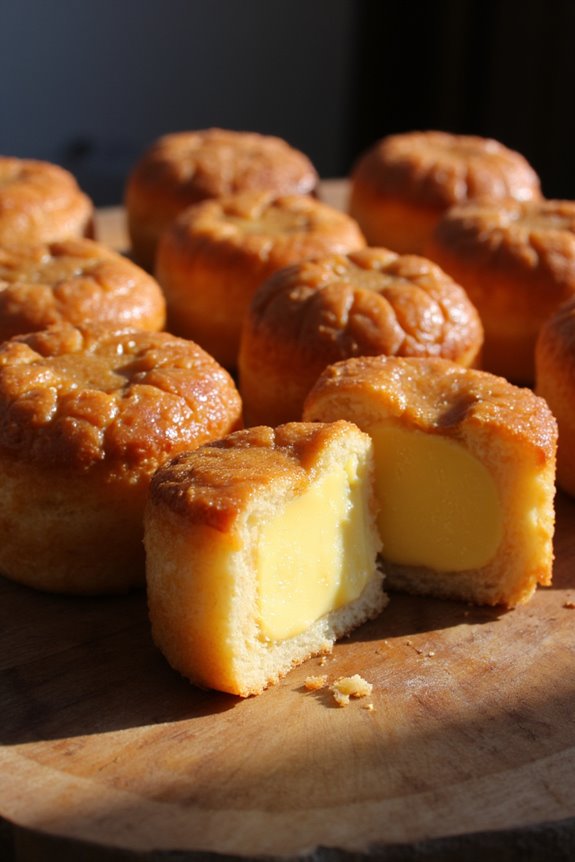
Canelés: Caramelized Custard Delights are a cherished French pastry originating from the Bordeaux region. These small, fluted cakes boast a delectable contrast between their deeply caramelized exterior and the rich, custard-like interior. The combination of a crisp, dark crust with a tender, flavorful center makes canelés a unique treat that captures the essence of French baking artistry.
Traditionally baked in copper molds, the resulting pastries are a perfect balance of sweet and savory flavors with a hint of vanilla and rum, making them a popular choice for both breakfast and dessert.
To achieve the perfect canelé, patience and precision are key. The batter is simple yet requires resting time to develop its full flavor, and the baking process demands careful attention to guarantee the signature crust forms without overcooking the delicate center.
While the traditional method calls for specialized molds and equipment, modern adaptations allow for silicone molds, making it easier for home bakers to create these delicious pastries. Despite their seemingly complex nature, the reward of biting into a perfectly baked canelé is well worth the effort.
Ingredients (Serves 4-6):
- 500 ml whole milk
- 50 g unsalted butter
- 1 vanilla bean or 1 teaspoon vanilla extract
- 100 g all-purpose flour
- 200 g granulated sugar
- 2 large eggs
- 2 large egg yolks
- 2 tablespoons dark rum
- A pinch of salt
- Melted butter (for greasing molds)
Cooking Instructions:
- Prepare the Milk Mixture: In a medium saucepan, combine the whole milk and butter. Split the vanilla bean lengthwise, scrape out the seeds, and add both the seeds and the pod to the milk mixture (or add the vanilla extract). Heat the mixture over medium-low heat until the butter melts and the milk is warm, but not boiling. Remove from heat and let it cool slightly.
- Mix Dry Ingredients: In a large mixing bowl, whisk together the flour, sugar, and salt until well combined.
- Combine Eggs and Rum: In another bowl, lightly beat the eggs and egg yolks. Stir in the dark rum until the mixture is smooth.
- Create the Batter: Slowly pour the slightly cooled milk mixture into the bowl with the dry ingredients, whisking continuously to avoid lumps. Add the egg and rum mixture, stirring until you achieve a smooth batter. The consistency should be similar to pancake batter.
- Rest the Batter: Cover the batter with plastic wrap and refrigerate for at least 24 hours. This resting period allows the flavors to develop and the batter to thicken.
- Prepare the Molds: Preheat the oven to 200°C (400°F). Generously brush the canelé molds with melted butter, making sure every crevice is coated to help achieve the characteristic crust.
- Fill and Bake: Pour the batter into the prepared molds, filling them about three-quarters full. Place the molds on a baking sheet and bake for 15 minutes at 200°C (400°F), then reduce the temperature to 180°C (350°F) and bake for another 45-55 minutes, or until the canelés are dark brown and have a caramelized crust.
- Unmold and Cool: Remove the canelés from the oven and allow them to cool in the molds for a few minutes before carefully unmolding them onto a wire rack. Let them cool completely to achieve the perfect texture.
Extra Tips:
For the best results, use copper molds if available, as they conduct heat more effectively to create a crisp crust. If using silicone molds, extend the baking time slightly if needed to guarantee proper caramelization.
Resting the batter is essential; it allows the flour to hydrate and the flavors to meld, resulting in a superior taste and texture. Finally, when filling the molds, avoid overfilling to prevent the batter from overflowing during baking. Enjoy these classic French delights fresh, as they’re best consumed on the day they’re made.
Opera Cake: A Symphony of Coffee and Chocolate
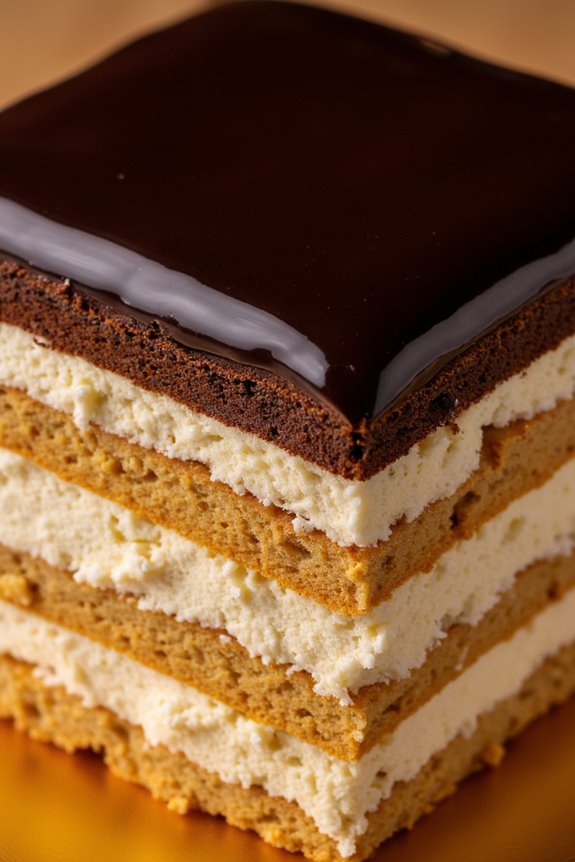
Opera Cake is a classic French dessert that combines the rich flavors of coffee and chocolate in a multi-layered delicacy. Known for its elegant presentation and intricate layers, Opera Cake is often considered the pinnacle of patisserie skill.
The dessert is composed of layers of almond sponge cake (known as Joconde) soaked in coffee syrup, layered with coffee buttercream and chocolate ganache, and finished with a shiny chocolate glaze. This sophisticated cake is perfect for special occasions and is sure to impress your guests with its harmonious blend of flavors and textures.
Creating an Opera Cake requires patience and precision, but the result is worth the effort. The key to success lies in carefully assembling the layers, guaranteeing each component complements the others.
The coffee syrup infuses the almond sponge with a robust flavor, while the smooth coffee buttercream and rich chocolate ganache add depth and indulgence. The final touch is the glossy chocolate glaze, which provides a beautiful finish. This recipe will guide you through the process of making an Opera Cake that serves 4-6 people, allowing you to bring a taste of classic French patisserie into your home.
Ingredients:
- For the Joconde (Almond Sponge Cake):
- 6 large eggs
- 1 cup almond flour
- 1 cup powdered sugar
- 1/4 cup all-purpose flour
- 1/4 cup unsalted butter, melted
- 3 large egg whites
- 1/4 cup granulated sugar
- For the Coffee Syrup:
- 1/2 cup water
- 1/2 cup granulated sugar
- 1 tablespoon instant coffee granules
- For the Coffee Buttercream:
- 1/2 cup unsalted butter, softened
- 1 1/2 cups powdered sugar
- 1 tablespoon instant coffee granules
- 2 tablespoons hot water
- For the Chocolate Ganache:
- 1 cup heavy cream
- 8 ounces dark chocolate, chopped
- For the Chocolate Glaze:
- 4 ounces dark chocolate, chopped
- 2 tablespoons unsalted butter
Instructions:
- Prepare the Joconde Cake:
- Preheat your oven to 425°F (220°C). Line a baking sheet with parchment paper.
- In a large bowl, whisk together the eggs, almond flour, powdered sugar, and all-purpose flour until smooth.
- Gently fold in the melted butter until fully incorporated.
- In a separate bowl, beat the egg whites until soft peaks form. Gradually add the granulated sugar and continue beating until stiff peaks form.
- Carefully fold the egg whites into the almond mixture, being cautious not to deflate the batter.
- Spread the batter evenly onto the prepared baking sheet. Bake for 5-7 minutes or until lightly golden. Let cool completely and cut into three equal rectangles.
- Make the Coffee Syrup:
- In a small saucepan, bring water and sugar to a boil. Remove from heat and stir in the instant coffee granules until dissolved. Set aside to cool.
- Prepare the Coffee Buttercream:
- Dissolve the instant coffee granules in hot water and let cool.
- In a bowl, beat the softened butter until creamy. Gradually add the powdered sugar and beat until fluffy.
- Add the dissolved coffee to the butter mixture and beat until smooth.
- Create the Chocolate Ganache:
- In a saucepan, heat the heavy cream until it just begins to simmer. Remove from heat and add the chopped dark chocolate.
- Let it sit for a minute, then stir until smooth and glossy. Allow to cool slightly before using.
- Assemble the Opera Cake:
- Place one layer of Joconde on a serving platter and brush generously with coffee syrup.
- Spread half of the coffee buttercream over the soaked cake layer.
- Place a second layer of Joconde on top, brush with syrup, then spread with chocolate ganache.
- Add the final Joconde layer, brush with syrup, and spread the remaining coffee buttercream.
- Chill the assembled cake in the refrigerator for 30 minutes.
- Finish with Chocolate Glaze:
- Melt the chocolate and butter together until smooth. Let it cool slightly.
- Pour the glaze over the chilled cake, spreading evenly to cover the top. Chill until the glaze is set.
Extra Tips:
When making the Joconde sponge, confirm the egg whites are beaten to stiff peaks to give the cake its light texture.
It’s essential to spread each layer evenly to maintain the cake’s structure and appearance. Allow each component to cool as needed before assembly to prevent them from melting together.
Finally, use a sharp knife to cut the Opera Cake for clean slices, and wipe the blade between cuts for the best presentation. Enjoy your homemade Opera Cake, a true symphony of coffee and chocolate flavors!
Tarte Au Citron: Bright and Tangy Lemon Tart
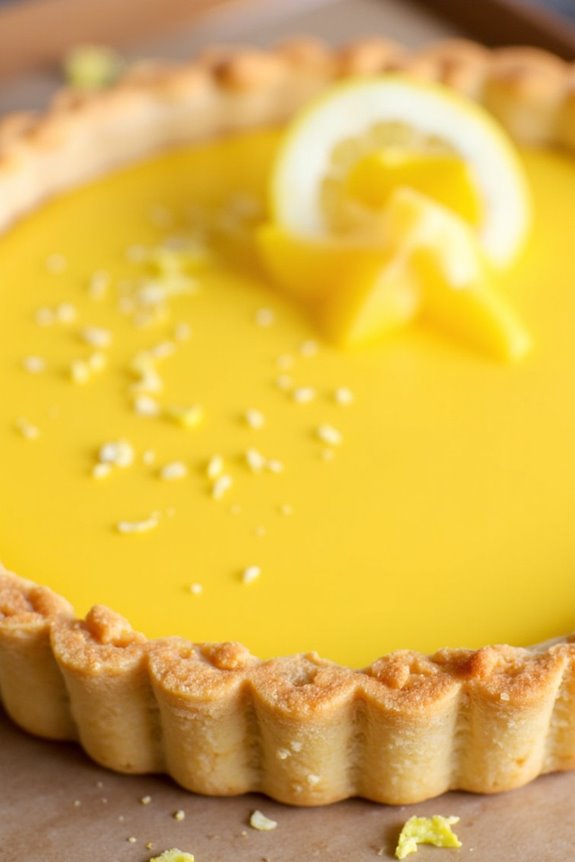
Tarte Au Citron, or Lemon Tart, is a classic French dessert that combines a buttery, flaky crust with a smooth, tangy lemon curd filling. This delightful dessert is a perfect balance of sweet and tart flavors, making it a rejuvenating end to any meal. The bright, zesty lemon filling is complemented by the rich, crisp pastry, leaving a memorable impression on the palate.
Whether served at a casual gathering or a formal dinner, Tarte Au Citron is sure to impress your guests with its elegant simplicity and vibrant taste.
To make this delectable dessert, you’ll begin by preparing a shortcrust pastry shell, which forms the base of the tart. The rich pastry is baked to a golden brown before being filled with a luscious lemon curd made from fresh lemon juice, sugar, eggs, and butter. The curd is cooked gently until thickened, then poured into the cooled crust to set. The result is a stunning tart with a smooth, glossy surface and a burst of citrus flavor in every bite.
This recipe serves 4-6 people, making it perfect for sharing with family and friends.
Ingredients:
- 1 ¼ cups all-purpose flour
- ½ cup unsalted butter, chilled and diced
- ¼ cup powdered sugar
- 1 egg yolk
- 1-2 tablespoons cold water
- 1 cup granulated sugar
- 3 eggs
- 1 tablespoon grated lemon zest
- ½ cup fresh lemon juice (from about 3-4 lemons)
- ½ cup unsalted butter, softened
Instructions:
- Prepare the Pastry: In a medium bowl, combine the flour and powdered sugar. Add the diced, chilled butter and rub it into the flour mixture with your fingertips until it resembles breadcrumbs. Add the egg yolk and 1 tablespoon of cold water. Mix until the dough comes together, adding more water if necessary. Form the dough into a disk, wrap in plastic wrap, and refrigerate for at least 30 minutes.
- Blind Bake the Crust: Preheat your oven to 375°F (190°C). Roll out the chilled pastry dough on a floured surface to fit a 9-inch tart pan. Gently press the dough into the pan and trim the edges. Line the pastry with parchment paper and fill with pie weights or dried beans. Bake for 15 minutes, then remove the weights and parchment. Bake for another 10 minutes or until the crust is golden brown. Allow the crust to cool completely.
- Make the Lemon Curd: In a medium saucepan, whisk together the granulated sugar, eggs, lemon zest, and lemon juice. Cook over medium heat, stirring constantly, until the mixture thickens and coats the back of a spoon (about 10 minutes). Remove from heat and stir in the softened butter until fully incorporated.
- Fill and Set the Tart: Pour the warm lemon curd into the cooled pastry shell. Smooth the surface with a spatula. Let the tart sit at room temperature until the curd sets, or refrigerate for an hour before serving.
- Serve: Once set, slice the tart and serve each piece with a dollop of whipped cream or a sprinkle of powdered sugar, if desired.
Extra Tips:
For a perfectly smooth lemon curd, make sure to stir constantly while cooking to prevent curdling. If you notice any lumps, you can strain the curd through a fine-mesh sieve before filling the tart shell.
Additionally, when rolling out the pastry, work quickly to prevent the butter from melting, which can lead to a tough crust. If you prefer a sweeter tart, you can adjust the sugar in the lemon curd to taste.
Finally, for added flair, decorate the top of the tart with thin slices of lemon or a sprinkle of lemon zest before serving.
Macarons: The Colorful Almond Meringue Confections

Macarons are a quintessentially French pastry that have become beloved worldwide for their delicate, crisp exterior and chewy interior. These colorful confections are made from almond flour, egg whites, and sugar, and are often filled with a rich buttercream, ganache, or jam.
While they may appear intimidating at first, with a bit of practice, you can master the art of creating these delightful treats right in your own kitchen. Perfect for any occasion, macarons aren’t only delicious but also visually stunning, making them a favorite for both serving and gifting.
To make macarons, it’s important to follow the recipe carefully and measure your ingredients precisely. Patience and attention to detail are key when it comes to achieving the perfect texture and flavor balance. This recipe yields about 20-24 macarons, perfect for serving a group of 4-6 people. The process involves making the meringue shells and preparing a luscious filling of your choice. With this guide, you’ll be able to impress your friends and family with these elegant French treats.
Ingredients:
- 200g powdered sugar
- 100g almond flour
- 120g egg whites (about 4 large eggs, room temperature)
- 100g granulated sugar
- A pinch of salt
- Food coloring (optional)
- 150g unsalted butter, softened
- 100g powdered sugar (for filling)
- 1 teaspoon vanilla extract or other flavoring of choice
Instructions:
- Prepare the Baking Sheets: Line two baking sheets with parchment paper or silicone baking mats. If desired, draw circles on the parchment paper as a guide for piping the macarons.
- Sift Dry Ingredients: In a bowl, sift together the powdered sugar and almond flour to guarantee there are no lumps. This will create a smooth macaron shell.
- Make the Meringue: In a clean, dry mixing bowl, whisk the egg whites and a pinch of salt until they begin to foam. Gradually add the granulated sugar while continuing to whisk until stiff peaks form. If using food coloring, add it at this stage, mixing until the color is even.
- Combine Ingredients: Gently fold the almond flour mixture into the meringue using a spatula. Be careful not to deflate the meringue. The batter should be smooth and have a lava-like consistency.
- Pipe the Macarons: Transfer the batter into a piping bag fitted with a round tip. Pipe small, even circles onto the prepared baking sheets, leaving space between each macaron. Tap the baking sheets gently on the counter to release any air bubbles.
- Rest the Shells: Allow the piped macarons to rest at room temperature for 30-60 minutes, or until a skin forms on the surface. This is essential for forming the signature macaron “feet” during baking.
- Bake the Macarons: Preheat your oven to 300°F (150°C). Bake the macarons for 15-18 minutes, rotating the baking sheets halfway through. The macarons should rise slightly and form feet.
- Cool the Shells: Allow the macarons to cool completely on the baking sheets before gently removing them.
- Prepare the Filling: In a mixing bowl, beat the softened butter until creamy. Gradually add the powdered sugar and vanilla extract, continuing to beat until smooth and fluffy.
- Assemble the Macarons: Pair the macaron shells by size. Pipe the filling onto the flat side of one shell and sandwich it with another.
- Mature the Macarons: For the best flavor and texture, refrigerate the assembled macarons in an airtight container for at least 24 hours before serving.
Extra Tips:
Achieving the perfect macaron requires precision and patience. Always measure your ingredients by weight for accuracy. The meringue should be stiff and glossy before folding in the dry ingredients.
Resting the piped macarons is essential for achieving the characteristic feet, so don’t skip this step. If using food coloring, use gel-based colors to avoid altering the batter consistency.
Finally, allow your macarons to mature for at least a day after assembly; this enhances their flavor and creates the ideal chewy texture. Enjoy your macarons at room temperature for the best experience.
Baba Au Rhum: a Rum-Soaked Cake Experience
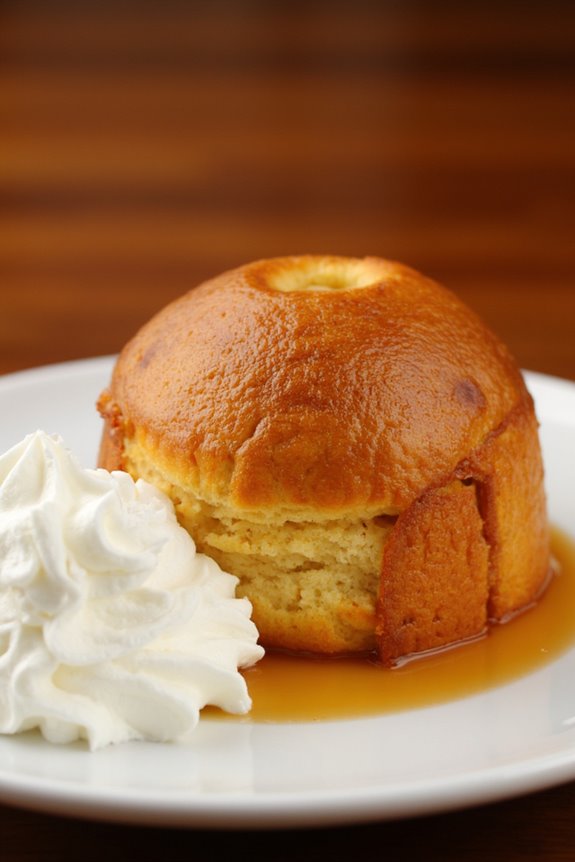
Baba Au Rhum is a classic French dessert that combines the light, airy texture of a yeast cake with the rich, aromatic flavors of rum. Originating from Eastern Europe, this dessert quickly became a staple in French patisseries due to its unique preparation method and irresistible taste.
The cake itself is a delicate, brioche-like dough that’s baked until golden brown and then generously soaked in a rum syrup, giving it its signature moistness and boozy allure. Often served with a dollop of whipped cream or pastry cream, Baba Au Rhum is a delightful treat that captures the essence of indulgence in every bite.
To master the art of creating this exquisite dessert, it’s essential to pay attention to the balance of flavors and textures. The cake should be light and fluffy, while the rum syrup must be potent enough to infuse the cake with its distinct flavor without overpowering it.
This recipe is designed to serve 4-6 people, making it perfect for a small gathering or a special occasion. By following these instructions, you’ll be able to recreate this French classic at home and impress your guests with a dessert that’s as authentic as it’s delicious.
Ingredients (Serves 4-6)
- 1 cup all-purpose flour
- 2 tablespoons sugar
- 1/4 teaspoon salt
- 1 packet (2 1/4 teaspoons) active dry yeast
- 2 large eggs, room temperature
- 1/4 cup whole milk, warmed
- 5 tablespoons unsalted butter, melted
- 1/2 cup water
- 1/2 cup sugar
- 1/2 cup dark rum
- 1 teaspoon vanilla extract
- Whipped cream or pastry cream, for serving
Cooking Instructions
- Prepare the Yeast Mixture: In a small bowl, dissolve the yeast in the warm milk. Allow it to sit for about 5 minutes until it becomes frothy, indicating the yeast is activated.
- Mix Dry Ingredients: In a large mixing bowl, combine the flour, sugar, and salt. Make a well in the center of the dry ingredients.
- Combine Wet Ingredients: Add the eggs and melted butter to the yeast mixture, then pour this into the well of the dry ingredients. Mix until the dough is smooth and elastic.
- First Rise: Cover the bowl with a clean kitchen towel and let the dough rise in a warm place for about 1 hour, or until it has doubled in size.
- Prepare the Baking Mold: Preheat your oven to 375°F (190°C). Grease a bundt pan or individual baba molds with butter.
- Shape and Second Rise: Punch down the risen dough and transfer it to the prepared mold(s). Cover again and let rise for another 30 minutes until slightly puffed.
- Bake the Cake: Bake in the preheated oven for 20-25 minutes, or until the cake is golden brown and a toothpick inserted into the center comes out clean. Remove from the oven and let cool slightly.
- Make the Rum Syrup: While the cake is baking, combine the water and sugar in a saucepan over medium heat. Stir until the sugar dissolves, then remove from heat and stir in the rum and vanilla extract.
- Soak the Cake: Once the cake is cool enough to handle, remove it from the mold and place it on a serving dish. Gradually pour the rum syrup over the cake, allowing it to absorb the liquid until fully soaked.
- Serve: Slice the baba and serve with a generous dollop of whipped cream or pastry cream.
Extra Tips
For the best results, confirm that all your ingredients are at room temperature before you begin. This will help the dough rise more effectively.
Additionally, if you prefer a stronger rum flavor, you can increase the amount of rum in the syrup according to your taste. When pouring the syrup over the cake, do so slowly and evenly to confirm thorough absorption.
If making this dessert in advance, it can be stored in the fridge for a day and served cold or slightly warmed.
Paris-Brest: A Nutty, Creamy Bicycle Wheel Dessert
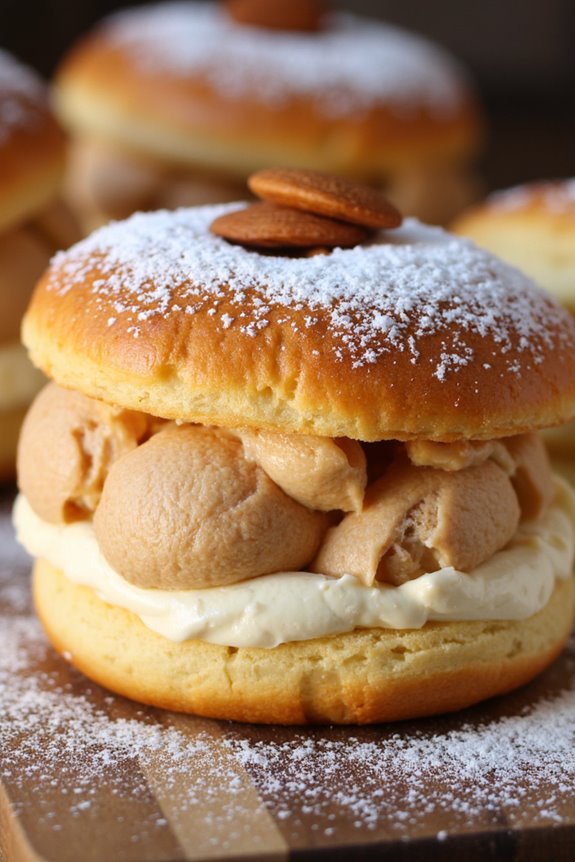
Paris-Brest is a classic French dessert named after the Paris-Brest-Paris bicycle race, with its circular shape designed to mimic a bicycle wheel. This delectable pastry is made from choux dough, filled with a rich praline-flavored cream, and often topped with slivered almonds and a dusting of powdered sugar. The combination of the airy pastry and the nutty, creamy filling creates a dessert that’s both indulgent and satisfying, making it a favorite among pastry lovers.
The Paris-Brest is a representation of the elegance and precision of French patisserie. While it may seem intricate, this dessert is achievable in your home kitchen with a bit of patience and care. The key to mastering Paris-Brest lies in getting the choux pastry just right and preparing a smooth, flavorful praline cream. When made correctly, this dessert is sure to impress your family and friends, offering a taste of classic French culinary artistry.
Ingredients (for 4-6 servings):
- 1 cup water
- 1/2 cup unsalted butter
- 1/4 teaspoon salt
- 1 tablespoon sugar
- 1 cup all-purpose flour
- 4 large eggs
- 1 cup heavy cream
- 1/2 cup praline paste
- 1/4 cup powdered sugar
- 1 teaspoon vanilla extract
- Slivered almonds for topping
- Additional powdered sugar for dusting
Instructions:
- Preheat the Oven: Begin by preheating your oven to 375°F (190°C). Line a baking sheet with parchment paper. Draw an 8-inch circle on the parchment as a guide for piping the choux pastry.
- Prepare the Choux Pastry: In a medium saucepan, combine the water, butter, salt, and sugar. Bring to a boil over medium heat. Once boiling, remove from heat and add the flour all at once. Stir vigorously until the mixture forms a ball and pulls away from the sides of the pan.
- Add the Eggs: Allow the dough to cool for a few minutes. Then, add the eggs one at a time, beating well after each addition until the dough is smooth and glossy. Transfer the dough to a piping bag fitted with a large round tip.
- Pipe the Dough: Pipe the dough onto the prepared baking sheet, following the circle guide to form a ring. Pipe a second layer on top of the first ring, guaranteeing a sturdy structure.
- Bake the Choux Ring: Sprinkle slivered almonds over the top of the dough. Bake in the preheated oven for 30-35 minutes, or until the pastry is puffed and golden brown. Allow it to cool completely on a wire rack.
- Make the Praline Cream: In a mixing bowl, whip the heavy cream with the powdered sugar and vanilla extract until soft peaks form. Gently fold in the praline paste until well combined.
- Assemble the Paris-Brest: Slice the choux ring horizontally with a serrated knife. Pipe or spoon the praline cream generously onto the bottom half of the ring. Replace the top half of the pastry.
- Finish and Serve: Dust the assembled Paris-Brest with powdered sugar before serving. Enjoy this nutty, creamy treat as a delightful ending to any meal.
Extra Tips:
When making choux pastry, it’s essential to verify that the dough is neither too wet nor too dry, as this can affect the pastry’s ability to rise properly.
The praline paste can be purchased at specialty stores or made at home by grinding toasted nuts and caramelized sugar until smooth.
Also, for the best results, assemble the Paris-Brest shortly before serving to maintain the pastry’s crispness. If you find the praline cream too sweet, adjust the sugar content to your liking.
