

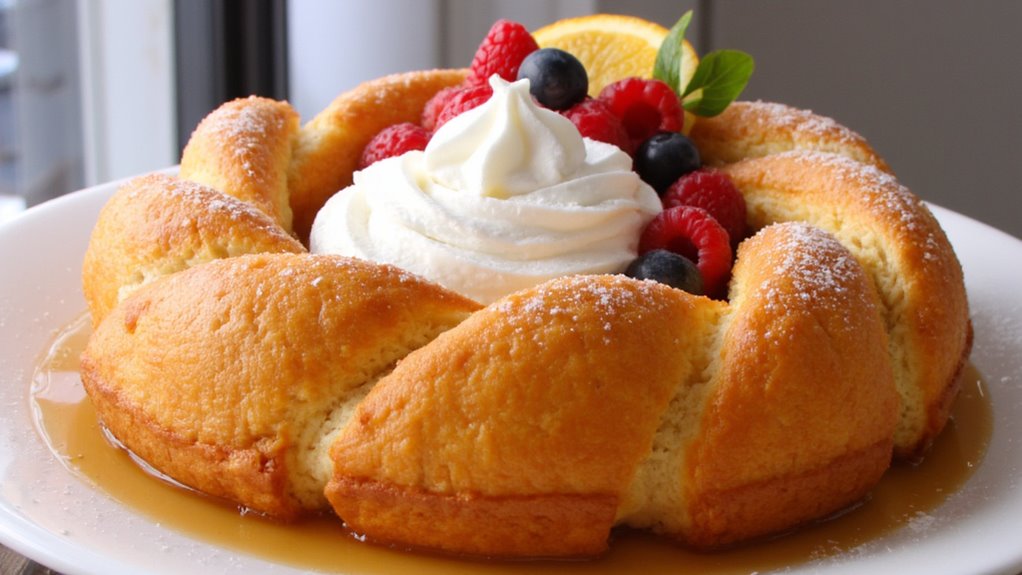
There’s something special about trying your hand at classic French patisserie recipes right in your own kitchen. From the inviting aroma of freshly baked croissants to the satisfaction of a perfectly crisp macaron shell, each recipe offers a little taste of France. These delightful treats, like richly filled éclairs and buttery tarte tatin, are a joy to recreate. Join me in exploring these legendary recipes. Let’s bring a bit of French sweetness into our homes.
Éclairs
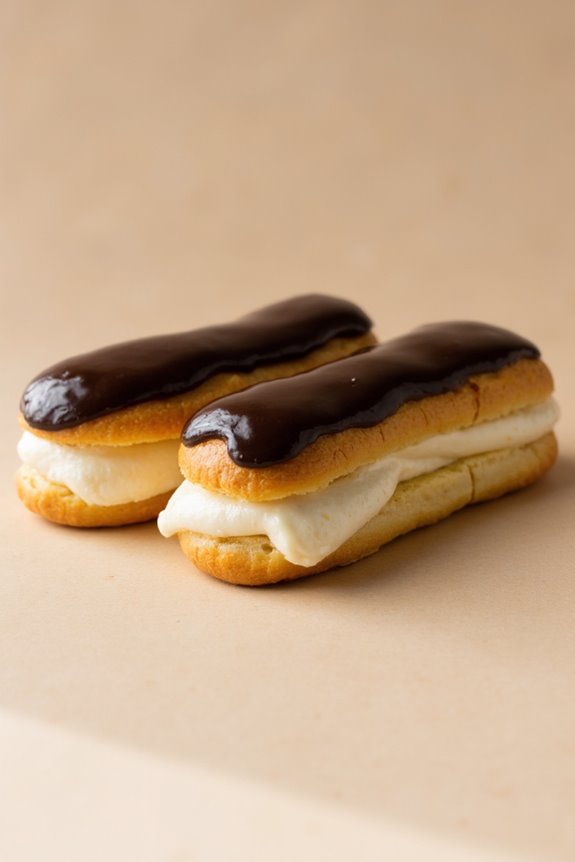
Éclairs are a quintessential delight in the world of French patisserie, known for their delicate choux pastry shell filled with rich pastry cream and topped with a glossy chocolate glaze. Originating in France during the 19th century, éclairs have become a global favorite, appreciated for their light texture contrasted with the creamy filling.
Making éclairs from scratch involves creating three main components: the choux pastry, the pastry cream filling, and the chocolate glaze. Each element contributes to the éclairs’ distinctive taste and appearance, making them a perfect choice for impressing guests or treating yourself to a special dessert.
Creating éclairs at home might seem intimidating, but with a bit of practice and patience, you can master this classic French dessert. The key is to guarantee the choux pastry puffs up perfectly, the pastry cream is smooth and flavorful, and the chocolate glaze has a glossy finish.
By following the steps precisely, you’ll be able to produce éclairs that rival those from a professional patisserie. This recipe will guide you through the process to make éclairs that serve 4-6 people, perfect for a small gathering or family treat.
Ingredients (Serves 4-6)
- Choux Pastry:
- 1 cup water
- 1/2 cup unsalted butter
- 1 cup all-purpose flour
- 4 large eggs
- 1/4 tsp salt
- Pastry Cream:
- 2 cups whole milk
- 1/2 cup granulated sugar
- 1/4 cup cornstarch
- 4 large egg yolks
- 1 tsp vanilla extract
- 2 tbsp unsalted butter
- Chocolate Glaze:
- 1/2 cup heavy cream
- 4 oz dark chocolate, chopped
- 1 tbsp unsalted butter
Cooking Instructions
- Prepare the Choux Pastry:
- Preheat the oven to 425°F (220°C) and line a baking sheet with parchment paper.
- In a medium saucepan, combine water, butter, and salt. Bring to a boil over medium heat.
- Reduce heat to low, add flour, and stir vigorously until the mixture forms a ball and pulls away from the sides of the pan.
- Transfer the dough to a mixing bowl. Allow it to cool slightly, then beat in eggs one at a time until the dough is smooth and glossy.
- Transfer the dough to a piping bag fitted with a large round tip. Pipe 4-inch long strips onto the prepared baking sheet.
- Bake for 15 minutes, then reduce the temperature to 375°F (190°C) and bake for another 20 minutes until golden brown. Cool on a wire rack.
- Make the Pastry Cream:
- In a saucepan, heat milk until it begins to simmer. In a separate bowl, whisk together sugar, cornstarch, and egg yolks until smooth.
- Gradually pour the hot milk into the egg mixture, whisking constantly, then return the mixture to the saucepan.
- Cook over medium heat, stirring constantly, until it thickens and comes to a boil. Remove from heat, stir in vanilla and butter.
- Cover with plastic wrap directly on the surface and refrigerate until cool.
- Prepare the Chocolate Glaze:
- In a small saucepan, heat cream until it starts to simmer. Remove from heat and add chopped chocolate and butter.
- Stir until the mixture is smooth and glossy.
- Assemble the Éclairs:
- Once the choux pastry is cooled, cut each éclair in half lengthwise.
- Fill a piping bag with the chilled pastry cream and pipe into the bottom halves of the éclairs.
- Dip the top halves in the chocolate glaze and place them on top of the filled halves.
- Serve and Enjoy:
- Allow the éclairs to set for a few minutes before serving. Enjoy these classic French delights fresh for the best taste and texture.
Extra Tips
When making choux pastry, guarantee that the dough isn’t too hot when you add the eggs; otherwise, they may cook unevenly. For best results with the pastry cream, be sure to whisk continuously to avoid lumps.
The glaze should be used while still warm to guarantee a smooth, even coat. Finally, éclairs are best enjoyed the same day they’re made, as the choux pastry can soften if stored for too long. If you need to store them, keep the components separate and assemble just before serving.
Croissants
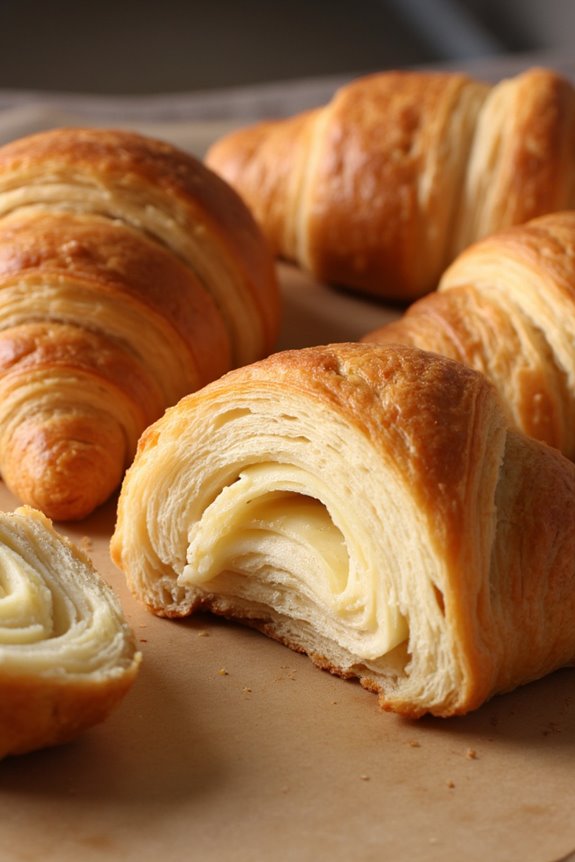
Creating croissants from scratch is a labor of love that results in flaky, buttery layers that melt in your mouth. Originating from Vienna but perfected by French pâtissiers, croissants are a staple of French bakeries and a beloved breakfast treat around the world. The process involves laminating dough with butter to create multiple layers, a technique that requires time and patience. As you commence on this culinary journey, prepare yourself for the delightful aroma of freshly baked croissants wafting through your kitchen.
To achieve the perfect croissant, make sure you have a cool environment, as warmer temperatures can cause the butter to melt too quickly, compromising the layers. This recipe will yield 12 croissants, sufficient for 4-6 people. While the preparation takes a couple of days, the results are worth every minute spent. Ready to impress your family and friends with your pastry skills? Let’s get started!
Ingredients for 4-6 servings:
- 500g strong white bread flour
- 10g salt
- 80g sugar
- 10g instant yeast
- 300ml cold water
- 300g unsalted butter (for laminating)
- 1 egg (for egg wash)
Instructions:
- Prepare the Dough:
- In a large mixing bowl, combine the flour, salt, and sugar. Mix well.
- Add the yeast to one side of the bowl, making sure it doesn’t touch the salt directly, as salt can inhibit yeast activity.
- Pour in the cold water and mix the ingredients until a rough dough forms.
- Knead the dough for about 10 minutes until smooth and elastic. Form it into a rectangle, wrap it in plastic, and refrigerate for at least 1 hour.
- Prepare the Butter Block:
- While the dough rests, shape the 300g of butter into a flat rectangular block, approximately 15cm x 20cm.
- Wrap the butter block in parchment paper and chill until firm but pliable, about 20-30 minutes.
- Laminate the Dough:
- On a lightly floured surface, roll out the chilled dough into a rectangle, roughly 30cm x 60cm.
- Place the butter block in the center of the dough, folding the dough edges over the butter like an envelope.
- Roll the dough out gently into a long rectangle, approximately 20cm x 60cm.
- Fold the top third of the dough down to the center and the bottom third up over it, like folding a letter. Turn the dough 90 degrees, roll it out again, and perform another fold. Wrap in plastic and chill for 1 hour. Repeat this process two more times, making certain a total of three folds, with chill time in between each.
- Shape the Croissants:
- After the final chilling, roll the dough out into a large rectangle, about 30cm x 100cm.
- Cut the dough into triangles with bases of about 12cm.
- To shape each croissant, stretch the triangle slightly and roll it up from the base to the tip, tucking the tip under the roll.
- Proof the Croissants:
- Place the shaped croissants on a baking tray lined with parchment paper, leaving space between them.
- Cover them loosely with plastic wrap and let them proof at room temperature until doubled in size, approximately 1-2 hours.
- Bake the Croissants:
- Preheat your oven to 200°C (390°F).
- Brush each croissant with beaten egg for a glossy finish.
- Bake for 15-20 minutes or until golden brown and crisp.
- Allow them to cool slightly on a wire rack before serving.
Extra Tips:
For best results, make sure your kitchen is cool, ideally around 18°C (65°F), to keep the butter from melting too quickly during the lamination process. If your environment is warmer, chill the dough more frequently.
Patience is key with croissants; don’t rush the proofing stage as it’s essential for achieving the light, airy layers. Finally, experiment with fillings such as almond paste or chocolate for a delicious variation on the classic plain croissant.
Macarons
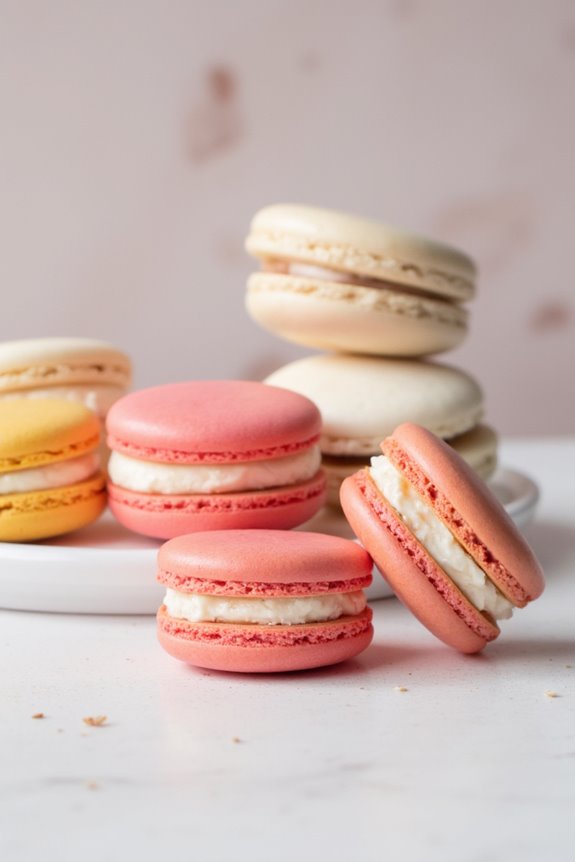
Macarons are a quintessential part of French patisserie, known for their delicate textures and delightful flavors. These elegant confections consist of two almond meringue cookies that are sandwiched together with a creamy filling. While they may seem intimidating at first, with a bit of patience and practice, you can master the art of creating these beautiful and delicious treats. Perfect for any occasion, macarons come in a variety of flavors and colors, allowing you to customize them to your liking.
A successful macaron is characterized by its smooth, shiny shell and a chewy interior. Achieving the perfect macaron requires precision and attention to detail, especially when it comes to measuring the ingredients and monitoring the baking process. This recipe will guide you through each step, guaranteeing you produce macarons that not only taste divine but also look like they came straight from a Parisian bakery.
Ingredients (Serves 4-6):
- 100g almond flour
- 100g powdered sugar
- 75g egg whites (about 2 large eggs), aged overnight
- 50g granulated sugar
- A pinch of salt
- Gel food coloring (optional)
- 100g unsalted butter, softened
- 150g powdered sugar (for filling)
- 1 tsp vanilla extract (or other flavor, to taste)
Cooking Instructions:
- Prepare the Dry Ingredients:
- Sift the almond flour and powdered sugar together into a large bowl to guarantee there are no lumps. This will give the macarons a smooth texture.
- Make the Meringue:
- In a clean, dry bowl, beat the egg whites on low speed until they start to foam. Gradually increase the speed to medium and add the granulated sugar and a pinch of salt. Continue beating until you achieve stiff, glossy peaks. If using, add a few drops of gel food coloring at this stage and mix until evenly incorporated.
- Combine the Ingredients:
- Gently fold the sifted dry ingredients into the meringue using a spatula. This process, known as “macaronage,” requires careful folding to achieve a batter that has a lava-like consistency. A good test is to let the batter fall off the spatula in ribbons and see if it blends back into the rest of the batter within about 10 seconds.
- Pipe the Macarons:
- Transfer the batter to a piping bag fitted with a round tip. Pipe small, even circles onto a baking sheet lined with parchment paper or a silicone mat. Tap the baking sheet gently on the counter to release any air bubbles. Let them sit at room temperature until they form a skin, about 30-60 minutes.
- Bake the Macarons:
- Preheat the oven to 300°F (150°C). Bake the macarons for 15-18 minutes, rotating the pan halfway through to guarantee even baking. The macarons should have risen slightly and developed their characteristic “feet.”
- Prepare the Filling:
- While the macarons cool, beat the softened butter until creamy. Gradually add the powdered sugar and vanilla extract, mixing until smooth and fluffy.
- Assemble the Macarons:
- Once the macarons are completely cool, pair them by size. Pipe a small amount of filling onto the flat side of one macaron shell and gently press the matching shell on top to create a sandwich.
Extra Tips:
Getting the perfect macaron texture can be tricky, but don’t be discouraged if they don’t turn out perfect the first time. Aging the egg whites by leaving them uncovered in the refrigerator overnight helps in achieving better volume in the meringue.
Also, guarantee your mixing bowl and utensils are completely grease-free. Humidity can affect macarons, so choose a dry day to bake or use a dehumidifier in your kitchen. Finally, allow the macarons to mature in the refrigerator for 24 hours before serving, as this enhances their flavor and texture.
Tarte Tatin
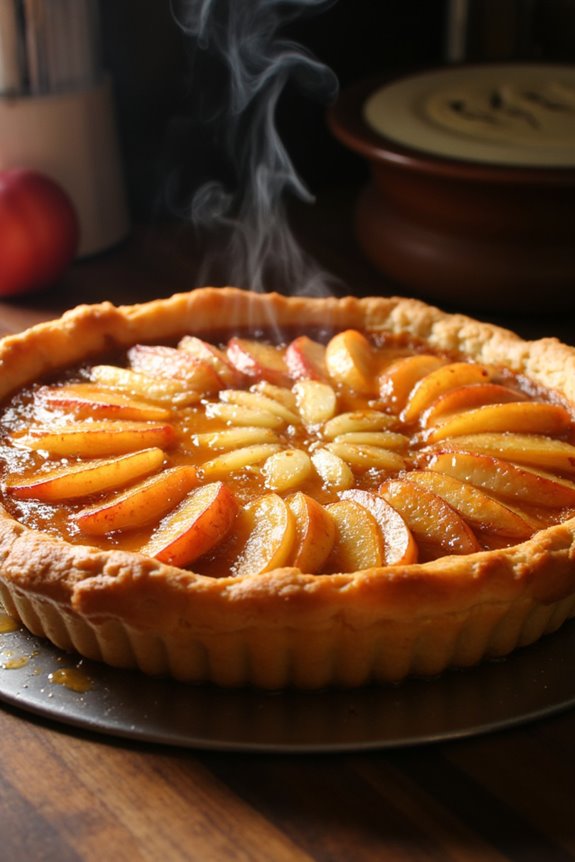
Tarte Tatin is a quintessential French dessert that embodies the beauty of simplicity and the magic of caramelization. This upside-down caramelized apple tart was serendipitously created by the Tatin sisters in the late 19th century as a delightful accident. At its core, Tarte Tatin is a harmonious blend of buttery pastry and tender apples cooked in a luscious caramel sauce, offering a perfect balance of sweet and tart flavors.
The combination of textures—from the crisp pastry to the soft, caramel-coated apples—makes it a show-stopping dessert that’s surprisingly easy to make at home. The charm of Tarte Tatin lies in its rustic presentation and the depth of flavor that develops from caramelizing the apples. Traditionally, this dish is made with a shortcrust pastry, but puff pastry is often used for a flakier result.
The apples are cooked in butter and sugar until they reach a beautiful golden brown, then topped with pastry and baked to create a cohesive tart. Once baked, the tart is inverted onto a serving plate, revealing a glistening layer of caramelized apples that’s sure to impress both the eyes and the palate.
Ingredients for Tarte Tatin (serves 4-6):
- 6 large firm apples (such as Granny Smith or Honeycrisp)
- 1 cup granulated sugar
- 1/2 cup unsalted butter
- 1 sheet of puff pastry (or homemade shortcrust pastry)
- 1 tablespoon lemon juice
- A pinch of salt
- All-purpose flour (for dusting)
Cooking Instructions:
- Prepare the Apples: Peel, core, and quarter the apples. Toss them with lemon juice to prevent browning and set aside.
- Make the Caramel: In a 9-inch ovenproof skillet, melt the butter over medium heat. Add sugar and a pinch of salt, stirring until it dissolves and begins to caramelize to a rich golden color. This should take about 8-10 minutes. Be careful not to burn the caramel.
- Arrange the Apples: Once the caramel is ready, carefully arrange the apple quarters in a circular pattern over the caramel, rounded side down. The apples should fit snugly in the pan.
- Cook the Apples: Let the apples cook in the caramel for about 10-15 minutes, turning them occasionally, until they start to soften and become golden brown.
- Prepare the Pastry: Roll out the puff pastry on a lightly floured surface until it’s slightly larger than the skillet. Prick the pastry all over with a fork to prevent it from puffing up too much.
- Cover the Apples: Carefully place the pastry over the apples in the skillet, tucking the edges down around the fruit.
- Bake the Tart: Preheat your oven to 375°F (190°C). Transfer the skillet to the oven and bake for 25-30 minutes, or until the pastry is golden brown and crisp.
- Invert the Tart: Remove the skillet from the oven and let it cool for about 5 minutes. Carefully invert the tart onto a serving plate, confirming all caramel and apples are transferred.
- Serve: Allow the tart to cool slightly before serving warm, possibly with a dollop of crème fraîche or vanilla ice cream.
Extra Tips:
When making Tarte Tatin, it’s essential to choose the right type of apple; firm varieties like Granny Smith or Honeycrisp hold up well during cooking and contribute to a lovely tartness that complements the caramel.
Be cautious with the caramel, as it can quickly turn from perfect to burnt; keep a watchful eye and stir gently. If using puff pastry, make sure it’s thawed but still cold, as this helps it rise crisply in the oven.
Finally, take care when inverting the tart, as the caramel will be hot and may splatter slightly.
Madeleines
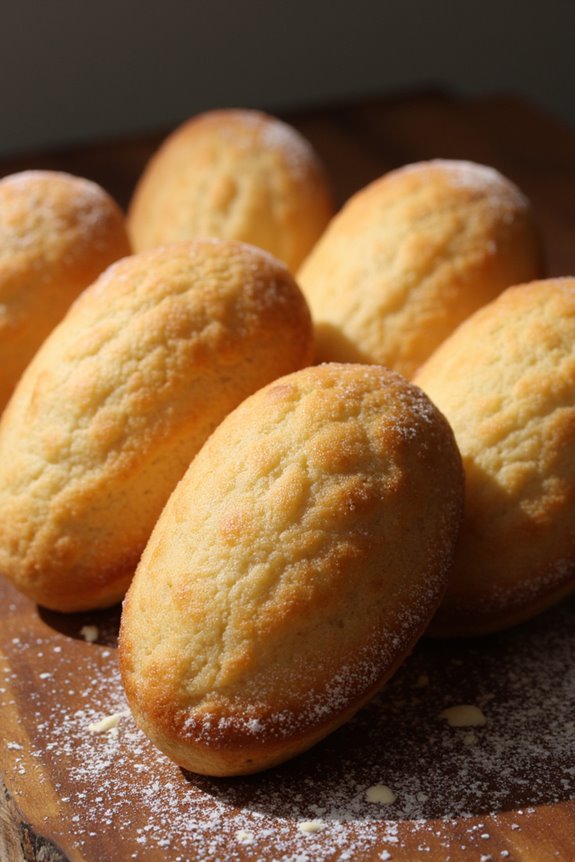
Madeleines are a quintessential French pastry, known for their unique shell-like shape and delicate, buttery flavor. These small sponge cakes are a delightful treat, often enjoyed with a cup of tea or coffee.
Originating from the Lorraine region of France, madeleines have captured the hearts and taste buds of dessert lovers around the world. Their light and airy texture, combined with a hint of lemon or vanilla, makes them a versatile and elegant addition to any dessert spread.
The process of making madeleines involves creating a batter that’s allowed to rest, guaranteeing the cakes achieve their signature hump during baking. This classic recipe will guide you through the steps to create perfect madeleines for a serving size of 4 to 6 people.
Whether you’re a novice baker or a seasoned pastry chef, this recipe provides a wonderful opportunity to explore the art of French patisserie.
Ingredients (for 4-6 servings):
- 1 cup all-purpose flour
- 1/2 teaspoon baking powder
- 2 large eggs
- 1/2 cup granulated sugar
- 1 teaspoon vanilla extract
- Zest of 1 lemon
- 1/2 cup unsalted butter, melted and cooled
- A pinch of salt
- Powdered sugar for dusting (optional)
Cooking Instructions:
- Prepare the Batter:
- In a bowl, whisk together the flour, baking powder, and salt. Set aside.
- In another bowl, beat the eggs and granulated sugar using an electric mixer on medium speed until the mixture is pale and thick, about 5 minutes.
- Gently fold in the vanilla extract and lemon zest into the egg mixture.
- Combine Ingredients:
- Gradually add the dry ingredients into the wet mixture, stirring gently until just combined.
- Slowly incorporate the melted butter into the batter, folding carefully to maintain the airy texture.
- Rest the Batter:
- Cover the bowl with plastic wrap and refrigerate the batter for at least 1 hour, or overnight. This resting period is essential for the madeleines to develop their traditional hump during baking.
- Prepare the Molds:
- Preheat the oven to 375°F (190°C). Grease the madeleine molds with butter and lightly dust with flour, tapping out the excess.
- Bake the Madeleines:
- Spoon the rested batter into the prepared molds, filling each cavity about 3/4 full. Avoid overfilling as the batter will expand during baking.
- Bake for 10-12 minutes or until the edges are golden brown and the centers spring back when lightly touched.
- Cool and Serve:
- Remove the madeleines from the oven and let them cool in the molds for a few minutes before gently transferring them to a wire rack to cool completely.
- Dust with powdered sugar before serving, if desired.
Extra Tips:
To guarantee your madeleines have the best texture, it’s important to not overmix the batter after adding the dry ingredients. Overmixing can lead to denser cakes.
Additionally, resting the batter is vital for achieving the classic hump. If you don’t have a madeleine pan, a mini muffin tin can be used as an alternative, though the shape will differ.
Finally, madeleines are best enjoyed fresh, but they can be stored in an airtight container for a couple of days.
Mille-Feuille
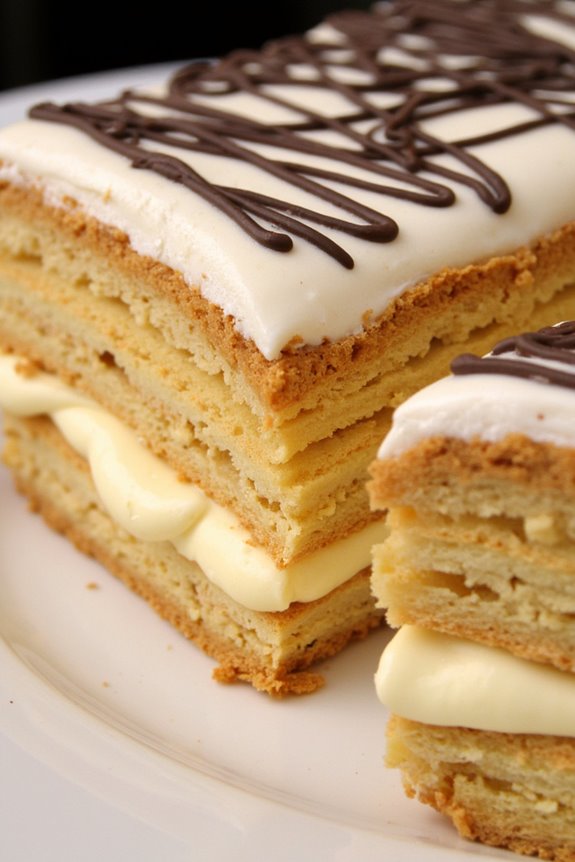
Mille-Feuille, also known as Napoleon, is a classic French pastry that’s both elegant and indulgent. This dessert comprises layers of flaky puff pastry, luscious pastry cream, and a delicate icing topping. The combination of textures—the crispness of the pastry and the creaminess of the filling—creates a harmonious balance that’s sure to delight dessert lovers.
Mille-Feuille is a show-stopper, perfect for impressing guests at any gathering, from casual brunches to sophisticated dinner parties.
Creating Mille-Feuille at home allows you to appreciate the art of French patisserie. While it may seem intimidating at first, with patience and attention to detail, you can achieve the ideal Mille-Feuille. The key is to use high-quality ingredients and to follow each step meticulously.
The process involves baking the puff pastry to golden perfection, preparing a rich and smooth pastry cream, and assembling the layers with precision. The final touch is a classic glaze that adds a touch of sweetness and elegance to this timeless dessert.
Ingredients (Serving Size: 4-6 people)
- 1 package of store-bought puff pastry (or homemade, if preferred)
- 2 cups whole milk
- 1 vanilla bean, split and scraped (or 1 teaspoon vanilla extract)
- 6 egg yolks
- 1/2 cup granulated sugar
- 1/4 cup all-purpose flour
- 1/4 cup cornstarch
- 1 cup heavy cream, whipped
- 1 cup powdered sugar
- 2 tablespoons milk
- 1/2 teaspoon vanilla extract
- 2 tablespoons dark chocolate, melted (optional, for decoration)
Cooking Instructions
- Prepare the Puff Pastry:
- Preheat the oven to 400°F (200°C). Roll out the puff pastry on a lightly floured surface until it’s about 1/8 inch thick.
- Cut the pastry into three equal rectangles. Place them on a baking sheet lined with parchment paper. Prick the surface with a fork to prevent puffing.
- Place another sheet of parchment paper on top, followed by another baking sheet to weigh the pastry down. Bake for 15-20 minutes until golden brown. Let cool.
- Make the Pastry Cream:
- In a medium saucepan, heat the milk and vanilla bean over medium heat until just simmering. Remove from heat and let it infuse for 10 minutes.
- In a bowl, whisk together the egg yolks and sugar until pale. Add the flour and cornstarch, whisking until smooth.
- Gradually pour the warm milk into the egg mixture, whisking constantly. Return the mixture to the saucepan and cook over medium heat, stirring constantly, until thickened.
- Remove from heat, strain through a fine-mesh sieve, and let cool. Gently fold in the whipped cream.
- Assemble the Mille-Feuille:
- Place one puff pastry rectangle on a serving platter. Spread half of the pastry cream evenly over it. Repeat with the second layer.
- Top with the third puff pastry rectangle.
- Prepare the Icing:
- In a bowl, mix the powdered sugar, milk, and vanilla extract until smooth. Spread the icing over the top layer of puff pastry.
- If desired, drizzle melted chocolate in straight lines across the icing and use a toothpick to create a feathered pattern.
- Chill and Serve:
- Refrigerate the Mille-Feuille for at least 1 hour to allow the layers to set. Slice with a sharp knife and serve chilled.
Extra Tips
For the best results, confirm that your puff pastry is well chilled before baking to achieve ideal flakiness.
If making pastry cream in advance, cover it with plastic wrap pressed directly onto the surface to prevent a skin from forming.
When assembling, use a serrated knife to trim the edges for a neater presentation.
Finally, to make slicing easier, dip your knife in hot water and wipe it clean between each cut. Enjoy your Mille-Feuille fresh, as the pastry tends to absorb moisture over time.
Profiteroles
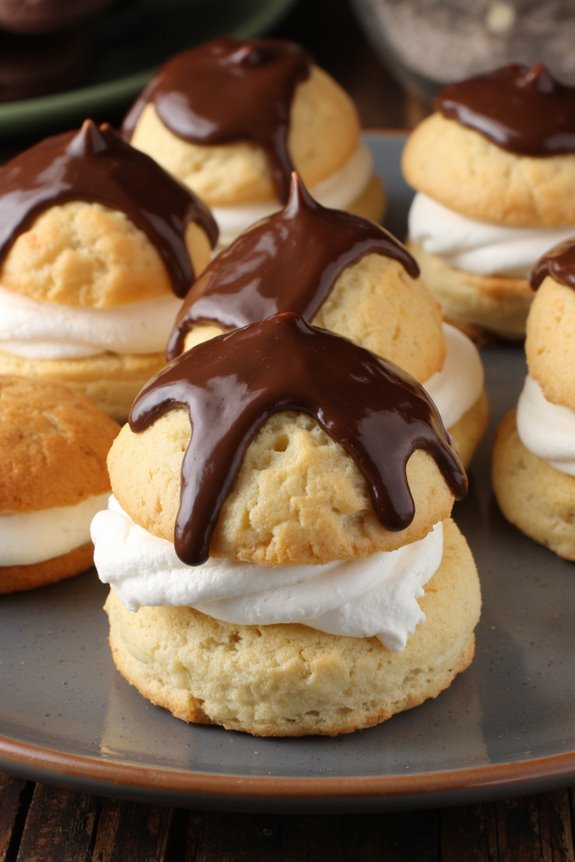
Profiteroles, a delightful and classic treat in French patisserie, are small, delicate choux pastry puffs filled with a luscious cream and often topped with a drizzle of chocolate sauce.
These elegant and light pastries aren’t only a feast for the eyes but also a pleasure for the palate, combining creamy textures with a slight crunch. Perfect for both formal gatherings and casual dessert settings, profiteroles are versatile and can be customized with different fillings and toppings to suit any occasion.
The foundation of a perfect profiterole lies in the choux pastry, a simple yet versatile dough that puffs up beautifully in the oven, creating a hollow center ready to be filled with delicious creams or custards. Traditionally, the filling is a smooth vanilla pastry cream, but variations such as whipped cream or ice cream are also popular.
Once filled, the profiteroles are often elegantly finished with a rich chocolate ganache or a dusting of powdered sugar, making them not only taste divine but look spectacular as well.
Ingredients (serving size: 4-6 people):
- 1 cup water
- 1/2 cup unsalted butter
- 1/4 teaspoon salt
- 1 cup all-purpose flour
- 4 large eggs
- 1 cup heavy cream
- 2 tablespoons sugar
- 1 teaspoon vanilla extract
- 1/2 cup chocolate chips
- 1/4 cup heavy cream (for chocolate sauce)
Cooking Instructions:
- Prepare the Choux Pastry: Preheat your oven to 400°F (200°C). In a medium saucepan, combine water, butter, and salt over medium heat. Bring to a boil, then add the flour all at once. Stir vigorously with a wooden spoon until the mixture forms a smooth ball and pulls away from the sides of the pan.
- Incorporate the Eggs: Remove the pan from heat and let the mixture cool for a few minutes. Add the eggs one at a time, beating well after each addition until the dough is smooth and glossy.
- Shape and Bake: Transfer the dough to a piping bag fitted with a large plain tip. Pipe small mounds (about 1 to 1.5 inches in diameter) onto a baking sheet lined with parchment paper. Bake in the preheated oven for 20-25 minutes, or until the profiteroles are puffed and golden brown. Allow to cool completely on a wire rack.
- Prepare the Filling: In a chilled bowl, whip the heavy cream with sugar and vanilla extract until stiff peaks form. Transfer the whipped cream to a piping bag.
- Fill the Profiteroles: Once the profiteroles are cool, cut a small hole in the bottom of each puff and fill with the whipped cream. Alternatively, slice the profiteroles in half and spoon the cream inside.
- Make the Chocolate Sauce: In a small saucepan, heat the chocolate chips and 1/4 cup heavy cream over low heat, stirring until smooth and shiny.
- Finish the Profiteroles: Drizzle the warm chocolate sauce over the filled profiteroles or dip the tops into the sauce. Serve immediately or chill for an hour before serving.
Extra Tips:
When making the choux pastry, verify that the mixture cools slightly before adding the eggs, as adding them to a very hot dough can cause the eggs to cook prematurely.
It’s also important not to open the oven door during the initial baking period, as this can cause the profiteroles to deflate. For an extra touch, you can sprinkle chopped nuts or powdered sugar over the top for decoration.
If preparing in advance, fill the profiteroles just before serving to maintain their crisp texture.
Opera Cake
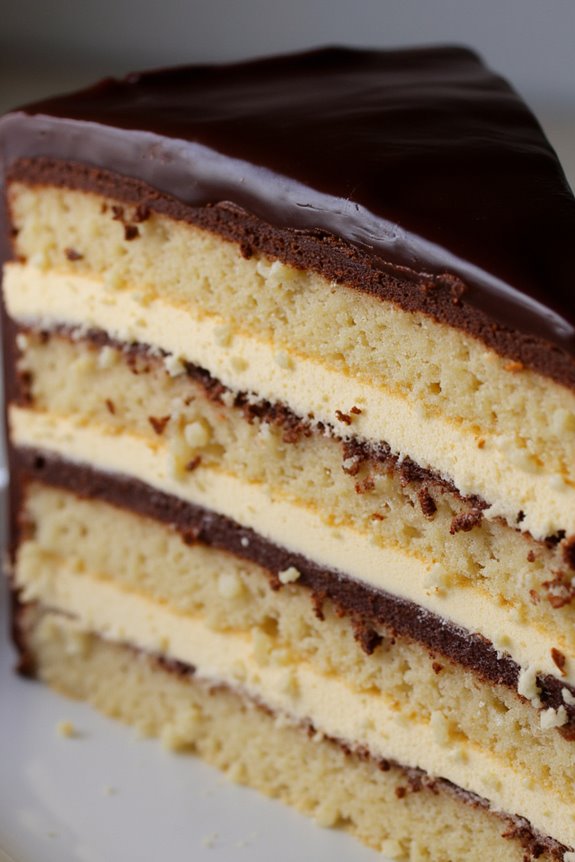
Opera Cake is a classic French dessert that combines layers of almond sponge cake, known as Joconde, with coffee syrup, coffee-flavored buttercream, and a rich chocolate ganache. This elegant and sophisticated cake is believed to have been created in the 1950s and is named after the famous Parisian opera house, Palais Garnier, due to its multi-layered complexity reminiscent of an opera performance.
The Opera Cake demands precision and patience, but the results are a sublime balance of flavors and textures that delight the senses.
To create this luxurious cake, each component must be made separately before being assembled into distinct layers. The Joconde sponge serves as a delicate base that absorbs the coffee syrup, providing the cake with a moist consistency and a subtle coffee flavor. The coffee buttercream adds creaminess and depth, while the chocolate ganache gives a rich, decadent finish.
This recipe is designed for 4-6 people and will guide you through the process to achieve a perfect Opera Cake.
Ingredients for Opera Cake (Serves 4-6)
- For the Joconde Sponge:
- 6 large eggs
- 150g almond flour
- 150g icing sugar
- 40g all-purpose flour
- 40g unsalted butter, melted
- 3 large egg whites
- 30g granulated sugar
- For the Coffee Syrup:
- 100ml water
- 50g granulated sugar
- 2 tablespoons instant coffee granules
- For the Coffee Buttercream:
- 100g unsalted butter, softened
- 150g icing sugar
- 2 tablespoons strong espresso
- For the Chocolate Ganache:
- 200g dark chocolate, chopped
- 200ml heavy cream
- For the Chocolate Glaze:
- 100g dark chocolate, chopped
- 50g unsalted butter
Cooking Instructions
- Prepare the Joconde Sponge:
- Preheat your oven to 220°C (428°F). Line a standard baking sheet with parchment paper.
- In a mixing bowl, whisk together the whole eggs, almond flour, and icing sugar until smooth. Then add the all-purpose flour and melted butter, mixing well.
- In a separate bowl, whisk the egg whites until soft peaks form, gradually adding the granulated sugar until stiff peaks are achieved.
- Gently fold the egg whites into the almond mixture. Spread the batter evenly on the prepared baking sheet.
- Bake for 8-10 minutes or until lightly golden. Allow to cool before cutting into three equal rectangles.
- Make the Coffee Syrup:
- In a small saucepan, bring water, sugar, and coffee granules to a boil. Stir until the sugar is dissolved. Set aside to cool.
- Prepare the Coffee Buttercream:
- Cream the softened butter in a bowl until light and fluffy. Gradually add the icing sugar and beat until smooth. Mix in the espresso until fully combined.
- Create the Chocolate Ganache:
- Heat the heavy cream in a saucepan until it begins to simmer. Pour over the chopped chocolate in a bowl and let it sit for 5 minutes. Stir until smooth. Allow it to cool slightly before use.
- Assemble the Opera Cake:
- Place one rectangle of Joconde sponge on your serving tray. Brush it generously with coffee syrup.
- Spread half of the coffee buttercream evenly over the soaked sponge. Place another layer of Joconde on top, repeat with syrup, and spread the remaining buttercream.
- Top with the final layer of Joconde, brush with syrup, then spread the chocolate ganache evenly over the top. Chill until set.
- Finish with Chocolate Glaze:
- Melt the dark chocolate and butter together over a double boiler. Pour over the chilled cake, spreading evenly with a spatula. Chill again until the glaze is set.
Extra Tips
When making an Opera Cake, precision is key. Confirm your layers are evenly spread and cooled before assembling to prevent sliding.
Use a serrated knife to cut through the cake gently for clean slices. If you prefer a more intense coffee flavor, you can add a touch of coffee liqueur to the syrup.
Allow the cake to set in the refrigerator for at least a couple of hours or overnight for the flavors to meld beautifully. Remember, patience will reward you with a stunning and delicious Opera Cake.
Tarte Au Citron
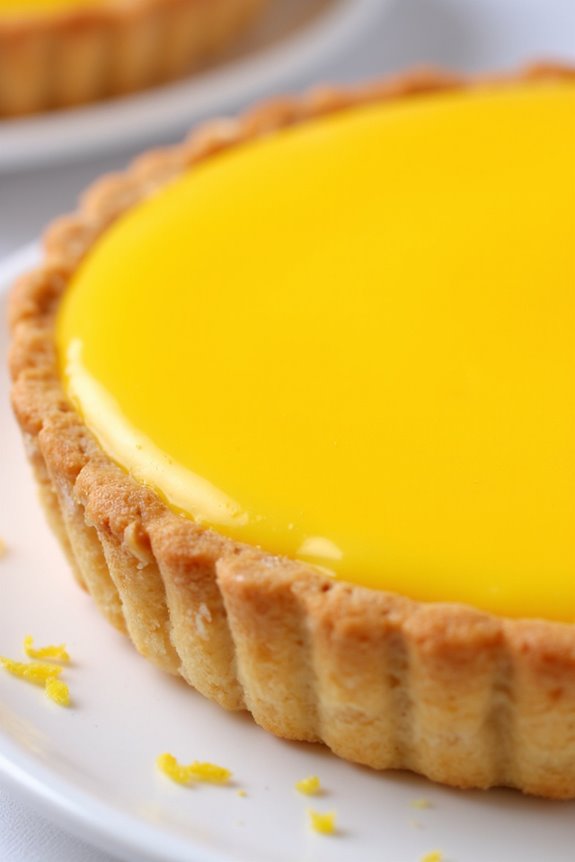
Tarte Au Citron, or Lemon Tart, is a quintessential French dessert known for its bright, tangy lemon flavor combined with a delicate, buttery crust. This classic patisserie treat is a delightful balance of sweet and tart, making it a favorite for dessert lovers around the world.
The smooth, creamy lemon filling paired with the crisp pastry shell creates a harmonious texture that’s as satisfying to the palate as it’s to the eye. Whether served as a revitalizing end to a meal or as a standalone treat, Tarte Au Citron is sure to impress.
To create this delectable dessert, you’ll need to prepare both a pastry shell and a lemon filling. The pastry, known as pâte sucrée, is sweet and tender, providing the perfect complement to the zesty lemon filling. The filling itself is a smooth custard made from lemon juice, eggs, sugar, and butter, cooked to perfection in the oven.
This recipe serves 4-6 people, making it ideal for a small gathering or a special occasion.
Ingredients:
*For the pastry (pâte sucrée):*
- 1 1/4 cups all-purpose flour
- 1/4 cup powdered sugar
- 1/2 cup unsalted butter, chilled and cubed
- 1 large egg yolk
- 2 tablespoons cold water
- Pinch of salt
For the lemon filling:
- 3/4 cup fresh lemon juice (from about 4 lemons)
- Zest of 2 lemons
- 1 cup granulated sugar
- 4 large eggs
- 1/2 cup unsalted butter, cut into pieces
Instructions:
- Prepare the Pastry: In a large bowl, whisk together the flour, powdered sugar, and salt. Add the chilled, cubed butter and use your fingers or a pastry cutter to work it into the flour mixture until it resembles coarse crumbs.
- Add Wet Ingredients: In a small bowl, whisk together the egg yolk and cold water. Add this to the flour mixture, mixing until the dough just comes together. Form the dough into a disk, wrap in plastic wrap, and refrigerate for at least 30 minutes.
- Preheat the Oven: While the dough is chilling, preheat your oven to 350°F (175°C).
- Roll Out the Dough: Once the dough is chilled, roll it out on a lightly floured surface to fit a 9-inch tart pan. Transfer the dough to the pan, pressing it into the edges and trimming any excess. Prick the bottom with a fork to prevent bubbling.
- Blind Bake the Crust: Line the pastry with parchment paper and fill with pie weights or dried beans. Bake for 15 minutes, then remove the weights and paper, and bake for an additional 5-10 minutes until lightly golden. Let cool.
- Make the Lemon Filling: In a medium saucepan over medium heat, whisk together the lemon juice, lemon zest, sugar, and eggs. Stir continuously until the mixture thickens and coats the back of a spoon, about 5-7 minutes.
- Incorporate Butter: Remove the pan from heat and gradually add the butter pieces, stirring until fully melted and combined.
- Fill the Tart Shell: Pour the lemon filling into the cooled tart shell, smoothing the top with a spatula.
- Bake the Tart: Return the tart to the oven and bake for 20-25 minutes, or until the filling is set with a slight wobble in the center.
- Cool and Serve: Allow the tart to cool at room temperature, then refrigerate for at least 1-2 hours before serving. Slice and enjoy!
Extra Tips:
For the best results, use fresh lemon juice and zest, as it will greatly enhance the flavor of the tart.
Be careful not to overbake the filling; it should have a slight wobble when you take it out of the oven, as it will continue to set as it cools.
If you want to add a decorative touch, consider garnishing the tart with thin lemon slices or a dusting of powdered sugar before serving.
Clafoutis
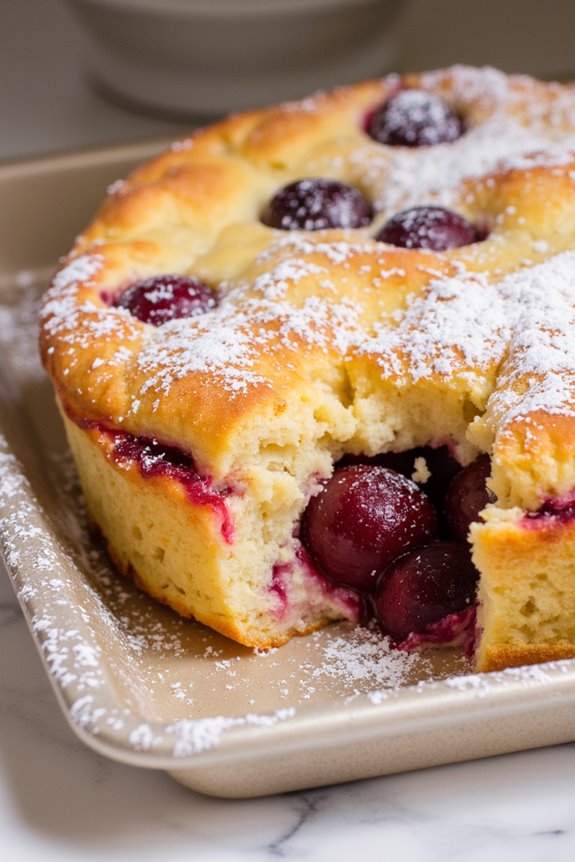
Clafoutis is a quintessential French dessert that combines the simplicity of a flan-like batter with the richness of ripe fruit, traditionally cherries. Originating from the Limousin region of France, this dessert is known for its rustic charm and delectable taste. The beauty of clafoutis lies in its ability to transform humble ingredients into a sophisticated and satisfying dish.
When baked, the batter puffs up around the fruit, creating a custard-like interior with a slightly golden, crisp top. The slight tartness of the cherries perfectly complements the creamy texture of the batter, making it an ideal choice for both casual family gatherings and elegant dinner parties.
This recipe for clafoutis serves 4-6 people and can be adapted to include other fruits such as plums, raspberries, or apricots if cherries aren’t in season. The key to a perfect clafoutis is using fresh, high-quality ingredients to allow the natural flavors to shine through. The dish is best served warm, with a light dusting of powdered sugar, and can be paired with a scoop of vanilla ice cream or a dollop of whipped cream for an extra indulgence.
Now, let’s gather our ingredients and get started on creating this delightful French classic.
Ingredients for Clafoutis (Serves 4-6):
- 1 cup of fresh cherries, pitted
- 3 large eggs
- 1 cup of whole milk
- 1/2 cup of granulated sugar
- 1/2 cup of all-purpose flour
- 1 teaspoon of vanilla extract
- 1/4 teaspoon of salt
- 2 tablespoons of unsalted butter (for greasing)
- Powdered sugar (for dusting)
Cooking Instructions:
- Preheat the Oven: Start by preheating your oven to 350°F (175°C). This guarantees that the oven reaches the right temperature by the time you’re ready to bake the clafoutis.
- Prepare the Baking Dish: Generously butter a 9-inch round baking dish or a similar size ovenproof dish. This will prevent the clafoutis from sticking to the dish and make serving easier.
- Arrange the Cherries: Evenly spread the pitted cherries across the bottom of the buttered baking dish. Confirm they’re distributed uniformly so that every bite contains some fruit.
- Mix the Batter: In a mixing bowl, whisk together the eggs, sugar, and salt until the mixture becomes pale and frothy. Gradually add in the flour, followed by the milk and vanilla extract. Continue whisking until you achieve a smooth, lump-free batter.
- Pour the Batter: Carefully pour the batter over the cherries in the baking dish. The cherries should be mostly submerged in the batter, with some peeking through.
- Bake the Clafoutis: Place the baking dish in the preheated oven and bake for about 35-40 minutes. The clafoutis is done when the top is golden brown and a toothpick inserted into the center comes out clean.
- Cool and Serve: Allow the clafoutis to cool slightly for about 10 minutes. Dust the top with powdered sugar before serving. Serve warm for the best texture and flavor experience.
Extra Tips:
For the best results, use ripe, fresh cherries as they impart a natural sweetness and juiciness to the clafoutis. If fresh cherries aren’t available, you can use frozen cherries, but make sure they’re thoroughly thawed and drained before using.
If you’re feeling adventurous, consider adding a splash of kirsch or almond extract to the batter for an extra depth of flavor. Leftovers can be stored in the refrigerator for up to two days, although clafoutis is best enjoyed fresh and warm.
Kouign-Amann
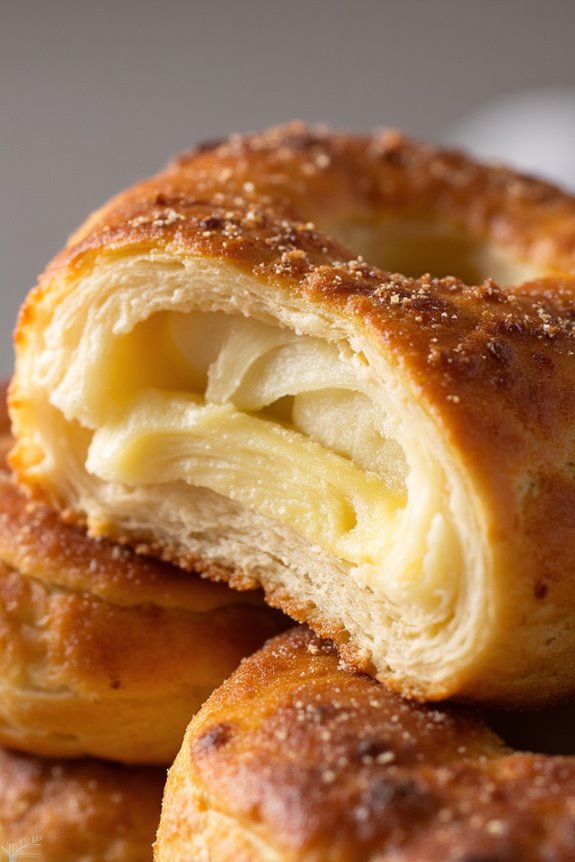
Kouign-Amann is a traditional Breton pastry, whose name translates to “butter cake” in Breton. With its roots in the Brittany region of France, this indulgent treat is renowned for its flaky, buttery layers, and caramelized sugar exterior.
The process of making Kouign-Amann is similar to that of croissant dough, where layers of butter are folded into the dough, creating a delectable treat that’s both crispy and tender. The distinct caramelization on the outside is achieved by incorporating sugar into the final folds of the pastry before baking, resulting in a sweet, rich flavor that pairs perfectly with a cup of coffee or tea.
Though the preparation requires some time and patience, the result is a rewarding and impressive dessert that’s well worth the effort. The following recipe is designed to serve 4-6 people, making enough Kouign-Amann for everyone to enjoy a generous portion. Gather your ingredients, prepare your workspace, and get ready to experience the delight of homemade Kouign-Amann, fresh from your oven.
Ingredients (Serves 4-6):
- 2 cups all-purpose flour
- 1 packet (2 1/4 tsp) active dry yeast
- 3/4 cup warm water
- 1/2 tsp salt
- 1/4 cup granulated sugar (plus extra for sprinkling)
- 1 1/4 cups unsalted butter, cold
- 1 tbsp melted butter (for greasing)
Cooking Instructions:
- Prepare the Dough: In a large mixing bowl, combine the warm water and yeast. Let it sit for about 5 minutes until the mixture becomes frothy. Add in the flour, salt, and 1/4 cup of sugar. Mix until the dough comes together, then knead on a lightly floured surface for about 5-7 minutes until smooth. Form into a ball, place in a greased bowl, cover with a cloth, and let it rise in a warm place for about 1 hour, or until doubled in size.
- Prepare the Butter Block: While the dough is rising, prepare the butter block. Cut the cold butter into slices and arrange them on a sheet of parchment paper to form a square. Cover with another sheet of parchment and pound the butter with a rolling pin to flatten and combine into one cohesive block. Chill in the refrigerator until the dough is ready.
- Roll and Fold: Once the dough has risen, roll it out on a lightly floured surface into a large rectangle. Place the chilled butter block in the center and fold the dough edges over to encase the butter completely. Roll the dough out gently into a rectangle, then fold it into thirds like a letter. Rotate the dough 90 degrees and roll it out again, then fold into thirds once more. Wrap in plastic and refrigerate for 30 minutes.
- Final Folds and Sugar: Remove the dough from the fridge and repeat the rolling and folding process twice more, this time sprinkling a few tablespoons of sugar over the dough with each fold to incorporate it into the layers. After the final fold, refrigerate the dough for another 30 minutes.
- Shape and Bake: Preheat your oven to 400°F (200°C). Roll the dough out one final time into a square, then cut into smaller squares for individual portions. Grease a muffin tin with melted butter and sprinkle each cup lightly with sugar. Place a dough square into each cup, folding the corners towards the center. Sprinkle more sugar over the top before baking.
- Bake: Place the muffin tin in the preheated oven and bake for 25-30 minutes or until the pastries are golden brown and the sugar has caramelized. If necessary, cover with foil halfway through to prevent over-browning. Let cool slightly before serving.
Extra Tips:
When making Kouign-Amann, always verify that your butter is cold during the folding process to prevent it from melting into the dough. If your kitchen is warm, you may need to chill the dough more frequently between folds.
Additionally, using a high-quality butter will greatly enhance the flavor of your pastries. Finally, be careful when handling the hot sugar caramel; it can cause burns, so allow the pastries to cool slightly before enjoying them.
Financiers

Financiers are a classic French pastry, known for their rich, nutty flavor and moist texture. These small almond cakes are traditionally baked in rectangular molds, resembling bars of gold, which is how they got their name.
Financiers are a delightful treat that can be enjoyed with tea or coffee, and their ease of preparation makes them a perfect choice for both novice and experienced bakers alike.
The key to making perfect financiers is to use high-quality ingredients, especially when it comes to the almonds and butter. The butter is browned to give the cakes their distinctive taste, while finely ground almonds contribute to both the flavor and texture. This recipe yields 4-6 servings, making it ideal for a small gathering or family treat.
Ingredients (Serves 4-6):
- 1/2 cup (1 stick) unsalted butter
- 1 cup almond flour
- 1 1/2 cups powdered sugar
- 1/2 cup all-purpose flour
- 1/4 teaspoon salt
- 6 large egg whites
- 1 teaspoon vanilla extract
- Optional: sliced almonds or berries for topping
Cooking Instructions:
- Preheat and Prepare: Preheat your oven to 400°F (200°C). Grease a set of financier molds or a muffin tin with butter or non-stick spray to prevent sticking.
- Brown the Butter: In a small saucepan, melt the unsalted butter over medium heat. Continue cooking until the butter turns a golden brown and emits a nutty aroma, about 5-7 minutes. Remove from heat and let it cool slightly.
- Mix Dry Ingredients: In a large mixing bowl, whisk together the almond flour, powdered sugar, all-purpose flour, and salt until well combined.
- Prepare Wet Ingredients: In another bowl, lightly whisk the egg whites until frothy but not stiff. Stir in the vanilla extract.
- Combine Ingredients: Gradually add the egg whites to the dry ingredients, stirring gently until well combined. Pour in the browned butter and mix until the batter is smooth and fully integrated.
- Fill the Molds: Spoon the batter into the prepared molds, filling each one about 3/4 full. If desired, top with sliced almonds or berries for a decorative touch.
- Bake: Place the molds in the preheated oven and bake for 12-15 minutes, or until the financiers are golden brown around the edges and slightly springy to the touch.
- Cool and Serve: Remove the financiers from the oven and let them cool in the molds for a few minutes before transferring to a wire rack to cool completely. Serve warm or at room temperature.
Extra Tips:
To guarantee your financiers have the perfect texture, avoid over-mixing the batter as this can lead to dense cakes.
If you don’t have financier molds, muffin tins or mini loaf pans can be used as alternatives, though the baking time might need slight adjustment.
Additionally, feel free to experiment with different toppings like pistachios or chocolate chips to add your personal touch to this classic recipe. Enjoy your freshly baked financiers with a dusting of powdered sugar for extra sweetness and elegance.
Paris-Brest
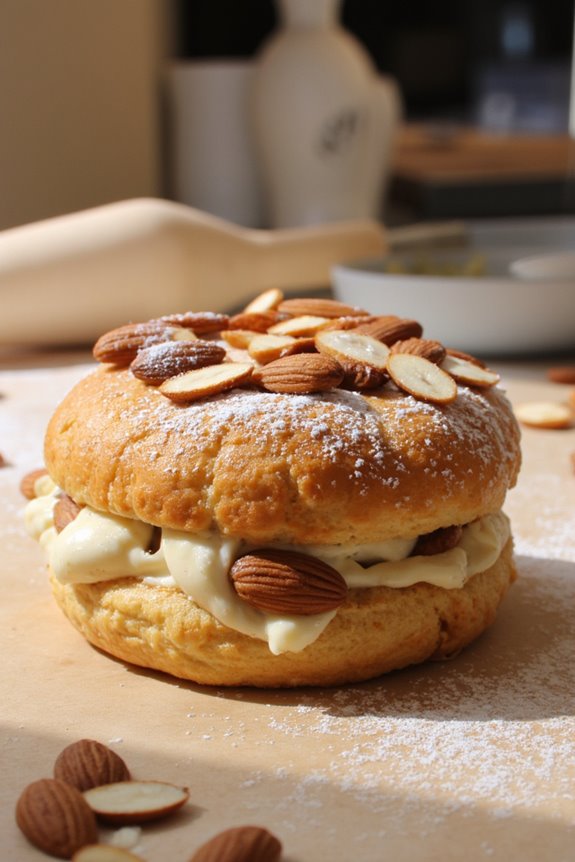
The Paris-Brest is a classic French dessert named after the famous Paris to Brest bicycle race. It consists of a ring of choux pastry filled with praline-flavored cream and topped with sliced almonds and powdered sugar. This delicious and elegant pastry is reminiscent of a wheel, paying homage to its cycling origins.
Its light, airy texture combined with the rich, nutty cream makes it a standout in any patisserie display and a delightful treat for any dessert lover.
Creating a Paris-Brest requires a few fundamental techniques, including making choux pastry and a smooth, flavorful praline cream. This recipe serves 4-6 people and highlights the delicate balance of textures and flavors that define this iconic dish. While it may seem complex, following each step carefully will guarantee a beautifully presented and delicious Paris-Brest that’s sure to impress.
Ingredients for 4-6 servings:
- 1 cup water
- 1/2 cup unsalted butter
- 1/4 teaspoon salt
- 1 tablespoon granulated sugar
- 1 cup all-purpose flour
- 4 large eggs
- 1/2 cup sliced almonds
- 3/4 cup heavy cream
- 1/2 cup praline paste
- 1/4 cup powdered sugar
- 1 teaspoon vanilla extract
- Additional powdered sugar for dusting
Cooking Instructions:
- Prepare the Choux Pastry: Preheat your oven to 375°F (190°C). In a medium saucepan, combine the water, butter, salt, and granulated sugar. Bring the mixture to a rolling boil over medium heat. Remove from heat, and add the flour all at once, stirring vigorously with a wooden spoon until the mixture forms a smooth ball.
- Cook the Dough: Return the pan to the stove and cook the dough over low heat for about 1-2 minutes to remove excess moisture, stirring continuously. This helps dry out the dough, guaranteeing a light and airy pastry.
- Incorporate the Eggs: Transfer the dough to a mixing bowl and let it cool for a few minutes. Add the eggs one at a time, beating well after each addition until the dough is smooth and glossy.
- Shape the Pastry: Line a baking sheet with parchment paper. Pipe the choux dough into a ring shape, approximately 8 inches in diameter. Scatter sliced almonds over the top of the dough.
- Bake the Pastry: Bake in the preheated oven for 30-35 minutes or until the pastry is golden brown and puffed. Don’t open the oven door during baking, as this may cause the pastry to deflate. Once baked, allow it to cool completely on a wire rack.
- Prepare the Praline Cream: In a mixing bowl, whip the heavy cream until soft peaks form. Gently fold in the praline paste, powdered sugar, and vanilla extract until well combined. Refrigerate the cream until ready to use.
- Assemble the Paris-Brest: Once the choux pastry has cooled, slice it horizontally using a serrated knife. Pipe or spoon the praline cream onto the bottom half of the pastry ring. Carefully place the top half back on.
- Finish and Serve: Dust the assembled Paris-Brest with additional powdered sugar before serving.
Extra Tips:
When making the choux pastry, be sure to add the eggs one at a time, and make sure each is fully incorporated before adding the next. This guarantees a smooth and consistent dough.
Additionally, when baking, resist the urge to open the oven door, as this can cause the pastry to collapse. For the praline cream, guarantee the heavy cream is cold before whipping for the best results.
To save time, the choux pastry can be made a day in advance and stored in an airtight container once cooled.
Galette Des Rois

Galette Des Rois, also known as the “King Cake,” is a traditional French pastry that’s typically enjoyed during the Epiphany celebration in January. This delightful pastry is made with layers of buttery puff pastry filled with a luscious almond cream known as “frangipane.”
The Galette Des Rois isn’t only a treat for the taste buds but also plays a role in French cultural tradition. A small figurine, known as a “fève,” is hidden inside the cake, and the person who finds it’s crowned king or queen for the day.
This recipe will guide you through making a Galette Des Rois that serves 4-6 people. The combination of crisp, flaky puff pastry and rich, creamy almond filling is certain to impress your family and friends. Whether you’re celebrating a special occasion or simply indulging in a delicious dessert, this classic French pastry won’t disappoint.
Ingredients:
- 500g puff pastry (store-bought or homemade)
- 100g unsalted butter, softened
- 100g granulated sugar
- 100g ground almonds
- 2 large eggs, beaten
- 1 teaspoon almond extract
- 1 teaspoon vanilla extract
- 1 fève (small ceramic figurine) or whole almond
- 1 egg yolk mixed with 1 tablespoon milk (for egg wash)
Cooking Instructions:
- Prepare the Frangipane Filling: In a medium-sized bowl, cream together the softened butter and sugar until light and fluffy. Add the ground almonds, beaten eggs, almond extract, and vanilla extract. Mix until all ingredients are well combined and set the frangipane aside.
- Roll out the Puff Pastry: Divide the puff pastry into two equal portions. Roll out each portion into a circle about 25cm in diameter. It’s important to guarantee the pastry is just slightly larger than your desired final size to allow for trimming.
- Assemble the Galette: Place one puff pastry circle on a baking sheet lined with parchment paper. Spread the frangipane filling evenly over the pastry, leaving a 2cm border around the edge. Hide the fève or almond somewhere in the frangipane.
- Seal the Pastry: Brush the border of the pastry with a little water, then place the second pastry circle on top. Press down lightly around the edges to seal, and use a sharp knife to trim any excess pastry, ensuring a neat circle.
- Decorate and Glaze: Using the back of a knife, gently score the top of the pastry with a pattern of your choice, being careful not to cut through to the filling. Brush the entire top with the egg wash to give it a nice golden color when baked.
- Chill and Bake: Chill the assembled galette in the refrigerator for at least 30 minutes to allow the pastry to firm up. Preheat your oven to 200°C (400°F). Bake the Galette Des Rois for 25-30 minutes until the pastry is puffed and golden brown.
- Cool and Serve: Allow the galette to cool slightly before serving. It can be enjoyed warm or at room temperature. Remember to warn your guests about the hidden fève!
Extra Tips:
When working with puff pastry, it’s vital to keep it cold. If the pastry becomes too warm, it can become difficult to handle and may not puff up as desired. If you notice the pastry becoming soft while assembling the galette, place it back in the refrigerator for a few minutes to firm up.
Additionally, if you prefer a sweeter filling, you can increase the sugar in the frangipane by 25g. Finally, for a more traditional experience, serve the Galette Des Rois with a paper crown for the lucky finder of the fève.
Savarin
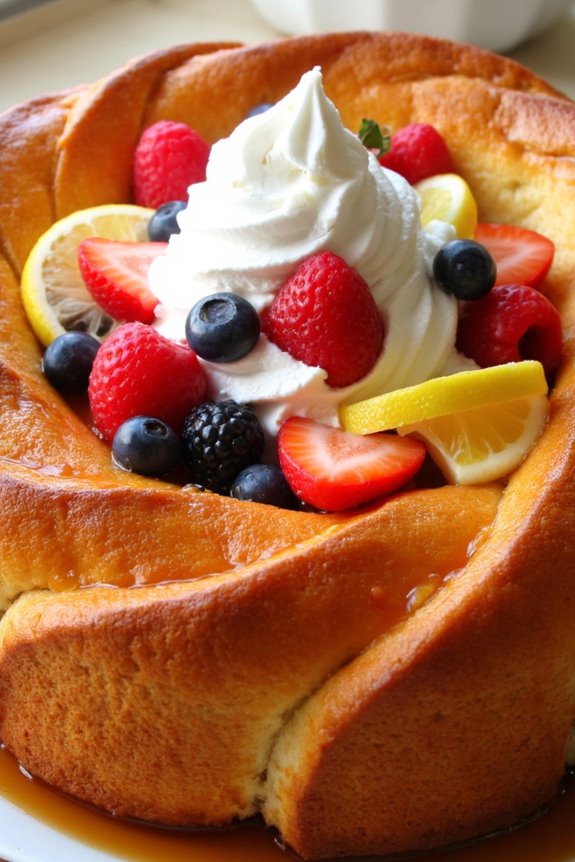
Savarin is a classic French patisserie dish, known for its unique ring shape and deliciously moist texture. It’s a yeast-based cake that’s typically soaked in a sweet syrup, giving it an irresistible flavor. The Savarin is often served with whipped cream and fresh fruit, making it an elegant dessert fit for any occasion.
The origins of the Savarin trace back to the 18th century, and it was named after the renowned French gastronome, Jean Anthelme Brillat-Savarin. The dish’s beauty lies in its simplicity and the way it absorbs the syrup, creating a perfect balance of sweetness and richness.
The process of making a Savarin involves creating a delicate dough, which, when baked, becomes airy and light. The key to a successful Savarin is guaranteeing that the yeast is properly activated and that the dough is allowed to rise sufficiently.
Once baked, the cake is soaked in a flavorful syrup, often infused with rum or orange liqueur, which adds depth to the taste. This recipe serves 4-6 people and is perfect for a delightful dessert after a sumptuous meal. Below, you’ll find the ingredients and step-by-step instructions to create your own classic Savarin at home.
Ingredients:
- 250g all-purpose flour
- 50g sugar
- 10g active dry yeast
- 3 large eggs
- 100ml milk
- 75g unsalted butter, softened
- A pinch of salt
- 400ml water
- 200g sugar (for syrup)
- 100ml rum or orange liqueur
- Whipped cream, for serving
- Fresh fruit, such as berries or citrus slices, for garnish
Instructions:
- Prepare the Dough: In a small bowl, dissolve the active dry yeast in warm milk (not hot) and let it sit for about 5-10 minutes until it becomes frothy. This indicates that the yeast is activated.
- Mix Ingredients: In a large mixing bowl, combine the flour, sugar, and a pinch of salt. Make a well in the center and add the eggs, activated yeast mixture, and softened butter. Mix until you form a smooth dough.
- Knead the Dough: Turn the dough onto a lightly floured surface and knead it for about 10 minutes until it becomes elastic and smooth. Alternatively, use a stand mixer with a dough hook attachment for convenience.
- First Rise: Place the dough in a greased bowl, cover it with a damp cloth, and let it rise in a warm place for about 1 hour, or until it doubles in size.
- Prepare the Savarin Mold: Grease a Savarin mold or a bundt pan with butter. Once the dough has risen, punch it down to release the air and transfer it to the prepared mold.
- Second Rise: Cover the mold and let the dough rise again until it reaches the top of the mold, about 30-40 minutes.
- Bake the Savarin: Preheat your oven to 180°C (350°F). Bake the Savarin for about 20-25 minutes, or until it’s golden brown and a skewer inserted comes out clean.
- Make the Syrup: While the Savarin is baking, prepare the syrup by heating water and sugar in a saucepan until the sugar dissolves completely. Remove from heat and stir in the rum or orange liqueur.
- Soak the Savarin: Once the Savarin is baked, let it cool for a few minutes, then gently remove it from the mold. Place it on a wire rack over a tray and slowly pour the syrup over the cake, guaranteeing it’s evenly absorbed.
- Serve: When ready to serve, place the soaked Savarin on a serving plate. Fill the center with whipped cream and garnish with fresh fruit. Enjoy this delightful French dessert!
Extra Tips:
For best results, guarantee all ingredients are at room temperature before starting, as this will help with the dough’s rise. It’s important not to overheat the milk when activating the yeast, as this can kill the yeast and prevent the dough from rising.
If you prefer a non-alcoholic version of Savarin, you can substitute the rum with orange juice or another flavored syrup. Finally, be patient with the soaking process, as the Savarin should be thoroughly infused with the syrup for the best flavor.
