

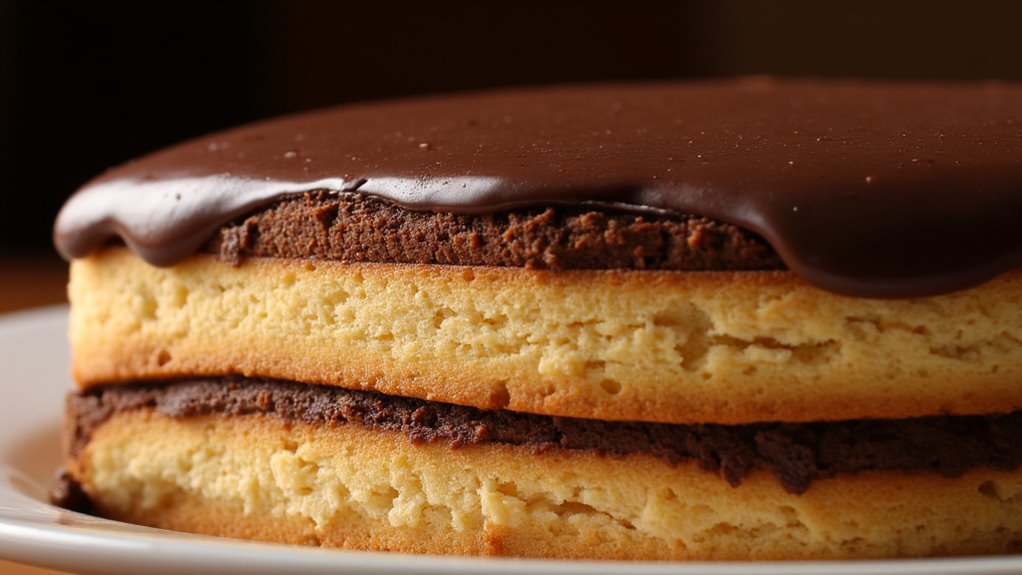
There’s something truly magical about the art of French pastry. Picture yourself savoring the rich, buttery layers of a croissant or the gentle sweetness of a madeleine. Each of these delightful treats tells a story of tradition and skill passed down through generations. Curious to explore which pastry will inspire your next baking adventure? Let’s discover these exquisite recipes together.
Tarte Tatin: The Upside-Down Apple Delight
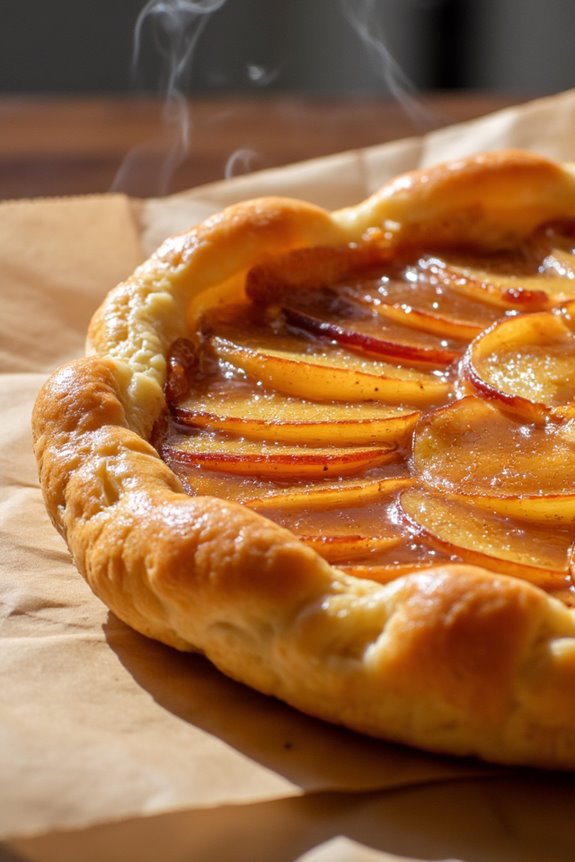
Tarte Tatin is a classic French dessert that showcases the exquisite combination of caramelized apples and buttery pastry. This upside-down tart is a symbol of the simplicity and elegance of French patisserie, where the caramelized apples steal the show with their deep, rich flavor.
Traditionally made by cooking the apples in butter and sugar before being topped with pastry and baked to perfection, the Tarte Tatin is a beautiful dessert that’s both rustic and refined. Perfect for a cozy family gathering or an elegant dinner party, this dessert is sure to impress with its glossy caramel finish and tender, melt-in-your-mouth apples.
This delightful dessert is believed to have been created by accident by the Tatin sisters in France. Despite its serendipitous origins, the Tarte Tatin has become a beloved staple in French cuisine. The balance of flavors and textures, with the soft apples and crisp pastry, makes it a timeless favorite.
To achieve the best results, it’s essential to choose the right type of apple, such as Granny Smith or Golden Delicious, which hold their shape during cooking. Serve it warm with a dollop of crème fraîche or a scoop of vanilla ice cream for an indulgent treat that will transport you to the heart of France.
Ingredients (Serves 4-6):
- 6 to 8 medium-sized apples (Granny Smith or Golden Delicious)
- 1 cup granulated sugar
- 1/2 cup unsalted butter
- 1 sheet puff pastry (store-bought or homemade)
- 1 teaspoon vanilla extract
- Juice of half a lemon
- Pinch of salt
Cooking Instructions:
- Prepare the Apples: Peel and core the apples, then cut them into halves or quarters, depending on their size. Toss the apple slices with lemon juice to prevent browning and set aside.
- Make the Caramel: In a heavy-bottomed, oven-safe skillet (about 9-10 inches), melt the butter over medium heat. Add the sugar and stir until it dissolves, cooking until the mixture turns a deep golden brown caramel. This should take about 5-7 minutes. Stir in the vanilla extract and a pinch of salt.
- Arrange the Apples: Carefully arrange the apple pieces in the skillet, placing them rounded side down. Pack them snugly as they’ll shrink slightly when cooked. Let the apples cook in the caramel for about 10 minutes, basting them occasionally with the caramel to guarantee they’re well-coated.
- Preheat the Oven: While the apples are cooking, preheat your oven to 375°F (190°C).
- Prepare the Puff Pastry: Roll out the puff pastry on a lightly floured surface to fit the size of your skillet. It should be slightly larger than the skillet to allow for tucking in the edges.
- Cover the Apples: Once the apples have softened and caramelized slightly, remove the skillet from the heat. Carefully place the puff pastry over the apples, tucking the edges down the sides of the skillet.
- Bake the Tart: Place the skillet in the preheated oven and bake for 25-30 minutes, or until the pastry is golden brown and puffed.
- Invert the Tart: Once baked, remove the skillet from the oven and let it cool for about 5 minutes. Using a plate slightly larger than the skillet, carefully invert the tart onto the plate. Be cautious as the caramel may still be hot.
- Serve: Allow the tart to cool slightly before serving. Optionally, serve warm with crème fraîche or vanilla ice cream.
Extra Tips:
When making Tarte Tatin, it’s important not to rush the caramelization process. Patience is key to achieving the deep, rich flavor that makes this dessert so special.
Make sure your skillet is well-seasoned or non-stick to prevent the caramel from sticking. If you’re using a store-bought puff pastry, let it thaw properly before rolling it out to prevent tearing.
For a unique twist, consider adding a sprinkle of cinnamon or a splash of Calvados (apple brandy) to the caramel for an extra layer of flavor. Enjoy your Tarte Tatin fresh out of the oven for the best texture and taste.
Paris-Brest: A Nutty, Cream-Filled Dream
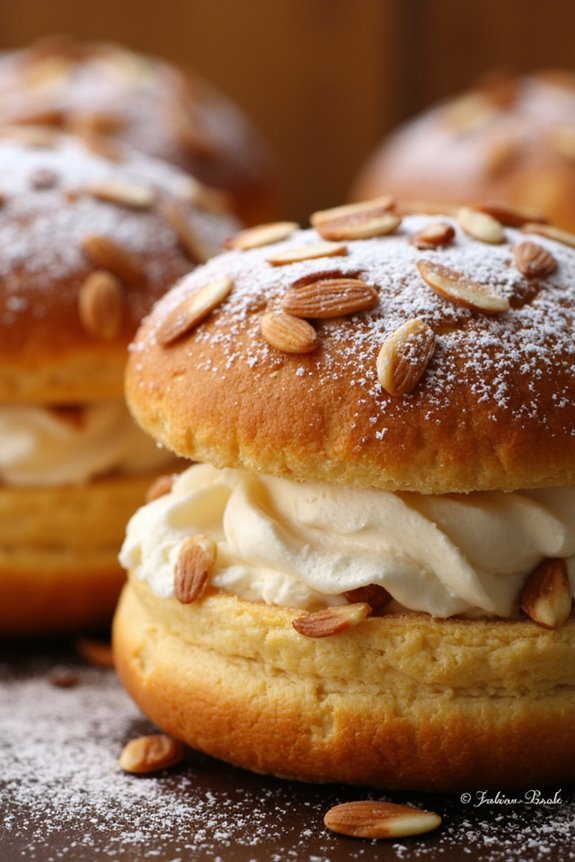
The Paris-Brest is a delightful French pastry that pays homage to the classic cycling race between Paris and Brest. This dessert isn’t only visually stunning, resembling a bicycle wheel, but it’s also a treat for the taste buds with its rich, nutty flavors and creamy filling.
Originally created in 1910, the Paris-Brest has become a staple in French patisserie, celebrated for its light choux pastry and decadent praline cream that offers a perfect balance of sweetness and texture.
To create an authentic Paris-Brest, you begin with a choux pastry ring, which serves as the base. Once baked to golden perfection, the choux ring is sliced in half and filled with a luscious praline-flavored cream. The cream, typically made by folding whipped cream into a smooth praline paste, adds a luxurious nutty flavor that complements the airy pastry.
The finished dessert is often dusted with powdered sugar and adorned with slivers of toasted almonds for an added crunch, making it a truly irresistible treat for any dessert lover.
Ingredients for 4-6 servings:
- 1 cup water
- 1/2 cup unsalted butter
- 1/4 teaspoon salt
- 1 cup all-purpose flour
- 4 large eggs
- 1/2 cup sliced almonds
- 1 cup heavy cream
- 1/2 cup praline paste
- 1 tablespoon powdered sugar (for dusting)
Cooking Instructions:
- Preheat and Prep: Preheat your oven to 375°F (190°C). Line a baking sheet with parchment paper. Using a pencil, trace a 9-inch circle on the parchment as a guide for your choux pastry.
- Make the Choux Pastry: In a medium saucepan, combine water, butter, and salt. Bring to a boil over medium heat, then add the flour all at once, stirring vigorously until the mixture forms a ball and pulls away from the sides of the pan. Remove from heat and let it cool for a few minutes.
- Add Eggs: Transfer the dough to a bowl. Add the eggs, one at a time, beating well after each addition until the mixture is smooth and glossy.
- Form the Ring: Transfer the choux pastry to a piping bag fitted with a large plain nozzle. Pipe the dough onto the prepared baking sheet, following the traced circle. Sprinkle the top with sliced almonds.
- Bake the Pastry: Bake in the preheated oven for 25-30 minutes, or until the pastry is puffed and golden brown. Turn off the oven and leave the door slightly ajar to let the pastry cool gradually for about 10 minutes. Then remove from the oven and let it cool completely on a wire rack.
- Prepare the Praline Cream: Whip the heavy cream to soft peaks. Gently fold in the praline paste until well combined.
- Assemble the Paris-Brest: Slice the cooled choux pastry ring horizontally. Pipe or spoon the praline cream onto the bottom half of the pastry, then place the top half over the cream.
- Finish and Serve: Dust the Paris-Brest with powdered sugar. Slice into portions and serve.
Extra Tips: When making choux pastry, it’s crucial to cook the dough thoroughly in the saucepan before adding the eggs; this guarantees that the pastry will puff up properly when baked.
If you can’t find praline paste, you can make your own by processing toasted hazelnuts and almonds with sugar in a food processor until smooth. Remember, patience is key when folding the cream into the praline paste to maintain a light and airy texture. Enjoy your Paris-Brest fresh for the best taste and texture.
Mille-Feuille: Layers of Delicate Flakiness
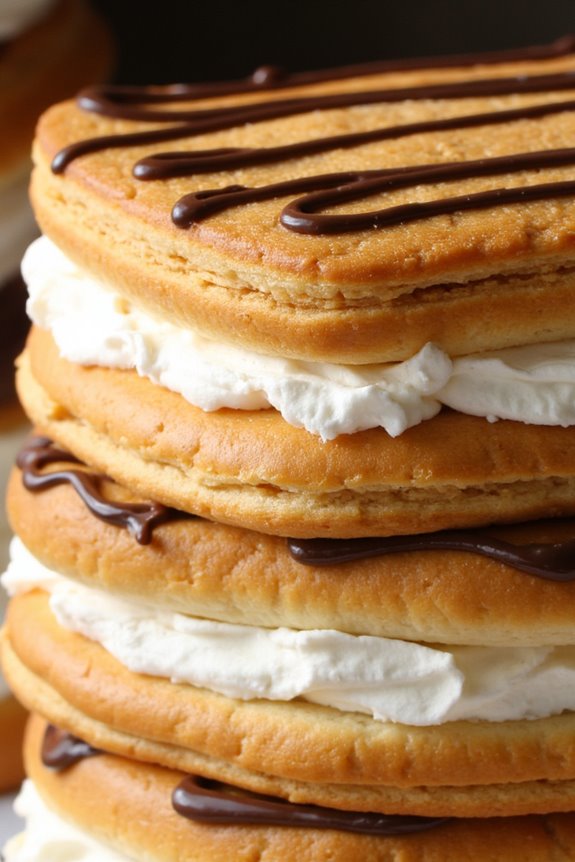
Mille-Feuille, also known as the Napoleon, is a classic French dessert that showcases the art of creating crisp, delicate layers of puff pastry filled with rich pastry cream, and often topped with a sweet glaze or fondant.
This dessert is a symphony of textures and flavors, with the buttery flakiness of the pastry contrasting beautifully against the smooth, velvety cream. It’s a dessert that not only delights the palate but also offers a feast for the eyes with its elegant presentation.
Creating a Mille-Feuille may seem intimidating due to its multiple layers, but with patience and attention to detail, it can be mastered at home. The key is to achieve perfectly baked puff pastry, which involves confirming each layer is thin and evenly cooked.
Paired with a luscious vanilla pastry cream and a simple glaze on top, this dessert becomes a show-stopping centerpiece for any meal. Here’s how to make Mille-Feuille for 4-6 servings:
Ingredients:
- 1 package of frozen puff pastry (approximately 500g), thawed
- 2 cups whole milk
- 1 vanilla bean (or 1 teaspoon vanilla extract)
- 6 large egg yolks
- 1/2 cup granulated sugar
- 1/4 cup cornstarch
- 2 tablespoons unsalted butter
- 1 cup powdered sugar
- 2-3 tablespoons milk
- Dark chocolate (optional for decoration)
Cooking Instructions:
- Prepare the Puff Pastry:
- Preheat your oven to 400°F (200°C). Roll out the thawed puff pastry on a lightly floured surface to remove any creases.
- Cut the pastry into three equal rectangles. Place them on a baking sheet lined with parchment paper.
- Prick the pastry all over with a fork to prevent it from puffing up too much. Place another sheet of parchment on top and weigh it down with a second baking tray.
- Bake for 15-20 minutes, or until the pastry is golden and crisp. Remove from oven, cool slightly, then carefully transfer to a wire rack to cool completely.
- Make the Pastry Cream:
- In a saucepan, heat the milk and vanilla bean (if using vanilla extract, add later) until just boiling. Remove from heat and let it infuse for a few minutes.
- In a bowl, whisk together egg yolks, sugar, and cornstarch until smooth. Gradually pour the hot milk into the egg mixture, whisking constantly.
- Return the mixture to the saucepan and cook over medium heat, stirring constantly, until it thickens and begins to boil. Remove from heat and stir in butter and vanilla extract (if using). Cover with plastic wrap directly on the surface and let cool completely.
- Assemble the Mille-Feuille:
- Place one pastry layer on a serving platter. Spread half of the pastry cream evenly over the layer.
- Top with a second pastry layer, spread the remaining pastry cream, and finish with the third pastry layer.
- For the glaze, mix powdered sugar with enough milk to reach a pourable consistency. Spread over the top layer of pastry.
- For decoration, you can melt a small amount of dark chocolate, drizzle it in lines over the glaze, and use a toothpick to create a feathered effect.
Extra Tips:
When making Mille-Feuille, it’s essential to keep the pastry cream chilled until assembly to maintain its firm texture.
Additionally, verify that the puff pastry is completely cool before adding the cream to prevent it from becoming soggy. If possible, prepare the components a day in advance and assemble just before serving to retain the pastry’s crispness.
Finally, use a sharp serrated knife to slice the Mille-Feuille, as this will help maintain the integrity of the layers.
Éclairs: A Classic French Indulgence
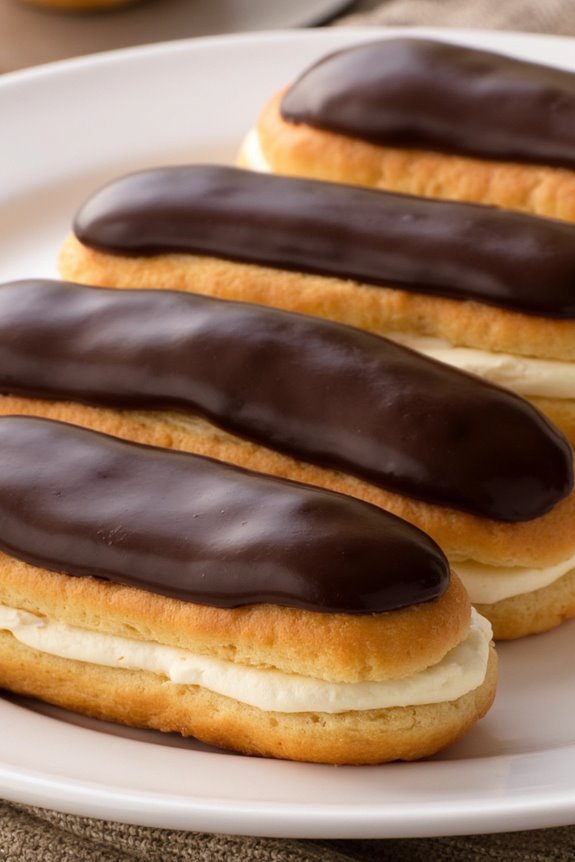
Éclairs are a quintessential French pastry that has delighted dessert lovers for generations. These elongated pastries are made from choux pastry, filled with a rich, creamy filling, and topped with a glossy chocolate glaze. The delicate and airy texture of the choux combined with the smooth and decadent filling makes éclairs a truly indulgent treat.
Traditionally, éclairs are filled with vanilla pastry cream, but variations abound, including flavors like chocolate, coffee, or even fruit-infused creams. Whether enjoyed at a Parisian café or made at home, éclairs are sure to impress and satisfy any sweet tooth.
Making éclairs at home may seem intimidating, but with the right ingredients and techniques, you can recreate this classic French treat in your own kitchen. The key to perfect éclairs lies in mastering the choux pastry, which serves as the foundation for the dessert.
Once you nail the pastry, the possibilities for fillings and toppings are endless. In this recipe, you’ll learn how to make éclairs filled with a traditional vanilla pastry cream and topped with a luscious chocolate glaze. This recipe serves 4-6 people, making it perfect for a special occasion or simply to indulge your love for French pastries.
Ingredients (Serves 4-6):
- 1 cup water
- 1/2 cup unsalted butter
- 1 cup all-purpose flour
- 4 large eggs
- 1/4 teaspoon salt
- 2 cups whole milk
- 1/2 cup granulated sugar
- 1/4 cup cornstarch
- 1 teaspoon vanilla extract
- 4 ounces semisweet chocolate
- 1/2 cup heavy cream
Cooking Instructions:
- Prepare the Choux Pastry:
- Preheat your oven to 400°F (200°C) and line a baking sheet with parchment paper.
- In a medium saucepan, combine 1 cup of water, 1/2 cup of unsalted butter, and 1/4 teaspoon of salt. Bring to a boil over medium heat.
- Once boiling, remove from heat and quickly stir in 1 cup of all-purpose flour, mixing vigorously until a dough forms.
- Return the saucepan to low heat and continue stirring for about 2 minutes until the dough pulls away from the sides of the pan and a thin film forms on the bottom.
- Transfer the dough to a mixing bowl and let it cool slightly.
- Beat in the eggs one at a time, making sure each egg is fully incorporated before adding the next. The dough should be smooth and glossy.
- Spoon or pipe the dough onto the prepared baking sheet in 4-inch long strips.
- Bake for 20-25 minutes until the éclairs are puffed and golden brown. Allow them to cool completely on a wire rack.
- Make the Vanilla Pastry Cream:
- In a saucepan, heat 2 cups of whole milk over medium heat until it begins to simmer.
- In a separate bowl, whisk together 1/2 cup granulated sugar, 1/4 cup cornstarch, and a pinch of salt.
- Gradually whisk the hot milk into the sugar mixture, then return the mixture to the saucepan.
- Cook over medium heat, stirring constantly, until the mixture thickens and starts to boil.
- Remove from heat and stir in 1 teaspoon vanilla extract. Let the pastry cream cool, covering with plastic wrap directly on the surface to prevent a skin from forming.
- Prepare the Chocolate Glaze:
- In a small saucepan, heat 1/2 cup heavy cream until it just begins to simmer.
- Pour the hot cream over 4 ounces of chopped semisweet chocolate in a heatproof bowl.
- Let it sit for a minute, then stir until smooth and glossy.
- Assemble the Éclairs:
- Once the éclairs are cooled, use a sharp knife to make a small slit on the side of each éclair.
- Fill a piping bag fitted with a small tip with the cooled vanilla pastry cream.
- Pipe the cream into each éclair until filled.
- Dip the top of each filled éclair into the chocolate glaze, allowing any excess to drip off.
- Place the glazed éclairs on a rack to set.
Extra Tips:
When making éclairs, it’s vital to confirm your choux pastry dough isn’t too runny; it should hold its shape when piped onto the baking sheet. If it’s too loose, the éclairs won’t rise properly.
Also, avoid opening the oven during the baking process to prevent the éclairs from collapsing. For added flavor, consider infusing the milk for the pastry cream with a vanilla bean instead of extract.
Finally, experiment with different fillings and toppings to customize your éclairs to your taste. Enjoy these delightful pastries fresh, as they’re best consumed the day they’re made.
Madeleine: The Quintessential French Tea Cake
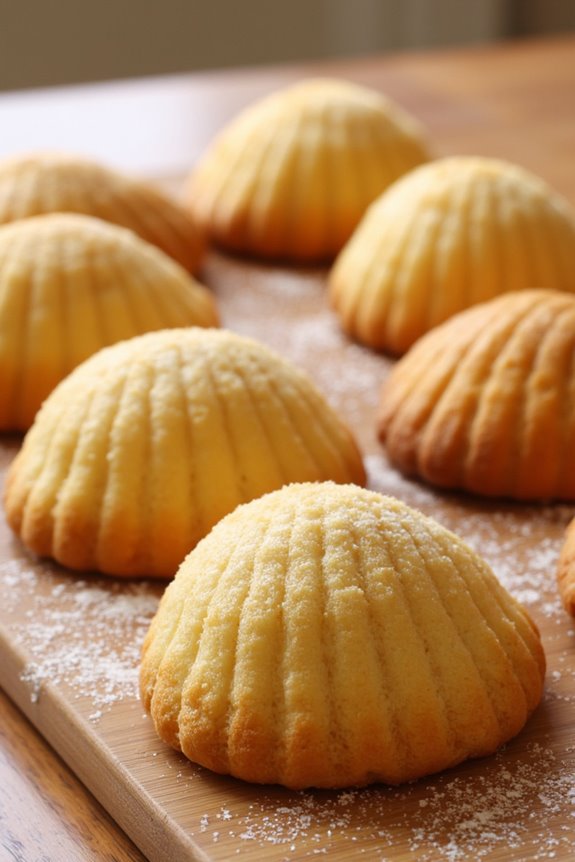
Originating from the Lorraine region in northeastern France, Madeleines are delicate, shell-shaped cakes that are a quintessential part of French patisserie. Traditionally served with tea, these petite cakes have a moist, buttery texture, and are often flavored with lemon zest or vanilla. Their unique shape is achieved by baking the batter in specially designed pans with shell-like indentations. The process of making Madeleines is a delightful culinary experience that results in a treat that’s both elegant and comforting.
Madeleines aren’t only a treat for the taste buds but also a feast for the eyes. Their golden-brown exterior and signature hump make them visually appealing, while their tender crumb and rich flavor offer a perfect balance of taste and texture. Despite their sophisticated appearance, Madeleines are surprisingly simple to make at home. This recipe will guide you through the process, guaranteeing that you achieve the perfect Madeleines that are worthy of any French café.
Ingredients for 4-6 servings:
- 1 cup (125g) all-purpose flour
- 1/2 teaspoon baking powder
- 1/4 teaspoon salt
- 2 large eggs, at room temperature
- 1/2 cup (100g) granulated sugar
- 1 teaspoon vanilla extract
- Zest of 1 lemon
- 1/2 cup (115g) unsalted butter, melted and cooled
- Powdered sugar, for dusting (optional)
Cooking Instructions:
- Preheat and Prepare: Preheat your oven to 375°F (190°C). Grease the madeleine molds with butter or non-stick spray to facilitate easy removal after baking. Dust with a light coating of flour, shaking off any excess.
- Mix Dry Ingredients: In a small bowl, whisk together the flour, baking powder, and salt. Set aside.
- Beat Eggs and Sugar: In a large mixing bowl, beat the eggs and granulated sugar using an electric mixer on high speed until the mixture becomes thick, pale, and forms ribbons when the beaters are lifted, about 5 minutes.
- Add Flavorings: Gently fold in the vanilla extract and lemon zest into the egg mixture using a spatula, being careful not to deflate the batter.
- Incorporate Dry Ingredients: Sift the flour mixture over the egg mixture and gently fold in until just combined.
- Add Butter: Gradually fold the melted and cooled butter into the batter. Verify that the butter is fully incorporated without overmixing, which could deflate the batter.
- Chill the Batter: Cover the bowl with plastic wrap and refrigerate for at least 30 minutes. Chilling the batter helps develop the characteristic hump on the Madeleines.
- Fill the Molds: Once chilled, spoon the batter into the prepared molds, filling each about three-quarters full.
- Bake: Bake in the preheated oven for 10-12 minutes, or until the edges are golden brown and the centers spring back when lightly touched.
- Cool and Serve: Remove the madeleines from the oven and allow them to cool in the pan for a few minutes before transferring them to a wire rack. Dust with powdered sugar before serving, if desired.
Extra Tips:
For the best results, verify that all your ingredients are at room temperature before starting, as this will help in achieving the desired texture and height of the Madeleines.
Be careful not to overmix the batter at any stage, as this can lead to dense cakes. The chilling step is essential for the signature hump, so don’t skip it.
Finally, Madeleines are best enjoyed fresh, as they tend to dry out quickly; however, they can be stored in an airtight container for a couple of days.
Canelé: A Caramelized Bordeaux Treat
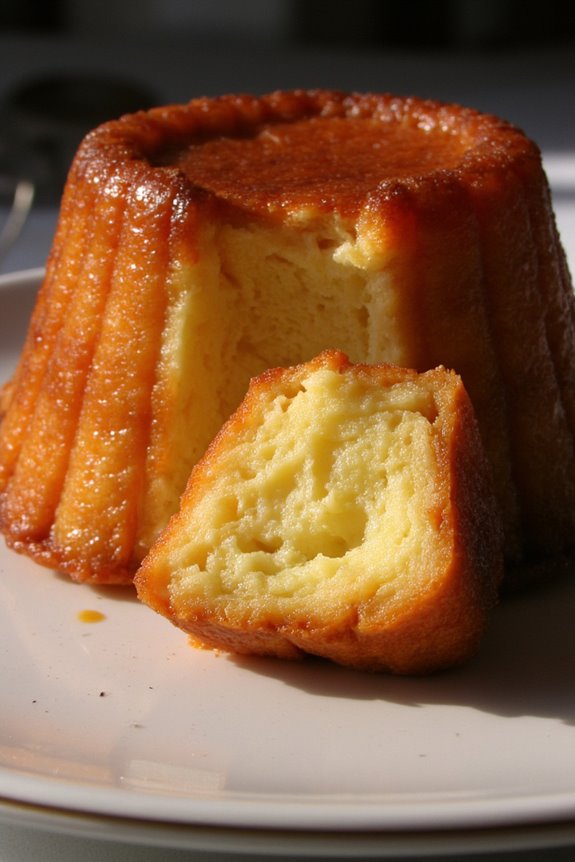
Canelé, a delightful pastry originating from the Bordeaux region of France, is renowned for its unique contrast of textures—a thick, caramelized crust enveloping a soft, custard-like interior. The name ‘Canelé’ is derived from the fluted mold used to shape these small cakes, giving them their distinctive cylindrical appearance.
Traditionally flavored with vanilla and a hint of rum, canelés offer a rich and aromatic taste experience. These delicious morsels are perfect for breakfast, an afternoon treat, or as a sophisticated dessert option.
Making canelés is a delicate process that requires patience and precision, but the reward is a truly exceptional pastry. The key to achieving the perfect canelé lies in the proper preparation of the batter and the careful baking process, which guarantees the characteristic contrast between the crunchy exterior and the tender interior.
While the ingredients are simple, the technique requires attention to detail to create this classic French delicacy.
Ingredients for Serving Size of 4-6 People:
- 500 ml whole milk
- 50 g unsalted butter
- 2 large eggs
- 2 large egg yolks
- 200 g granulated sugar
- 1 tablespoon pure vanilla extract
- 3 tablespoons dark rum
- 100 g all-purpose flour
- Pinch of salt
- Butter or baking spray for greasing the molds
Cooking Instructions:
- Prepare the Milk Mixture:
- In a medium saucepan, combine the milk and butter. Heat over medium heat until the butter melts and the milk is warm, but not boiling. Remove from heat and let it cool slightly.
- Mix the Eggs and Sugar:
- In a large mixing bowl, whisk together the whole eggs, egg yolks, and sugar until pale and slightly thickened. This should take about 2-3 minutes.
- Combine Ingredients:
- Gradually add the warm milk mixture to the egg mixture, whisking continuously to prevent the eggs from cooking. Stir in the vanilla extract and rum.
- Incorporate the Flour:
- Sift the flour and a pinch of salt into the liquid mixture, whisking until you achieve a smooth batter. Be careful not to overmix, as this will affect the texture of the canelés.
- Rest the Batter:
- Cover the bowl with plastic wrap and refrigerate the batter for at least 24 hours. This resting period is essential for developing the flavors and guaranteeing a smooth texture.
- Preheat and Prepare Molds:
- Preheat your oven to 230°C (450°F). Generously grease the canelé molds with butter or use a baking spray to guarantee easy removal after baking.
- Fill the Molds:
- Remove the batter from the refrigerator and give it a gentle stir. Fill each mold about 3/4 full, allowing room for the batter to rise.
- Bake the Canelés:
- Place the molds on a baking sheet and bake in the preheated oven for 10 minutes. Then, reduce the temperature to 180°C (350°F) and continue baking for another 45-50 minutes, until the canelés are dark brown and caramelized on the outside.
- Cool and Serve:
- Let the canelés cool slightly in the molds before carefully unmolding them. Serve warm or at room temperature.
Extra Tips:
Achieving the perfect canelé requires practice, and like many French pastries, can be affected by environmental factors such as humidity.
For the best results, use high-quality vanilla and rum, as these ingredients greatly enhance the flavor profile. Additionally, using copper molds, while traditional, often provides a better caramelization, but silicone molds can also be effective if you’re just starting.
Finally, remember to grease the molds thoroughly to prevent sticking and to achieve that beautiful, glossy crust.
Croquembouche: The Towering Showstopper
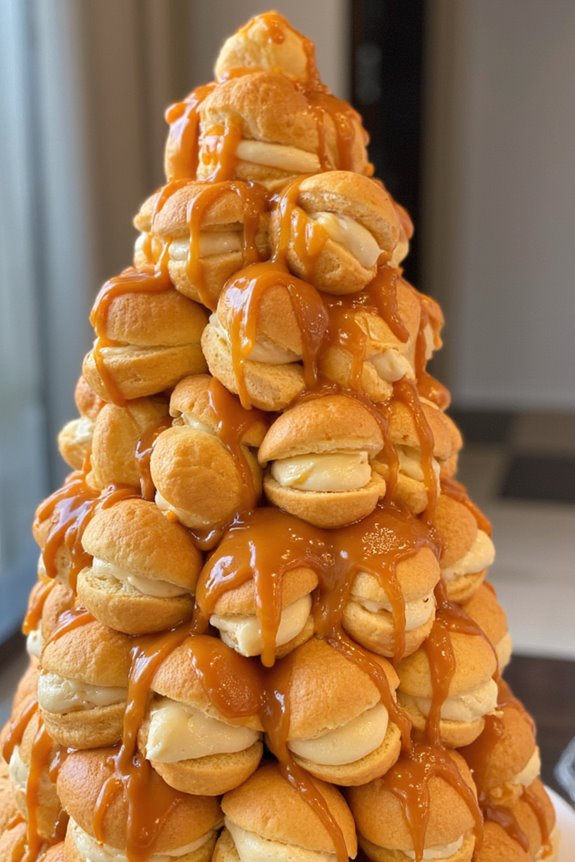
Croquembouche, a classic French dessert, is a magnificent tower of cream-filled choux pastry puffs bound together with delicate strands of caramel. This traditional centerpiece is as much a feast for the eyes as it’s for the palate, making it the perfect showstopper for special occasions.
The name “croquembouche” comes from the French words “croque en bouche,” which mean “crunch in the mouth,” aptly describing the delightful texture created by the sweet, crunchy caramel coating and the soft, creamy interior of the choux puffs.
This recipe will guide you through the process of creating your own croquembouche, ensuring that each element, from the profiteroles to the spun sugar, comes together to form an impressive and delicious dessert. While the process may seem intimidating, careful attention to detail and patience will reward you with a towering confection that’s sure to impress your guests.
This recipe makes a croquembouche serving 4-6 people, perfect for intimate gatherings.
Ingredients:
For the choux pastry:
- 1 cup water
- 1/2 cup unsalted butter
- 1/4 teaspoon salt
- 1 tablespoon granulated sugar
- 1 cup all-purpose flour
- 4 large eggs
For the pastry cream:
- 2 cups whole milk
- 1/2 cup granulated sugar
- 1 vanilla bean, split and seeds scraped (or 1 teaspoon vanilla extract)
- 4 large egg yolks
- 1/4 cup cornstarch
- 2 tablespoons unsalted butter
For the caramel:
- 2 cups granulated sugar
- 1/2 cup water
Instructions:
1. Make the choux pastry: Preheat your oven to 425°F (220°C) and line a baking sheet with parchment paper. In a saucepan over medium heat, combine water, butter, salt, and sugar. Bring to a boil, then remove from heat and quickly stir in the flour until the mixture forms a ball.
Return to heat for another minute, stirring constantly. Transfer to a bowl and let cool slightly. Add eggs one at a time, mixing well after each addition until smooth and glossy.
2. Pipe and bake the choux puffs: Transfer the choux paste to a piping bag fitted with a round tip. Pipe small mounds (about 1 inch in diameter) onto the prepared baking sheet, spacing them about 2 inches apart.
Wet your finger to smooth any peaks, then bake for 10 minutes. Reduce heat to 350°F (175°C) and bake for another 20 minutes, until golden brown. Let cool completely on a wire rack.
3. Prepare the pastry cream: In a medium saucepan, heat milk and vanilla bean (or extract) until just simmering. In a separate bowl, whisk together sugar, egg yolks, and cornstarch until pale.
Gradually pour the hot milk into the egg mixture, whisking constantly, then return to the saucepan. Cook over medium heat until thickened and bubbling. Remove from heat and stir in butter. Cover with plastic wrap directly on the surface and chill until set.
4. Fill the choux puffs: Once the pastry cream is chilled, transfer it to a piping bag fitted with a small tip. Poke a hole in the bottom of each puff and fill with cream.
5. Make the caramel: In a clean saucepan, combine sugar and water. Cook over medium heat without stirring until the sugar dissolves. Increase heat to medium-high and cook until the caramel turns a deep amber color.
Remove from heat and let cool slightly.
6. Assemble the croquembouche: Dip the tops of the filled puffs into the caramel and arrange them in a cone shape on a serving platter, using the caramel to glue them together.
For a decorative effect, use a fork or whisk to drizzle remaining caramel around the assembled tower, creating spun sugar strands.
Extra Tips:
When making the caramel, be cautious not to burn it, as it can turn bitter quickly. Use a candy thermometer if you have one to monitor the temperature closely.
If the caramel hardens before you’ve finished assembling, gently reheat it over low heat to make it pliable again. For added stability, you can build your croquembouche around a cone made from parchment paper.
Finally, practice caution when working with hot caramel to prevent burns. Enjoy your beautiful croquembouche!
Galette Des Rois: the King’s Cake
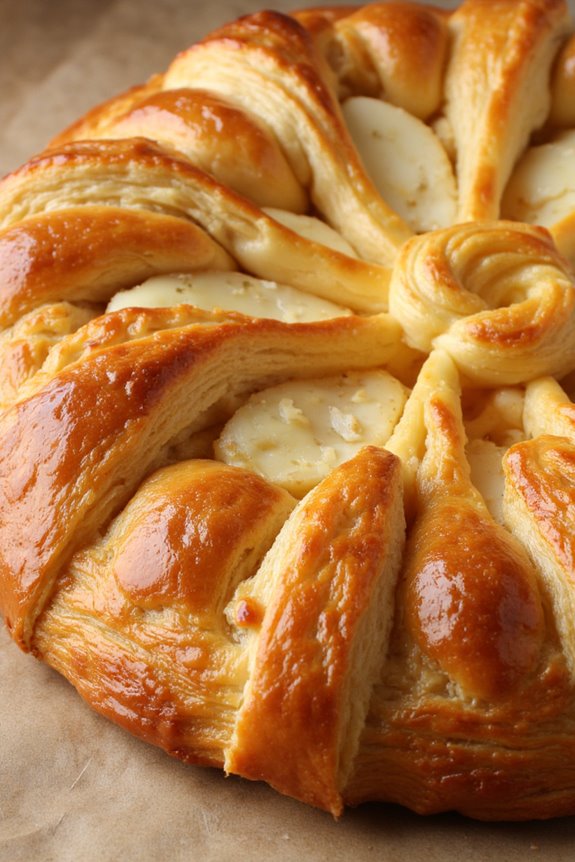
Galette Des Rois, or King’s Cake, is a traditional French pastry often enjoyed during the Epiphany, marking the visit of the Magi to baby Jesus. This delightful dessert consists of a flaky, buttery puff pastry filled with a rich almond cream, known as frangipane.
Its golden, crown-like appearance is both regal and inviting, making it a perfect treat for festive gatherings. In France, it’s customary to hide a small token or “fève” inside the cake, and the person who finds the fève in their slice gets to be “king” or “queen” for the day.
Crafting a Galette Des Rois at home is a rewarding experience and a wonderful way to bring a piece of French tradition to your table. The recipe calls for store-bought puff pastry to simplify the process, allowing you to focus on creating a luscious almond filling. This recipe serves 4-6 people, perfect for a small family celebration or gathering with friends.
Ingredients (serves 4-6):
- 2 sheets of puff pastry
- 100g almond flour
- 100g granulated sugar
- 100g unsalted butter, softened
- 2 large eggs
- 1 tsp vanilla extract
- 1 tsp almond extract
- 1 egg yolk (for egg wash)
- 1 fève or small ceramic figurine (optional)
Cooking Instructions:
- Prepare the Frangipane Filling: In a mixing bowl, cream together the softened butter and granulated sugar until light and fluffy. Add the almond flour, two eggs, vanilla extract, and almond extract, and mix until well combined to form a smooth almond cream.
- Preheat the Oven: Preheat your oven to 200°C (390°F). Line a baking sheet with parchment paper to prepare for the pastry assembly.
- Assemble the Galette: Unroll one sheet of puff pastry on the prepared baking sheet. Spread the frangipane filling evenly over the pastry, leaving a 2cm border around the edges. If using, place the fève somewhere in the filling, away from the center.
- Seal the Cake: Drape the second sheet of puff pastry over the filling. Press the edges of the two pastry sheets together firmly to seal, then use a fork to crimp the edges for a decorative touch.
- Create a Decorative Pattern: Using a sharp knife, lightly score a decorative pattern on the top of the pastry, taking care not to cut all the way through. Common designs include spirals or rays emanating from the center.
- Apply the Egg Wash: In a small bowl, beat the egg yolk with a tablespoon of water to create an egg wash. Brush the wash over the top of the galette to give it a shiny, golden finish.
- Bake the Galette: Place the assembled galette in the preheated oven and bake for 25-30 minutes, or until the pastry is puffed up and golden brown.
- Cool and Serve: Allow the Galette Des Rois to cool slightly before serving. Be sure to remind guests about the hidden fève!
Extra Tips:
For an even flakier crust, make sure the puff pastry remains chilled until just before baking. This helps the layers expand properly in the oven.
If you have extra time, consider making homemade puff pastry for an even more authentic touch. Remember, the fève is a fun tradition but can also pose a choking hazard, especially for kids, so inform everyone before serving!
Financiers: The Almond-Flavored Gems
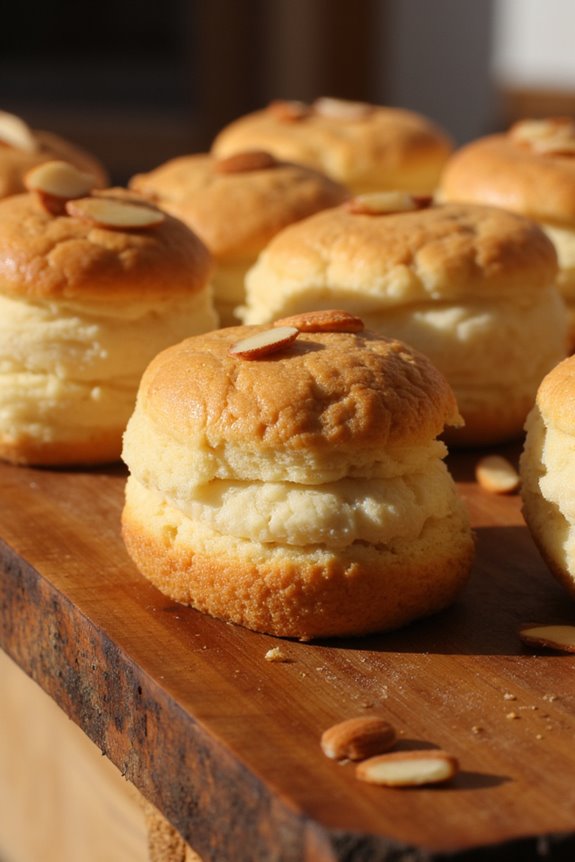
Financiers are delightful French almond-flavored cakes that are loved for their moist interiors and crisp exteriors. These small, buttery cakes are traditionally baked in small rectangular molds, resembling gold bars, which gives them their name. Financiers are perfect for a sophisticated afternoon tea or as a sumptuous dessert after a hearty meal.
Their simplicity and delicate flavor make them a staple in French patisseries, and now you can recreate these gems in your own kitchen!
The key to a perfect financier is the use of brown butter, or “beurre noisette,” which imparts a nutty aroma and deep flavor to the cakes. The combination of almond flour and powdered sugar creates a tender crumb that melts in your mouth. This recipe yields about 12 financiers, perfect for serving 4-6 people. Whether you’re an experienced baker or a novice, this recipe is straightforward and will certainly impress your guests with its elegance and taste.
Ingredients for 4-6 people:
- 100g unsalted butter
- 100g almond flour
- 100g powdered sugar
- 40g all-purpose flour
- 3 large egg whites
- 1 tsp vanilla extract
- A pinch of salt
- Optional: sliced almonds for topping
Cooking Instructions:
- Prepare the Brown Butter: Begin by placing the unsalted butter in a small saucepan over medium heat. Allow the butter to melt and continue cooking until it turns a golden brown color and emits a nutty aroma. This usually takes about 5-7 minutes. Once done, remove from heat and let cool slightly.
- Mix Dry Ingredients: In a medium bowl, sift together the almond flour, powdered sugar, all-purpose flour, and a pinch of salt. This will guarantee there are no lumps and the ingredients are well-combined.
- Whip Egg Whites: In another bowl, whisk the egg whites until they become frothy but not stiff. You don’t need stiff peaks, just enough to aerate the mixture.
- Combine Ingredients: Gradually add the dry ingredients to the whipped egg whites, gently folding them in to maintain the airiness. Add the vanilla extract and cooled brown butter to the mixture, and gently fold until everything is evenly incorporated.
- Prepare Molds: Preheat your oven to 180°C (350°F). Grease the financier molds or a muffin tin with butter or non-stick spray. Spoon the batter into the molds, filling each about three-quarters full. If desired, sprinkle sliced almonds on top for added texture and flavor.
- Bake the Financiers: Place the molds in the preheated oven and bake for 12-15 minutes, or until the edges are golden brown and a toothpick inserted into the center comes out clean. Remove from the oven and allow to cool in the molds for a few minutes before transferring them to a wire rack to cool completely.
Extra Tips:
To enhance the flavor of your financiers, consider adding a hint of citrus zest, such as lemon or orange, to the batter for a revitalizing twist.
If you don’t have financier molds, a regular muffin tin will work just fine; however, adjust the baking time slightly as the size may differ. Confirm that the brown butter is cooled but still liquid when adding it to the batter to maintain the consistency of the mixture.
Finally, financiers can be stored in an airtight container at room temperature for up to three days, making them a convenient make-ahead option for entertaining.
Choux À La Crème: Puffs of Pure Delight

Choux À La Crème, also known as cream puffs, are a quintessential French pastry delight that marries light, airy choux pastry with rich, luscious cream filling. These puffs are perfect for any occasion, whether you’re hosting a fancy dinner party or simply treating yourself to a sweet indulgence.
The beauty of Choux À La Crème lies in its simplicity and the perfect balance between the crisp exterior and the creamy interior, which can be customized with a variety of fillings and toppings to suit your taste.
To create the perfect Choux À La Crème, you begin by mastering the art of choux pastry, also known as pâte à choux. This versatile dough is used in a variety of French pastries, and its preparation is an essential skill for any aspiring pastry chef.
Once you have your puffs baked to perfection, the next step is to fill them with a decadent crème pâtissière or whipped cream, turning them into irresistible bites of pure delight. Serve these cream puffs with a dusting of powdered sugar, or drizzle them with chocolate for that extra touch of elegance.
Ingredients (Serves 4-6 people):
- 1/2 cup (120ml) water
- 1/2 cup (120ml) milk
- 1/2 cup (115g) unsalted butter
- 1 tablespoon sugar
- 1/4 teaspoon salt
- 1 cup (125g) all-purpose flour
- 4 large eggs
- 1 cup (240ml) heavy cream
- 2 tablespoons powdered sugar
- 1 teaspoon vanilla extract
Cooking Instructions:
- Prepare the Choux Pastry: Preheat your oven to 400°F (200°C). In a medium saucepan, combine water, milk, butter, sugar, and salt. Bring to a boil over medium heat. Once boiling, remove from heat and immediately add the flour, stirring vigorously until the mixture forms a smooth dough that pulls away from the sides of the pan.
- Incorporate the Eggs: Allow the dough to cool slightly for a couple of minutes. Then, add the eggs one at a time, stirring well after each addition until the dough is smooth and glossy. The dough should hold its shape when piped.
- Shape the Puffs: Transfer the dough into a piping bag fitted with a large round tip. Pipe small mounds (about 2 inches in diameter) onto a baking sheet lined with parchment paper, spacing them about 2 inches apart. Smooth out any peaks with a damp fingertip.
- Bake the Puffs: Bake in the preheated oven for 20-25 minutes until the puffs are golden brown and have a crisp exterior. Avoid opening the oven door during baking. Once done, remove from the oven and allow them to cool completely on a wire rack.
- Prepare the Cream Filling: In a mixing bowl, whip the heavy cream, powdered sugar, and vanilla extract together until stiff peaks form. Transfer the whipped cream into a piping bag with a small tip.
- Fill the Puffs: Once the puffs are cooled, use a small knife to make a slit in the bottom of each puff. Pipe the whipped cream into each puff, filling them generously.
- Serve: Dust the filled puffs with powdered sugar or drizzle with melted chocolate if desired. Serve immediately and enjoy these delightful treats!
Extra Tips:
When making Choux À La Crème, confirm your dough is smooth and not overly runny before baking. This guarantees the puffs will hold their shape and rise perfectly.
If your pastries seem undercooked, you can return them to the oven for a few more minutes to crisp up. When whipping the cream, keep your mixing bowl and beaters chilled for best results.
Finally, these puffs are best served fresh, but you can store them in an airtight container in the refrigerator for a day or two.
Clafoutis: A Rustic Cherry Dessert
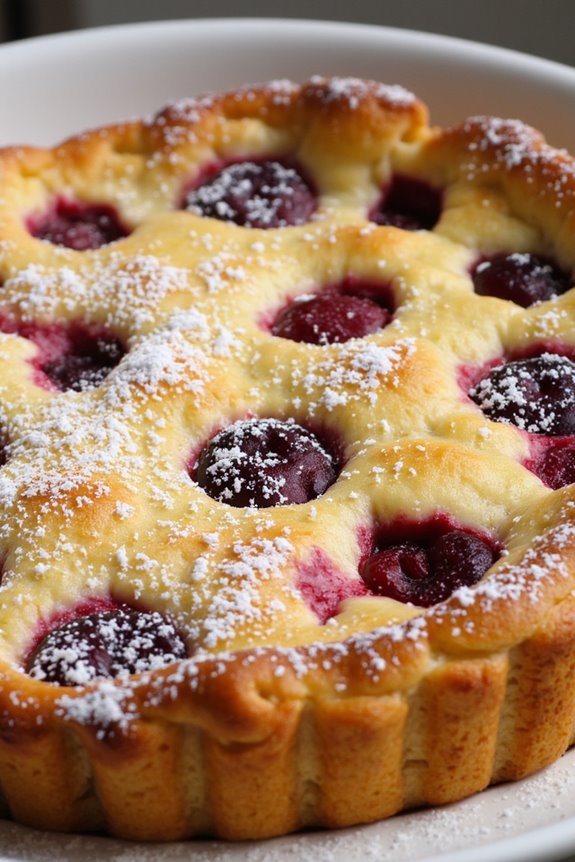
Clafoutis is a classic French dessert that boasts a deliciously rustic charm. Originating from the Limousin region, this treat combines fresh cherries with a custard-like batter to produce a dessert that’s both simple and elegant. Traditionally, clafoutis is made with whole, unpitted cherries, as the pits are believed to impart a subtle almond flavor to the dish. However, to make it more convenient for serving, many modern versions use pitted cherries. This dessert is perfect for showcasing fresh cherries in season, but frozen cherries can be used as a substitute when fresh ones aren’t available.
The beauty of clafoutis lies in its ease of preparation and its versatile nature. The batter, similar to that of a pancake or crepe, is poured over the cherries and baked until golden. As it bakes, the batter puffs up around the fruit, creating a beautifully rustic presentation. Serve it warm, dusted with powdered sugar, and perhaps a dollop of whipped cream or a scoop of vanilla ice cream to complement the tartness of the cherries. This dessert is perfect for a casual family dinner or an elegant dinner party, providing a touch of French sophistication with minimal effort.
Ingredients (Serves 4-6):
- 1 cup fresh cherries, pitted (or frozen cherries, thawed and drained)
- 3 large eggs
- 1/2 cup granulated sugar
- 1 cup whole milk
- 1/2 cup all-purpose flour
- 1 teaspoon vanilla extract
- 1/4 teaspoon almond extract (optional)
- Pinch of salt
- Butter for greasing the dish
- Powdered sugar for dusting
Cooking Instructions:
- Preheat the Oven: Begin by preheating your oven to 350°F (175°C). This will guarantee that the oven is at the correct temperature once you’re ready to bake.
- Prepare the Baking Dish: Grease a 9-inch (23 cm) round baking dish or a similar-sized dish with butter. This will prevent the clafoutis from sticking to the sides and make it easier to serve.
- Arrange the Cherries: Spread the pitted cherries evenly across the bottom of the greased baking dish. If using frozen cherries, confirm they’re fully thawed and drained of excess liquid.
- Make the Batter: In a mixing bowl, whisk together the eggs and granulated sugar until well combined. Gradually add the flour and continue whisking until smooth. Then, add the milk, vanilla extract, almond extract (if using), and salt, and whisk until the batter is smooth and well incorporated.
- Pour the Batter: Carefully pour the batter over the cherries in the baking dish. The cherries may float slightly, which is fine.
- Bake the Clafoutis: Place the baking dish in the preheated oven and bake for about 35-40 minutes, or until the clafoutis is puffed and golden brown around the edges. A knife inserted into the center should come out clean.
- Cool and Serve: Allow the clafoutis to cool for about 10 minutes. It may deflate slightly as it cools, which is normal. Dust with powdered sugar before serving. Serve warm, optionally with whipped cream or vanilla ice cream.
Extra Tips:
When making clafoutis, it’s important not to overmix the batter. Overmixing can lead to a dense texture rather than the light, custard-like consistency you want. If you don’t have a whisk, a blender can also be used to combine the ingredients smoothly.
Additionally, for a more intense almond flavor, consider adding a tablespoon of almond flour to the batter. Finally, while cherries are traditional, feel free to experiment with other fruits such as plums, apricots, or even berries for a unique twist on this classic dessert.
Kouign-Amann: The Buttery Breton Pastry
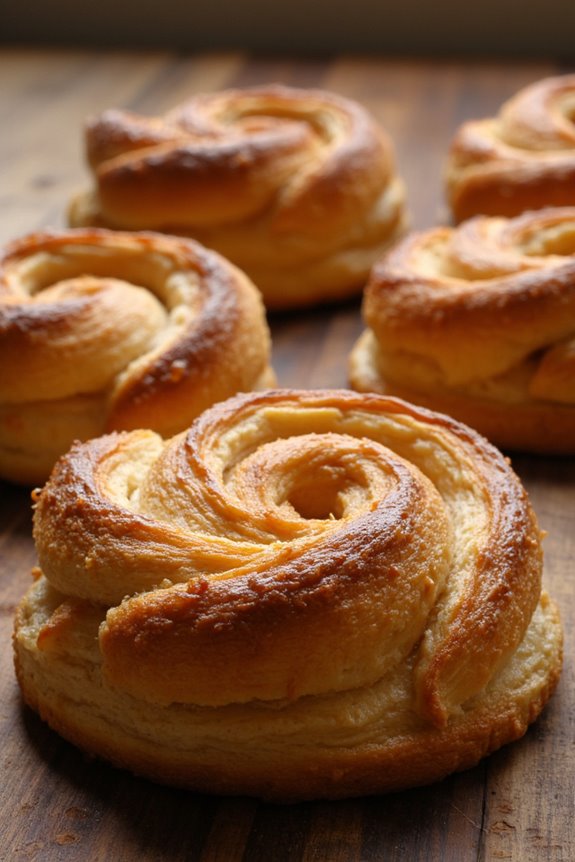
Kouign-Amann is a classic French pastry hailing from the Brittany region, renowned for its rich buttery flavor and sugary caramelized crust. The name itself translates to “butter cake” in Breton, perfectly capturing the essence of this delectable treat. This pastry is made by layering dough with generous amounts of butter and sugar, resulting in a flaky, sweet, and irresistibly crispy dessert.
Traditionally, Kouign-Amann is best enjoyed fresh out of the oven, where its buttery layers are at their most tender, making it a delightful indulgence for any occasion.
Crafting Kouign-Amann requires both patience and precision, as the dough undergoes a series of folds to achieve its signature layered texture. Despite its somewhat intricate preparation, this pastry rewards its bakers with a unique taste and texture that’s both satisfying and memorable.
Whether you’re a seasoned baker or a novice, mastering Kouign-Amann won’t only enhance your culinary repertoire but also provide a taste of authentic Breton cuisine right in your own kitchen.
Ingredients for Kouign-Amann (Serving Size: 4-6 people):
- 2 cups all-purpose flour
- 1 packet (2 1/4 teaspoons) active dry yeast
- 1/2 teaspoon salt
- 3/4 cup warm water (about 110°F)
- 1/2 cup unsalted butter, room temperature
- 1 cup granulated sugar
- Additional flour for dusting
Cooking Instructions:
- Prepare the Dough: In a large mixing bowl, combine the flour, yeast, and salt. Add the warm water gradually while mixing until a dough forms. Knead the dough on a floured surface for about 5-7 minutes until smooth and elastic. Place the dough in a greased bowl, cover it with a damp cloth, and let it rise in a warm place for about 1 hour or until doubled in size.
- Prepare the Butter Block: Meanwhile, shape the room-temperature butter into a flat rectangle approximately 5 x 7 inches. Wrap it in parchment paper and refrigerate until firm.
- Roll and Fold the Dough: Once the dough has risen, roll it out on a floured surface into a rectangle about 10 x 16 inches. Place the chilled butter block in the center of the dough. Fold the dough over the butter, envelope-style, making certain the butter is completely encased. Roll the dough carefully into a rectangle approximately 10 x 16 inches again.
- First Sugar Layer: Sprinkle 1/3 cup of granulated sugar evenly over the surface of the dough. Fold the dough into thirds, like a letter, and rotate it 90 degrees. Roll it out again into a 10 x 16-inch rectangle.
- Second Sugar Layer: Repeat the sugar sprinkling with another 1/3 cup of sugar, followed by the folding and rolling process. Rotate and roll out the dough once more.
- Final Sugar Layer and Shaping: Sprinkle the remaining sugar over the dough, fold, and roll out one last time. Cut the dough into 4-6 equal squares. Pinch the corners of each square into the center to create a flower-like shape.
- Final Rise and Baking: Place the shaped pastries into greased muffin tins or a baking sheet lined with parchment paper. Cover and let them rise for another 30 minutes. Preheat your oven to 400°F (200°C). Bake for 25-30 minutes until golden brown and caramelized. Allow to cool slightly before serving.
Extra Tips:
When making Kouign-Amann, keeping the butter cold is essential for achieving the flaky layers. If the butter starts to melt while folding, refrigerate the dough for a few minutes to firm it up before continuing.
Additionally, using a light hand when rolling and folding the dough guarantees the layers remain distinct, which contributes to the pastry’s tender texture. Finally, be mindful of the sugar caramelization during baking; if the pastries brown too quickly, cover them with foil to prevent burning.
Enjoy your homemade Kouign-Amann with a hot cup of coffee or tea for the perfect Breton experience.
Opera Cake: Layers of Chocolate and Coffee Perfection
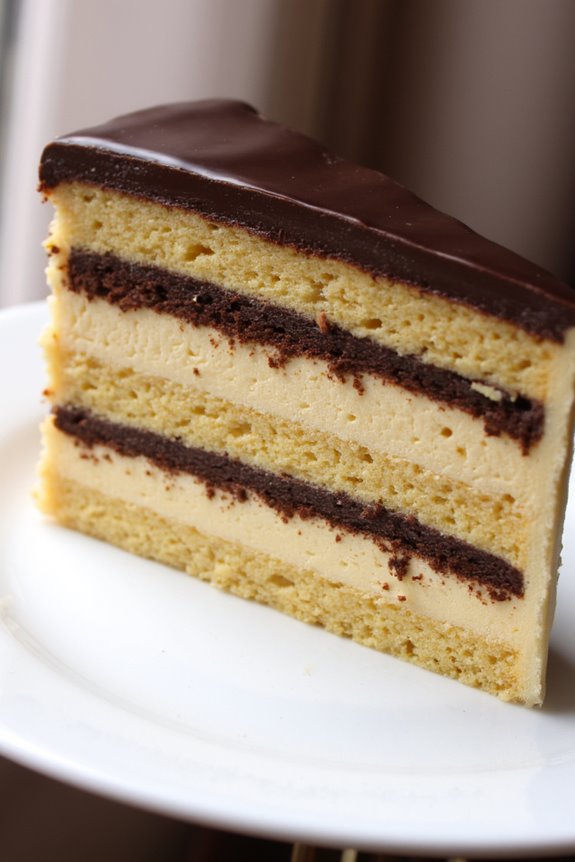
The Opera Cake is a classic French dessert that combines layers of almond sponge cake, coffee buttercream, and chocolate ganache to create a symphony of flavors and textures. This elegant cake, traditionally made rectangular, is known for its distinct layers that represent the opera’s complexity and richness. The combination of coffee and chocolate offers a sophisticated flavor profile that’s both indulgent and refined, making it a perfect choice for any special occasion or a luxurious treat for yourself.
Creating an Opera Cake may seem intimidating, but with careful preparation and attention to detail, it can be a rewarding experience. The key to success is in the precision of the layers and the quality of the ingredients. Each component of the cake – the Joconde sponge, the coffee syrup, the coffee buttercream, the chocolate ganache, and the chocolate glaze – must be made with care to guarantee the final result is a harmonious balance of flavors and textures.
Here’s how you can make an Opera Cake that serves 4-6 people:
Ingredients:
- Joconde Sponge:
- 65g almond flour
- 65g powdered sugar
- 20g all-purpose flour
- 3 large eggs
- 3 large egg whites
- 10g granulated sugar
- 20g unsalted butter, melted
- Coffee Syrup:
- 60ml strong brewed coffee
- 60g granulated sugar
- Coffee Buttercream:
- 2 large egg yolks
- 60g granulated sugar
- 60ml water
- 150g unsalted butter, softened
- 2 tsp instant espresso powder
- Chocolate Ganache:
- 120g dark chocolate, chopped
- 120ml heavy cream
- Chocolate Glaze:
- 100g dark chocolate, chopped
- 30g unsalted butter
Instructions:
- Prepare the Joconde Sponge: Preheat your oven to 220°C (425°F). Line a baking sheet with parchment paper. In a bowl, whisk together almond flour, powdered sugar, and all-purpose flour. In a separate bowl, beat the whole eggs, then gently fold into the dry ingredients. In another bowl, beat egg whites until soft peaks form, gradually adding granulated sugar to make a meringue. Fold the meringue into the almond mixture, then stir in melted butter. Spread the batter evenly onto the prepared baking sheet and bake for 5-7 minutes until golden. Allow to cool before removing from the sheet.
- Make the Coffee Syrup: In a small saucepan, combine brewed coffee and granulated sugar. Bring to a boil, stirring until the sugar dissolves. Set aside to cool.
- Prepare the Coffee Buttercream: In a heatproof bowl, whisk egg yolks until light. In a small saucepan, bring sugar and water to a boil until it reaches 115°C (240°F). Slowly pour the hot syrup into the yolks while beating continuously. Beat until the mixture cools to room temperature. Gradually add softened butter, beating until smooth. Dissolve espresso powder in a teaspoon of water and blend into the buttercream.
- Make the Chocolate Ganache: In a small saucepan, heat heavy cream until just boiling. Pour over chopped chocolate in a bowl and let sit for a minute. Stir until smooth and glossy. Allow to cool slightly.
- Assemble the Cake: Cut the Joconde sponge into three equal rectangles. Place the first layer on a serving tray and brush with coffee syrup. Spread half of the coffee buttercream evenly over the sponge. Place the second layer of sponge on top, brush with syrup, and spread a layer of ganache. Add the final sponge layer, brush with syrup, and spread the remaining buttercream. Chill the cake for 30 minutes.
- Prepare the Chocolate Glaze: Melt chocolate and butter together over a double boiler or in the microwave, stirring until smooth. Pour over the chilled cake, smoothing the top with a spatula. Let the glaze set in the refrigerator before serving.
Extra Tips:
To achieve the perfect layers in an Opera Cake, use a sharp knife to trim the edges of the sponge layers for a clean finish. Verify that each layer is evenly spread to maintain the cake’s structure.
It’s also helpful to chill the cake between adding layers to prevent them from mixing or sliding. When making the buttercream and ganache, make sure they’re at the right consistency – not too runny or too stiff – for easy spreading.
For an added decorative touch, you can pipe ‘Opera’ on top of the cake with melted chocolate or use gold leaf for a luxurious finish. Enjoy your creation with a cup of coffee or tea to complement the cake’s rich flavors.
