

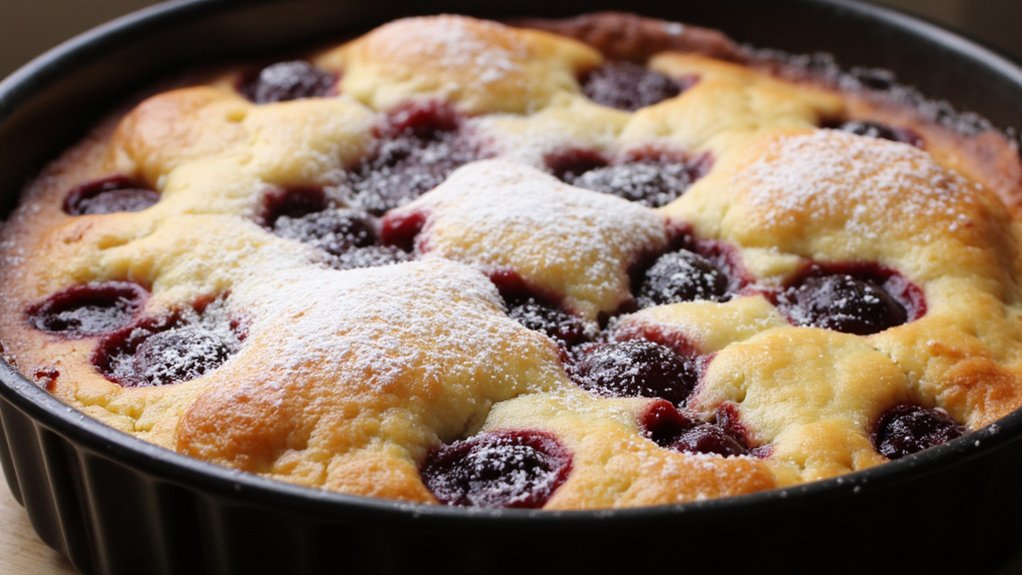
There’s something truly delightful about enjoying French flavors on a relaxed Saturday. Picture the aroma of a freshly baked Quiche Lorraine filling your kitchen. Or the layers of a Croque Monsieur tempting your taste buds. It’s like a little piece of Paris at home. Why not make your Saturday a celebration of French cuisine?
Classic Quiche Lorraine

Quiche Lorraine is a classic French dish that has stood the test of time, offering a perfect balance between rich, savory flavors and a delicate, buttery crust. Originating from the Lorraine region of France, this dish is a staple in French cuisine and is perfect for a leisurely weekend brunch or a light dinner.
Traditionally made with a filling of eggs, cream, and bacon, Quiche Lorraine beautifully combines simplicity and elegance. Its versatility allows it to be served warm or at room temperature, making it an ideal choice for entertaining or enjoying with family and friends.
The key to a perfect Quiche Lorraine lies in its flaky pastry crust and creamy, custard-like filling. This recipe will guide you through making this quintessential French dish from scratch, including crafting your own pastry dough. With a few fresh ingredients and some simple techniques, you can bring a taste of France into your home kitchen. The following recipe serves 4-6 people, guaranteeing there’s plenty to share and savor.
Ingredients (serves 4-6):
- 1 1/4 cups all-purpose flour
- 1/2 cup unsalted butter (chilled and diced)
- 1/4 teaspoon salt
- 3 tablespoons cold water
- 6 slices bacon
- 1 cup shredded Gruyère cheese
- 4 large eggs
- 1 1/2 cups heavy cream
- 1/4 teaspoon ground nutmeg
- Salt and pepper to taste
Cooking Instructions:
- Prepare the Pastry Dough: In a large bowl, combine the all-purpose flour and salt. Add the diced, chilled butter. Using a pastry cutter or your fingers, blend the butter into the flour until the mixture resembles coarse crumbs. Gradually add the cold water, one tablespoon at a time, mixing until the dough comes together. Shape the dough into a disc, wrap it in plastic wrap, and refrigerate for at least 30 minutes.
- Preheat the Oven: Preheat your oven to 375°F (190°C). This will guarantee the oven is hot and ready for the quiche once assembled.
- Roll Out the Dough: Remove the dough from the refrigerator and let it sit for a few minutes to soften slightly. On a lightly floured surface, roll out the dough into a circle about 12 inches in diameter. Carefully transfer the dough to a 9-inch tart pan, pressing it into the bottom and sides. Trim any excess dough and prick the bottom with a fork.
- Blind Bake the Crust: Line the pastry with parchment paper and fill it with pie weights or dried beans. Bake in the preheated oven for 15 minutes, then remove the weights and parchment and bake for another 5 minutes until the crust is lightly golden. Remove from oven and set aside to cool slightly.
- Cook the Bacon: While the crust is baking, cook the bacon slices in a skillet over medium heat until crisp. Remove from the skillet, drain on paper towels, and crumble into small pieces.
- Prepare the Filling: In a mixing bowl, whisk together the eggs, heavy cream, nutmeg, salt, and pepper until well combined.
- Assemble the Quiche: Spread the crumbled bacon and shredded Gruyère cheese evenly over the cooled crust. Pour the egg and cream mixture over the top, guaranteeing everything is evenly distributed.
- Bake the Quiche: Place the assembled quiche in the preheated oven and bake for 30-35 minutes, or until the filling is set and the top is golden brown. A knife inserted into the center should come out clean.
- Cool and Serve: Allow the quiche to cool slightly before slicing and serving. Quiche Lorraine can be enjoyed warm or at room temperature.
Extra Tips:
For a twist, you can add a pinch of herbs such as thyme or chives to the filling or experiment with different cheeses for added flavor.
If you find yourself short on time, store-bought pastry can be used as a convenient alternative to homemade dough. When blind baking, using pie weights guarantees the crust doesn’t puff up, maintaining a perfect base for the filling.
Enjoy your culinary journey into French cuisine with this timeless Quiche Lorraine!
Croque Monsieur

Croque Monsieur is a classic French sandwich that’s perfect for a weekend brunch or a comforting meal anytime. Originating from French cafés and bars as a quick snack, this delicious dish consists of ham and cheese sandwiched between slices of bread, topped with a béchamel sauce, and baked to golden perfection.
It’s a simple yet indulgent treat that highlights the richness of French culinary tradition. Whether you’re hosting a gathering or looking for a satisfying dish for the family, Croque Monsieur is sure to impress with its crispy exterior and creamy, savory interior.
The key to a perfect Croque Monsieur lies in the quality of its ingredients. Traditionally, the sandwich is made with French ham and Gruyère cheese, which provide a luxurious flavor profile. The béchamel sauce adds a creamy layer that enhances the textures and flavors of the sandwich.
While the preparation is straightforward, attention to detail will elevate this dish to new heights. Following this recipe, you’ll be able to create a Croque Monsieur that’s both authentic and delightful, serving 4-6 people with ease.
Ingredients for 4-6 servings:
- 8-12 slices of white bread (preferably brioche or pain de mie)
- 200g of Gruyère cheese, grated
- 200g of cooked ham, thinly sliced
- 50g of unsalted butter
- 50g of all-purpose flour
- 500ml of whole milk
- 1 tablespoon of Dijon mustard
- Salt and pepper to taste
- A pinch of nutmeg
- Optional: 2 tablespoons of grated Parmesan cheese
Cooking Instructions:
- Prepare the Béchamel Sauce: In a medium saucepan over medium heat, melt the butter. Add the flour and whisk continuously for about 2 minutes until the mixture is smooth and begins to bubble.
- Add Milk and Seasoning: Gradually pour in the milk while whisking to avoid lumps. Continue to cook, whisking frequently, until the sauce thickens (about 5-7 minutes). Add the Dijon mustard, a pinch of nutmeg, and season with salt and pepper to taste. Remove from heat and set aside.
- Assemble the Sandwich: Preheat your oven to 200°C (400°F). Lay out the slices of bread on a baking sheet. Spread a thin layer of béchamel sauce on each slice. On half of the slices, place a layer of ham, followed by a generous amount of Gruyère cheese.
- Top and Bake: Place the remaining slices of bread on top of the ham and cheese to form sandwiches. Spread another layer of béchamel sauce on the tops of the sandwiches and sprinkle with the remaining Gruyère cheese and optional Parmesan cheese.
- Cook: Transfer the baking sheet to the oven and bake the sandwiches for about 10-15 minutes, or until the tops are golden brown and the cheese is bubbling. For an extra crispy top, you can broil the sandwiches for an additional 1-2 minutes.
- Serve: Once done, remove from the oven and let them cool slightly before serving. Cut each sandwich into halves or quarters for easy serving.
Extra Tips:
When making Croque Monsieur, using high-quality bread and cheese will greatly enhance the flavor of the dish. Gruyère can be substituted with Emmental or Comté if needed.
For a more decadent version, you can add a fried egg on top, transforming it into a Croque Madame. If you prefer a stronger mustard flavor, adjust the amount of Dijon to suit your taste.
Finally, make sure to keep an eye on the sandwiches while they’re in the oven to prevent the cheese from burning. Enjoy your Croque Monsieur fresh from the oven for the best taste and texture!
French Onion Soup
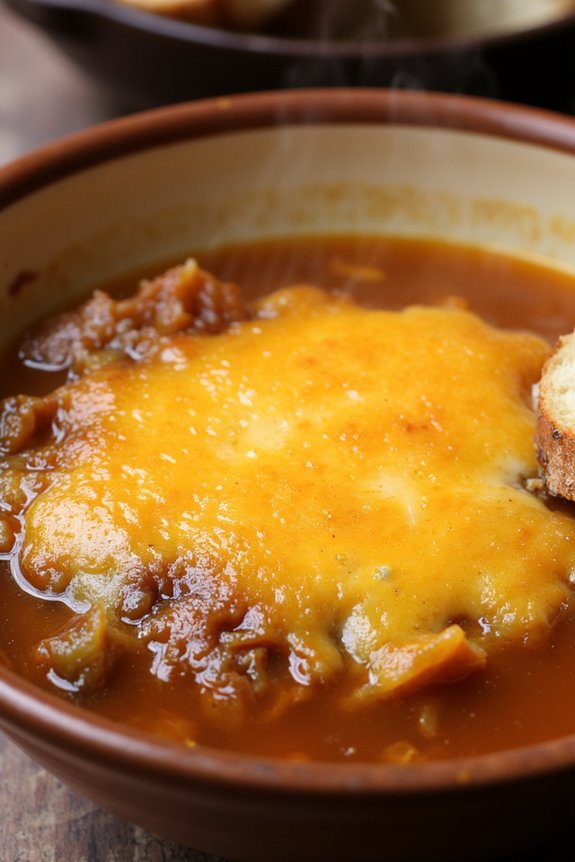
French Onion Soup is a classic French dish that perfectly captures the essence of comforting, homemade food. This savory soup, rich in flavor, is made with caramelized onions, beef broth, and topped with a slice of crusty bread and melted Gruyère cheese. It’s a perfect dish for a cozy weekend, providing warmth and a touch of elegance to any meal.
With its origins in the rustic kitchens of France, this soup has become a beloved staple worldwide, cherished for its robust taste and the simple pleasure it brings to the table.
Creating the perfect French Onion Soup involves a few key steps that require patience and attention to detail, particularly when caramelizing the onions. The deep, sweet flavor of the onions, achieved through slow cooking, is the heart of this dish. Coupled with the richness of the beef broth and the delightful crunch and creaminess from the bread and cheese topping, this soup is a symphony of textures and flavors.
Ideal for serving 4-6 people, this recipe will guide you through each step to guarantee your French Onion Soup is nothing short of spectacular.
Ingredients (serving size: 4-6 people):
- 6 large yellow onions, thinly sliced
- 4 tablespoons unsalted butter
- 1 tablespoon olive oil
- 1 teaspoon sugar
- 1 teaspoon salt
- 1/2 cup dry white wine
- 8 cups beef broth
- 2 tablespoons all-purpose flour
- 2 bay leaves
- 1 teaspoon fresh thyme leaves (or 1/2 teaspoon dried thyme)
- Salt and pepper to taste
- 1 baguette, sliced into 1-inch thick rounds
- 2 cups grated Gruyère cheese
Cooking Instructions:
- Caramelize the Onions: In a large pot or Dutch oven, heat the butter and olive oil over medium heat. Add the sliced onions, sugar, and 1 teaspoon of salt. Cook, stirring occasionally, for about 30-40 minutes until the onions are deeply browned and caramelized. Be patient and adjust the heat to prevent burning.
- Deglaze the Pot: Add the white wine to the pot, scraping up any browned bits from the bottom. Let it simmer for 2-3 minutes until the wine is mostly evaporated.
- Add Broth and Herbs: Stir in the flour and cook for another 2 minutes. Gradually add the beef broth while stirring to avoid lumps. Add the bay leaves and thyme. Bring the soup to a boil, then reduce the heat and let it simmer for about 30 minutes. Season with salt and pepper to taste.
- Prepare the Bread Topping: Preheat your oven broiler. Arrange the baguette slices on a baking sheet and toast them under the broiler until golden, about 1-2 minutes per side. Remove from the oven and set aside.
- Assemble and Serve: Remove the bay leaves from the soup. Ladle the hot soup into oven-safe bowls. Place a toasted baguette slice on top of each bowl and generously sprinkle with Gruyère cheese. Place the bowls on a baking sheet and broil in the oven until the cheese is melted and bubbly, about 3-5 minutes. Serve immediately.
Extra Tips: When caramelizing the onions, it’s important not to rush the process. The slow cooking allows the onions to develop their natural sweetness and rich color, which is vital for the flavor of the soup.
If you notice the onions sticking to the bottom of the pot, add a small splash of water to help lift them without burning. This dish can also be prepared a day ahead and reheated, which enhances the flavors even further. Just add the bread and cheese topping right before serving to keep it fresh and delicious.
Ratatouille
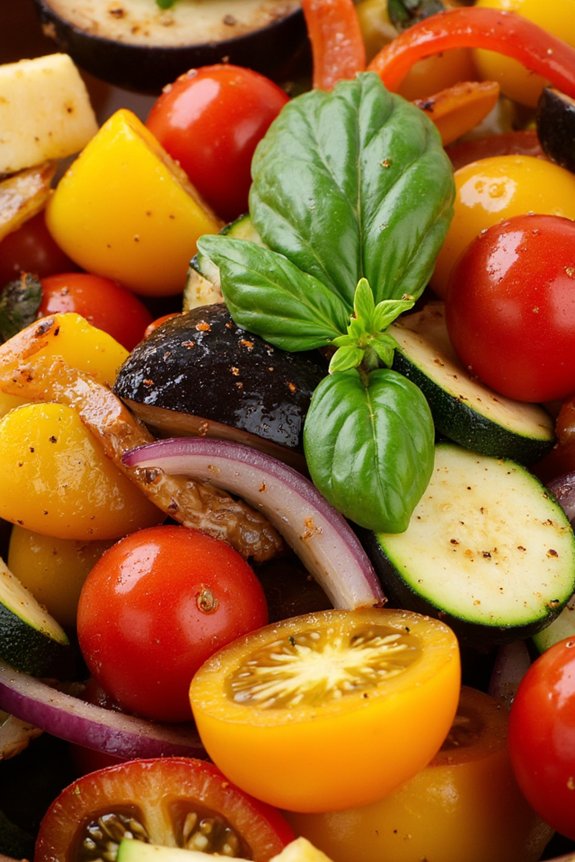
Ratatouille is an iconic French dish that hails from the Provence region, known for its vibrant colors and rich flavors. This vegetable stew combines a harmonious blend of summer vegetables, herbs, and olive oil to create a wholesome, satisfying meal. The key to a successful Ratatouille is in the slow cooking process, which allows the flavors to meld together beautifully.
Traditionally served as a side dish, Ratatouille can also be enjoyed as a main course, particularly when paired with crusty bread or served over a bed of rice or pasta.
This recipe for Ratatouille is perfect for a weekend gathering or a comforting family meal, serving 4-6 people. It features a combination of eggplant, zucchini, bell peppers, tomatoes, and aromatic herbs de Provence. By following a methodical layering and cooking process, each vegetable retains its individual taste while contributing to the overall depth of the dish.
Whether you’re a seasoned cook or a novice in the kitchen, this Ratatouille recipe promises to deliver a taste of French cuisine right to your dining table.
Ingredients (serving size: 4-6 people):
- 2 medium eggplants
- 2 medium zucchinis
- 1 red bell pepper
- 1 yellow bell pepper
- 1 large onion
- 4 ripe tomatoes
- 3 cloves garlic
- 1/4 cup olive oil
- 1 teaspoon herbes de Provence
- Salt and pepper to taste
- Fresh basil leaves for garnish
Cooking Instructions:
- Prepare the Vegetables: Begin by washing all the vegetables thoroughly. Peel the eggplants and cut them into 1-inch cubes. Slice the zucchinis into 1/4-inch thick rounds. Core and deseed the bell peppers, then slice them into strips. Dice the onion and chop the garlic finely. Finally, score the tomatoes with an “X” on the bottom and blanch them in boiling water for 30 seconds, then peel and chop them.
- Cook the Eggplant: In a large skillet or Dutch oven, heat 2 tablespoons of olive oil over medium heat. Add the eggplant cubes and sauté for about 5-7 minutes, until they begin to soften. Remove the eggplant from the skillet and set aside.
- Sauté the Vegetables: In the same skillet, add another tablespoon of olive oil. Add the onion and garlic, sautéing until the onion becomes translucent. Add the bell peppers and zucchini, cooking for about 5 minutes until they start to soften.
- Add the Tomatoes: Stir in the chopped tomatoes and herbes de Provence. Let the mixture cook for another 5 minutes, allowing the tomatoes to break down slightly and the flavors to begin melding.
- Combine and Simmer: Return the eggplant to the skillet, combining it with the other vegetables. Lower the heat to a gentle simmer, cover the skillet, and let it cook for about 30-40 minutes. Stir occasionally, allowing the vegetables to become tender and the flavors to blend thoroughly.
- Season and Serve: Taste the Ratatouille and season with salt and pepper as needed. Remove from heat and let the dish rest for a few minutes before serving. Garnish with fresh basil leaves for an aromatic finish.
Extra Tips:
For an even more flavorful Ratatouille, consider roasting the vegetables separately in the oven before combining them in the skillet. This will enhance their natural sweetness and add a slightly smoky depth to the dish.
Additionally, if fresh tomatoes aren’t in season, you can use canned diced tomatoes as a substitute. Ratatouille can be made ahead of time, as the flavors often improve after a day or two in the refrigerator. Reheat gently on the stove before serving to preserve the texture of the vegetables.
Coq Au Vin
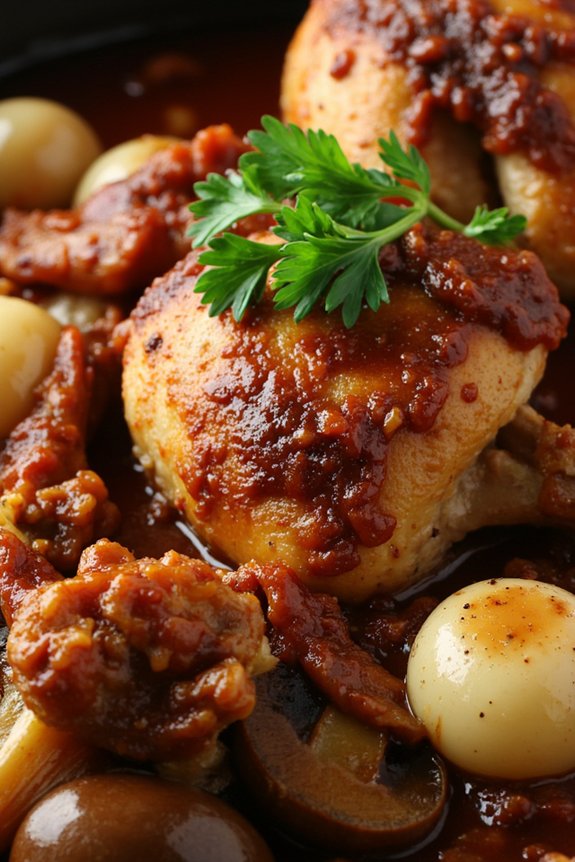
Coq Au Vin is a classic French dish that translates to “rooster in wine.” This rustic, hearty stew is traditionally made with chicken, red wine, bacon, mushrooms, and onions, simmered together to create a flavorful and comforting meal. The dish’s origins date back to ancient Gaul, with the slow-cooking method being used to tenderize tough cuts of meat.
Today, Coq Au Vin is typically made with chicken, as it’s more readily available, but the dish retains its characteristic rich and savory flavor profile. Perfect for a weekend meal, Coq Au Vin is best enjoyed with a glass of wine and crusty bread to soak up the delicious sauce.
The recipe involves a few steps to build layers of flavor, but the result is well worth the effort. The key to this dish is patience, as allowing the ingredients to simmer gently will meld the flavors beautifully. Whether you’re hosting a dinner party or looking for a comforting home-cooked meal, Coq Au Vin is sure to impress with its depth of flavor and aromatic presence.
Ingredients (serves 4-6):
- 1 whole chicken, cut into pieces
- Salt and pepper, to taste
- 2 tablespoons olive oil
- 4 slices bacon, diced
- 1 onion, chopped
- 2 cloves garlic, minced
- 2 tablespoons all-purpose flour
- 2 cups red wine
- 1 cup chicken broth
- 2 tablespoons tomato paste
- 1 bay leaf
- 1 teaspoon fresh thyme
- 8 ounces mushrooms, quartered
- 12 pearl onions, peeled
- 2 tablespoons unsalted butter
- Fresh parsley, chopped (for garnish)
Instructions:
- Prepare the Chicken: Season the chicken pieces generously with salt and pepper. Heat olive oil in a large Dutch oven or heavy-bottomed pot over medium-high heat. Add the chicken pieces in batches, browning each side until golden. Remove and set aside.
- Cook the Bacon: In the same pot, add the diced bacon and cook until crispy. Remove the bacon with a slotted spoon and set aside, leaving the drippings in the pot.
- Sauté Vegetables: Add the chopped onion and garlic to the pot and sauté until the onion is translucent, about 5 minutes. Stir in the flour and cook for another 2 minutes to form a roux.
- Add Liquids: Slowly pour in the red wine, stirring constantly to avoid lumps. Add the chicken broth, tomato paste, bay leaf, and thyme. Bring to a simmer.
- Combine Ingredients: Return the chicken and bacon to the pot, ensuring the chicken is mostly submerged in the liquid. Cover and simmer on low heat for about 30 minutes.
- Cook the Mushrooms and Onions: While the chicken simmers, melt butter in a skillet over medium heat. Add the quartered mushrooms and pearl onions, cooking until the mushrooms are browned and the onions are tender, about 10 minutes.
- Finish the Dish: Add the mushrooms and onions to the chicken mixture. Continue to simmer uncovered for another 20-30 minutes, allowing the sauce to thicken and the flavors to meld.
- Serve: Remove the bay leaf and adjust seasoning with salt and pepper if needed. Garnish with chopped parsley before serving.
Extra Tips:
When preparing Coq Au Vin, choosing a good quality red wine is essential, as it will considerably contribute to the dish’s flavor. A Burgundy or Pinot Noir are traditionally used, but any dry red wine will suffice.
Additionally, if time allows, marinate the chicken in the wine overnight to deepen the flavors further. Remember to cook the dish slowly and gently to allow all the ingredients to meld together harmoniously. Serve with mashed potatoes or French bread to soak up the delightful sauce.
Beef Bourguignon
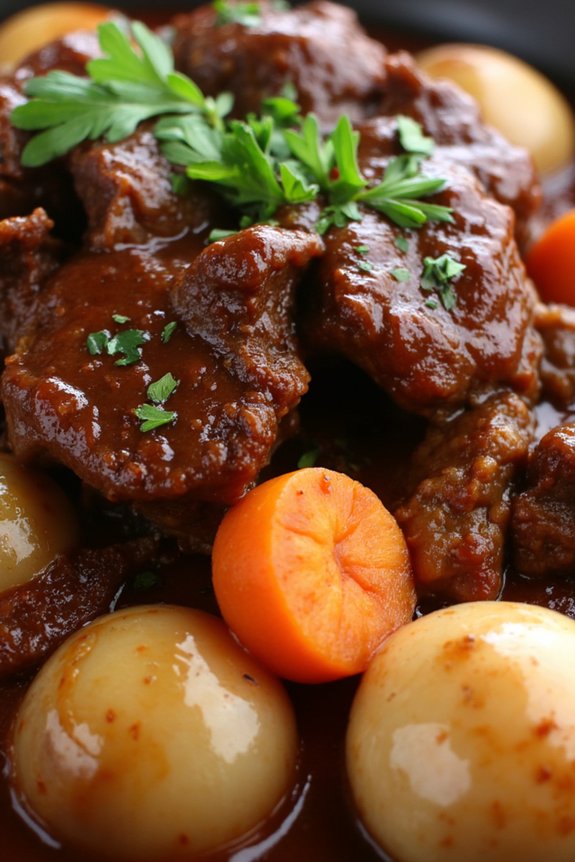
Beef Bourguignon is a classic French dish that combines the rich flavors of beef stewed in red wine with the aromatic essence of herbs and vegetables. This hearty dish is perfect for a weekend dinner, bringing warmth and comfort to your table.
Originating from the Burgundy region of France, Beef Bourguignon is traditionally slow-cooked to allow the flavors to fully develop, resulting in tender meat and a deeply flavored sauce. This dish is a true indication of the art of French cooking, showcasing the harmonious blend of simple ingredients to create something truly special.
Perfect for serving 4-6 people, Beef Bourguignon is best enjoyed with a side of crusty bread or creamy mashed potatoes to soak up the rich sauce. The dish may take a bit of patience and time, but the end result is well worth the effort.
The slow cooking process not only tenderizes the beef but also infuses it with the complex flavors of wine, herbs, and vegetables, creating a meal that’s both satisfying and memorable. Prepare this dish when you have a leisurely afternoon and are ready to savor the comforting aroma that will fill your kitchen.
Ingredients:
- 2 tablespoons olive oil
- 6 slices of bacon, chopped
- 3 pounds beef chuck, cut into 2-inch cubes
- Salt and black pepper to taste
- 1 large onion, sliced
- 2 carrots, sliced
- 2 cloves garlic, minced
- 2 tablespoons all-purpose flour
- 3 cups red wine (such as Burgundy or Pinot Noir)
- 2 cups beef broth
- 1 tablespoon tomato paste
- 1 teaspoon fresh thyme leaves
- 2 bay leaves
- 1 pound pearl onions, peeled
- 1 pound mushrooms, quartered
- 2 tablespoons unsalted butter
- Fresh parsley, chopped for garnish
Instructions:
- Prepare the Ingredients: Begin by preheating your oven to 325°F (160°C). In a large Dutch oven or heavy-bottomed pot, heat the olive oil over medium heat. Add the chopped bacon and cook until crisp. Remove the bacon with a slotted spoon and set it aside, leaving the drippings in the pot.
- Brown the Beef: Season the beef cubes with salt and black pepper. In batches, add the beef to the pot and brown it on all sides. Avoid overcrowding the pot to guarantee even browning. Once browned, remove the beef and set it aside with the bacon.
- Sauté the Vegetables: In the same pot, add the sliced onion and carrots. Cook for about 5 minutes until the onions are soft and translucent. Stir in the minced garlic and cook for an additional minute.
- Create the Base: Sprinkle the flour over the vegetables and stir to coat. This will help thicken the sauce. Gradually add the red wine, scraping up any browned bits from the bottom of the pot. Then, add the beef broth, tomato paste, thyme, and bay leaves, stirring to combine.
- Combine and Cook: Return the beef and bacon to the pot. Bring the mixture to a simmer, then cover and transfer the pot to the preheated oven. Let it cook for 2.5 to 3 hours, or until the beef is tender.
- Cook the Pearl Onions and Mushrooms: About 30 minutes before the beef is done, melt the butter in a skillet over medium heat. Add the pearl onions and mushrooms, cooking until they’re lightly browned, about 10 minutes.
- Finish the Dish: Once the beef is tender, add the cooked onions and mushrooms to the pot. Stir and let them cook with the stew for another 10 minutes on the stovetop. Taste and adjust seasoning if needed.
- Serve: Garnish with fresh parsley before serving. Pair with mashed potatoes or crusty bread to enjoy the full flavor of the dish.
Extra Tips:
When selecting the wine for Beef Bourguignon, choose a wine that you’d enjoy drinking, as the flavor of the wine will greatly affect the overall taste of the dish. Burgundy or Pinot Noir are traditional choices.
If you have time, marinate the beef in red wine, garlic, and herbs overnight to enhance its flavor even more. Pearl onions can be tricky to peel; blanching them in boiling water for a minute and then transferring them to cold water will make it easier to remove their skins.
Finally, make this dish a day ahead if possible, as the flavors develop and improve with time.
Bouillabaisse
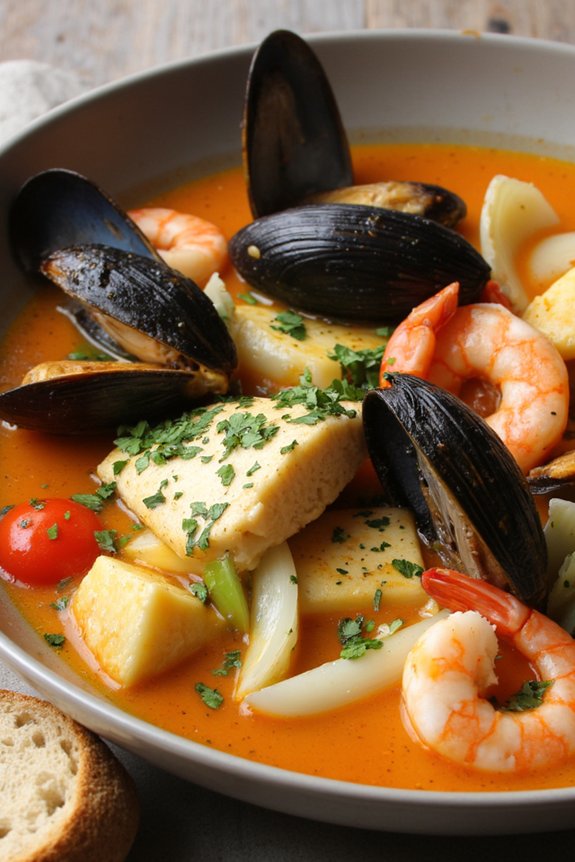
Bouillabaisse is a classic French seafood stew that hails from the Mediterranean coast, specifically the region of Provence. Traditionally, it was a humble dish made from the bountiful catch of the day that fishermen couldn’t sell. Over time, bouillabaisse has evolved into a celebrated culinary masterpiece, featuring a rich broth infused with aromatic herbs, tomatoes, saffron, and a variety of fresh seafood. This dish is perfect for a weekend gathering, where its complex flavors can be fully appreciated.
The heart of a good bouillabaisse lies in its broth, which should be fragrant and deeply flavored. The selection of seafood is vital, typically including a mix of firm white fish and shellfish such as mussels, clams, and shrimp. The stew is often served with a side of rouille, a garlicky mayonnaise-like sauce, along with crusty bread to soak up the delicious broth. Here is a recipe that serves 4-6 people, perfect for sharing with family and friends.
Ingredients:
- 2 tablespoons olive oil
- 1 large onion, chopped
- 2 leeks, white and light green parts only, sliced
- 3 cloves garlic, minced
- 1 fennel bulb, thinly sliced
- 1 large tomato, chopped
- 1 teaspoon saffron threads
- 1 teaspoon dried thyme
- 1 bay leaf
- 1/2 teaspoon orange zest
- 1 cup dry white wine
- 4 cups fish stock or chicken broth
- Salt and freshly ground black pepper to taste
- 1 pound firm white fish (such as cod or halibut), cut into chunks
- 12 mussels, cleaned and debearded
- 12 clams, scrubbed
- 12 large shrimp, peeled and deveined
- 1/4 cup chopped fresh parsley
- Crusty bread, for serving
- Rouille (optional), for serving
Instructions:
- Prepare the Aromatics: In a large pot, heat the olive oil over medium heat. Add the chopped onion, leeks, and garlic, and sauté until they become soft and translucent, about 5 minutes. Add the fennel and tomato, and cook for an additional 3-4 minutes until the vegetables are softened.
- Infuse the Broth: Stir in the saffron threads, thyme, bay leaf, and orange zest to the pot. Pour in the white wine and bring the mixture to a simmer. Allow it to cook for about 5 minutes, reducing slightly, to concentrate the flavors.
- Create the Base: Add the fish stock (or chicken broth) to the pot. Season with salt and black pepper to taste. Bring the mixture to a boil, then reduce the heat and let it simmer gently for 20 minutes to allow the flavors to meld together.
- Add the Seafood: Increase the heat to medium-high. Add the chunks of white fish to the pot, followed by the mussels, clams, and shrimp. Cover the pot and cook for about 5-7 minutes, or until the shellfish have opened and the fish is cooked through.
- Finish and Serve: Discard any unopened shellfish. Stir in the chopped parsley. Taste and adjust the seasoning if necessary. Serve the bouillabaisse hot, accompanied by crusty bread and a dollop of rouille on the side if desired.
Extra Tips:
When preparing bouillabaisse, make sure that the seafood is as fresh as possible to enhance the flavor of the dish. If saffron is unavailable, you can substitute with a pinch of turmeric for color, though the taste will differ slightly.
Be mindful not to overcook the seafood; it should be tender and just cooked through. Finally, the rouille is optional but highly recommended for its spicy, garlicky kick that complements the stew beautifully.
Tarte Tatin
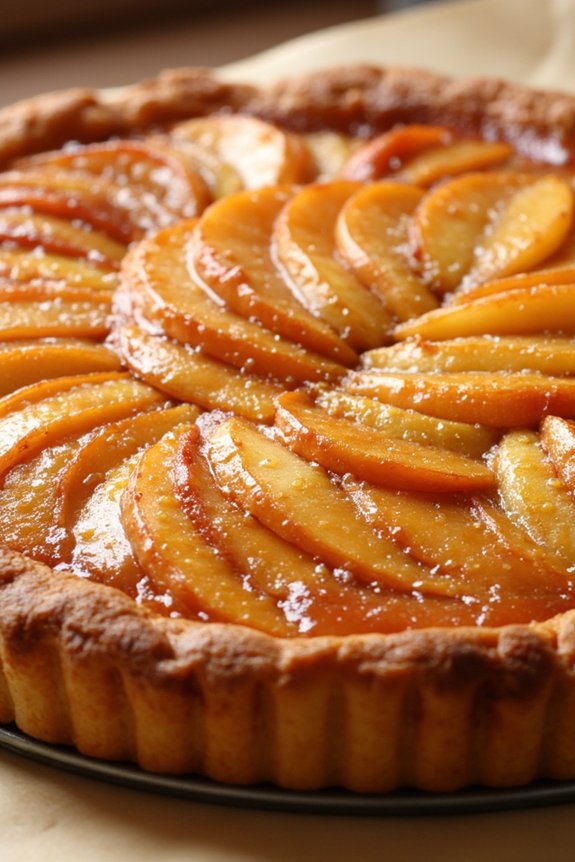
Tarte Tatin is a classic French dessert that transforms simple ingredients into a delightful, caramelized upside-down tart. Originating from the Loire Valley, this dish is believed to have been created by accident in the late 19th century by the Tatin sisters.
Whether it was a stroke of genius or sheer serendipity, Tarte Tatin has become a beloved staple in French cuisine, known for its rich, buttery flavor and the sweet, caramelized apples that melt in your mouth with every bite. Perfect for a weekend gathering, this dessert is both impressive and remarkably easy to prepare.
The magic of Tarte Tatin lies in its simplicity. The tart is made by cooking apples in caramelized sugar and butter, then covered with a flaky pastry crust that’s baked to golden perfection.
Once inverted, the tart reveals a stunning, glossy finish with apples that are tender yet hold their shape. This recipe serves 4-6 people, making it an ideal sweet treat for a family dinner or a cozy get-together with friends. Serve it warm with a dollop of crème fraîche or vanilla ice cream for an authentic French experience.
Ingredients (Serves 4-6):
- 6-8 medium-sized apples (such as Granny Smith or Golden Delicious)
- 1 cup granulated sugar
- 1/2 cup unsalted butter
- 1 sheet of puff pastry (store-bought or homemade)
- Juice of 1 lemon
- 1 teaspoon vanilla extract
- A pinch of salt
Cooking Instructions:
- Prepare the Apples: Peel, core, and quarter the apples. Toss them with lemon juice to prevent browning and set aside.
- Make the Caramel: In a large, oven-safe skillet, combine the sugar and butter over medium heat. Stir occasionally until the mixture turns a light amber color, creating a caramel. Be careful not to let it burn.
- Add the Apples: Arrange the apple quarters in the caramel in a circular pattern, with the rounded side down. Let them cook in the caramel for about 15 minutes over medium heat until they become slightly tender.
- Add Flavor: Stir in the vanilla extract and a pinch of salt to enhance the flavor. Continue to cook for an additional 5 minutes.
- Prepare the Pastry: Roll out the puff pastry to fit the size of your skillet. Carefully lay the pastry over the apples, tucking the edges down the sides of the skillet.
- Bake the Tart: Preheat your oven to 400°F (200°C). Place the skillet in the oven and bake for 25-30 minutes until the pastry is golden brown and crispy.
- Cool and Invert: Once baked, allow the tart to cool for about 5 minutes. Carefully invert the tart onto a serving plate by placing the plate over the skillet and flipping it quickly but gently.
Extra Tips:
For the best Tarte Tatin, choose apples that are firm and tart, as they hold their shape and balance the sweetness of the caramel.
If you’re new to making caramel, keep a close eye on the sugar and butter mixture to avoid burning; a light amber color is ideal. Remember to handle the skillet with care when flipping the tart, as the caramel will be hot.
For a creative twist, try adding a sprinkle of cinnamon or nutmeg to the apples for added warmth and depth of flavor.
Crêpes Suzette
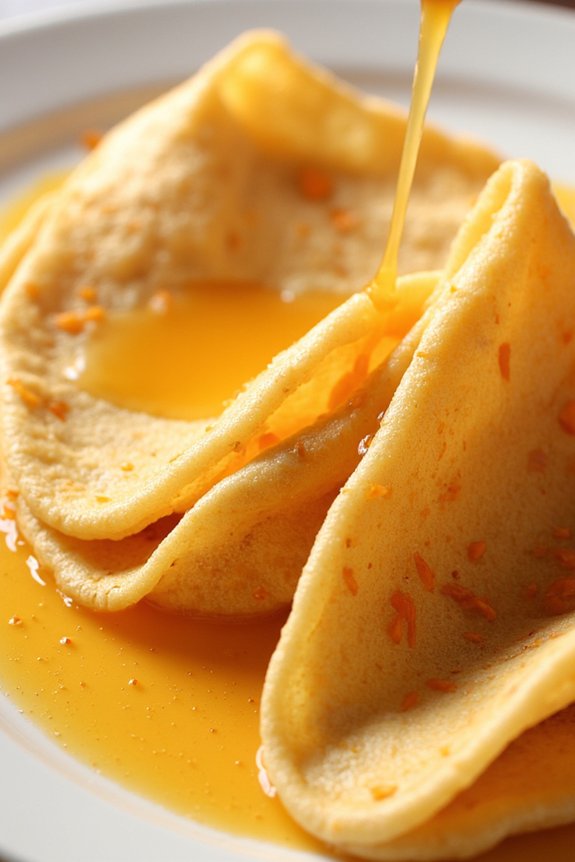
Crêpes Suzette is a classic French dessert that elevates the simple crêpe to a gourmet level. Often enjoyed as a sumptuous weekend treat, this dish combines delicate crêpes with a luscious, buttery orange sauce flambéed with Grand Marnier or another orange liqueur. The origins of Crêpes Suzette are somewhat debated, but it’s widely appreciated for its rich flavors and dramatic presentation. Perfect for a brunch or as a sweet ending to a meal, Crêpes Suzette brings a touch of elegance and a burst of citrus to the table.
The process of making Crêpes Suzette involves preparing the crêpes, creating the orange sauce, and finally, bringing everything together with a spectacular flambé. Each component of the dish requires attention and care, guaranteeing the crêpes are thin and tender while the sauce is perfectly balanced between sweet and tangy.
Once the crêpes are enveloped in the sauce and the flames have subsided, you’re left with a dish that’s as delightful to the eye as it’s to the palate.
Ingredients (Serves 4-6):
*For the Crêpes:*
- 1 cup all-purpose flour
- 2 large eggs
- 1/2 cup milk
- 1/2 cup water
- 1/4 teaspoon salt
- 2 tablespoons melted butter
For the Orange Sauce:
- 1/2 cup unsalted butter
- 1/2 cup granulated sugar
- Zest of 1 orange
- 1/2 cup fresh orange juice
- 1/4 cup Grand Marnier or Cointreau
Cooking Instructions:
- Prepare the Crêpe Batter: In a large mixing bowl, whisk together the flour and eggs. Gradually add the milk and water, stirring to combine. Add the salt and melted butter, and whisk until smooth. Let the batter rest for at least 30 minutes to allow the gluten to relax, resulting in tender crêpes.
- Cook the Crêpes: Heat a lightly greased non-stick skillet over medium heat. Pour about 1/4 cup of the batter into the skillet, swirling to coat the bottom evenly. Cook for 1-2 minutes until the edges start to lift and the bottom is lightly golden. Flip and cook for another 1 minute. Transfer to a plate and repeat with the remaining batter. You should have about 8-12 crêpes.
- Make the Orange Sauce: In a large skillet, melt the butter over medium heat. Add the sugar and orange zest, stirring until the sugar dissolves. Pour in the orange juice, allowing the mixture to simmer until slightly thickened, about 3-4 minutes.
- Flambé the Sauce: Carefully add the Grand Marnier to the skillet. Using a long match or a lighter, ignite the sauce to flambé. Let the flames burn off the alcohol, which should take a few seconds, and then gently swirl the skillet to mix.
- Combine Crêpes and Sauce: Fold each crêpe into quarters and place them into the skillet with the sauce. Spoon the sauce over the crêpes, guaranteeing they’re well coated. Allow them to soak in the sauce for a few minutes before serving.
Extra Tips:
When making Crêpes Suzette, be certain to use fresh orange juice and zest for the best flavor. The flambé step can be intimidating, but keeping a lid nearby to smother the flames if necessary can ease any concerns.
Serve the crêpes immediately after preparing them to enjoy the full effect of the warm, aromatic sauce. Additionally, experimenting with different liqueurs or adding a touch of vanilla can provide interesting variations to the traditional recipe.
Madeleines

Madeleines are a quintessential French pastry, known for their delicate, buttery flavor and distinct shell-like shape. These small sponge cakes are perfect for a weekend treat, combining simplicity and elegance in each bite.
Originating from the Lorraine region of France, madeleines are traditionally enjoyed with afternoon tea or coffee. Their light texture and subtle sweetness make them a delightful snack or dessert, and they can easily be customized with a hint of lemon, orange zest, or a touch of vanilla.
Making madeleines at home is a rewarding experience, and they require only a few basic ingredients that are likely already in your pantry. The key to achieving the classic hump and tender crumb is in the batter’s preparation and a brief chilling period before baking.
With a little patience and attention to detail, you can create these exquisite treats that will transport you to a quaint French café. This recipe makes enough to serve 4-6 people, providing about two madeleines per person.
Ingredients
- 2/3 cup all-purpose flour
- 3/4 teaspoon baking powder
- 1/4 teaspoon salt
- 1/2 cup unsalted butter, melted and cooled
- 2/3 cup granulated sugar
- 3 large eggs, at room temperature
- 1 teaspoon vanilla extract
- Zest of 1 lemon (optional)
- Powdered sugar, for dusting (optional)
Instructions
- Prepare the Dry Ingredients: In a medium bowl, whisk together the flour, baking powder, and salt. This guarantees that the leavening agent is evenly distributed and will help the madeleines rise evenly.
- Mix Wet Ingredients: In a separate large bowl, whisk the eggs and granulated sugar together until they become pale and thick. This should take about 5 minutes and will incorporate air into the mixture for a light texture.
- Combine Ingredients: Gently fold the flour mixture into the egg mixture in three additions, using a spatula. Be careful not to overmix, as this can deflate the batter.
- Add Flavorings: Fold in the melted butter, vanilla extract, and lemon zest (if using) until just combined. The batter should be smooth and shiny.
- Chill the Batter: Cover the bowl with plastic wrap and refrigerate for at least 1 hour, or up to overnight. Chilling the batter helps in forming the signature hump.
- Prepare the Pan: Preheat your oven to 375°F (190°C). Generously butter and flour a madeleine pan to prevent sticking. Tap out any excess flour.
- Fill the Molds: Spoon about 1 tablespoon of batter into each mold, filling them about 3/4 full. Don’t spread the batter; it will spread out naturally as it bakes.
- Bake: Place the pan in the center of the oven and bake for 10-12 minutes, or until the edges are golden brown and the centers spring back when lightly touched.
- Cool and Serve: Remove the madeleines from the oven and let them cool in the pan for a few minutes before gently turning them out onto a cooling rack. Dust with powdered sugar if desired before serving.
Extra Tips
For the best results, verify that all ingredients are at room temperature before starting. This helps them blend together more smoothly.
If you have the time, letting the batter rest overnight will enhance the flavor and texture of the madeleines. When buttering the madeleine pan, use a pastry brush to get into all the crevices, guaranteeing that your madeleines release easily after baking.
If you don’t have a madeleine pan, mini muffin tins can be used as an alternative, though they won’t have the classic shape. Enjoy these delightful treats fresh, as they’re best consumed the day they’re made.
Clafoutis With Cherries
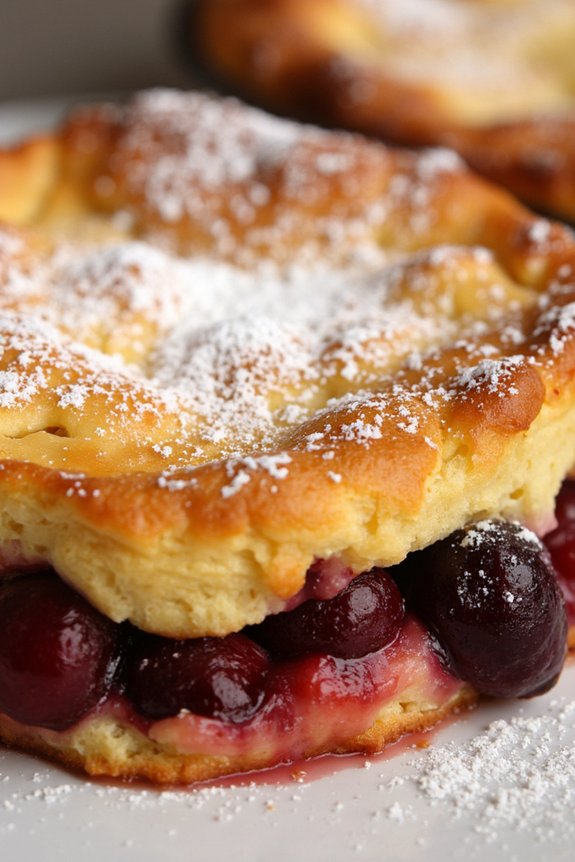
Clafoutis with cherries is a classic French dessert that’s both simple and elegant, perfect for bringing a touch of French sophistication to your weekend. Traditionally from the Limousin region, this delightful dish is made with fresh cherries suspended in a flan-like batter. The result is a wonderfully light and custardy texture, with the cherries imparting their juicy sweetness throughout.
This dessert isn’t only easy to make but also showcases the flavor of ripe, juicy cherries in a delightful way. Clafoutis is best enjoyed warm with a dusting of powdered sugar or a dollop of whipped cream. The cherries used in this recipe can be either sweet or tart, depending on your preference and availability.
While traditionally made with black cherries, feel free to experiment with other fruits if cherries aren’t in season. The versatile nature of clafoutis makes it a staple dessert in French homes, perfect for a cozy family gathering or an elegant dinner party.
Ingredients (serving size: 4-6 people):
- 1 pound fresh cherries, pitted
- 3 large eggs
- 1 cup whole milk
- 1/2 cup all-purpose flour
- 1/2 cup granulated sugar
- 1 teaspoon vanilla extract
- 1/4 teaspoon salt
- 2 tablespoons unsalted butter, melted
- Powdered sugar, for dusting
Cooking Instructions:
- Preheat the Oven: Start by preheating your oven to 350°F (175°C). This guarantees that the oven is at the correct temperature when you’re ready to bake the clafoutis.
- Prepare the Baking Dish: Grease a 9-inch round baking dish or pie pan with a bit of the melted butter. This will prevent the clafoutis from sticking and make it easy to serve.
- Arrange the Cherries: Spread the pitted cherries evenly across the bottom of the prepared baking dish. This forms the fruit layer of your clafoutis.
- Mix the Batter: In a mixing bowl, whisk together the eggs, milk, flour, sugar, vanilla extract, salt, and the remaining melted butter until smooth and well combined. The batter should be similar in consistency to pancake batter.
- Pour Over Cherries: Carefully pour the batter over the cherries in the baking dish, ensuring the cherries are evenly distributed and covered by the batter.
- Bake the Clafoutis: Place the baking dish in the preheated oven and bake for about 35-40 minutes, or until the clafoutis is puffed and golden brown. A toothpick inserted into the center should come out clean.
- Cool and Serve: Allow the clafoutis to cool slightly on a wire rack. Dust with powdered sugar before serving warm. It’s delicious on its own or with a scoop of vanilla ice cream or a dollop of whipped cream.
Extra Tips:
When making clafoutis with cherries, it’s important to use fresh, ripe cherries for the best flavor and texture. Make sure to pit the cherries carefully, as the pits can be hard to detect once baked.
If fresh cherries aren’t available, you can use frozen cherries, but make sure to thaw and drain them well to prevent excess moisture from affecting the texture of the dessert. Additionally, while clafoutis is best served warm, it can also be enjoyed at room temperature or chilled, making it a versatile dessert option for various occasions.
