

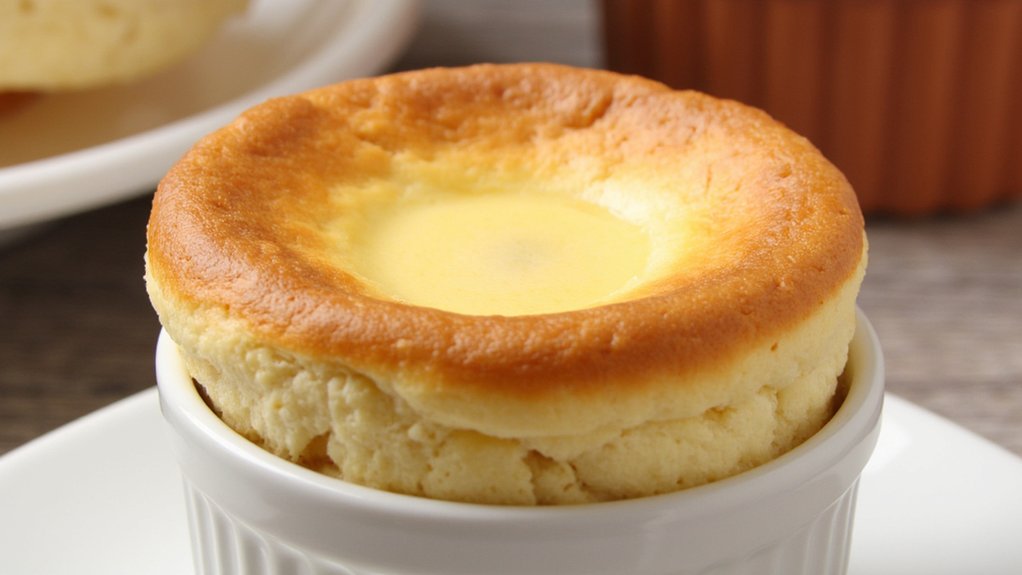
As I explored Pinterest, I found a delightful collection of French recipes that whisked me away to a culinary adventure. From the rich Coq Au Vin to the flaky Croissants, these dishes showcase the essence of French elegance and flavor. Picture the comforting aroma of Beef Bourguignon on a chilly evening or the delicate sweetness of Madeleines with your afternoon tea. Ready to explore these flavors? Join me on this delicious journey through some of the best French recipes Pinterest has to offer.
Coq Au Vin
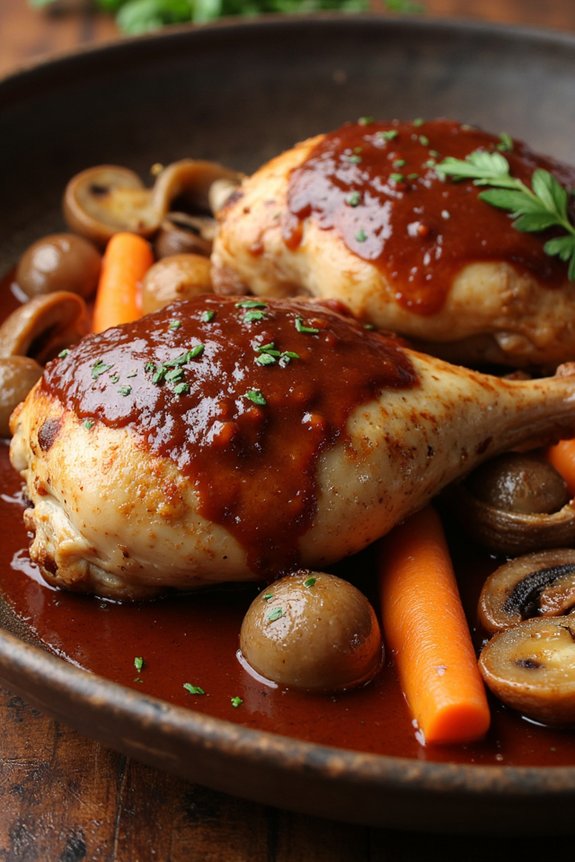
Coq Au Vin is a classic French dish that translates to “rooster in wine.” This hearty and flavorful dish has its origins in rustic French cooking, and it’s traditionally made with a tough rooster that’s slow-cooked in red wine until tender.
Over time, the dish has evolved and is now commonly prepared with chicken, combining rich flavors from the wine, aromatic herbs, and a medley of vegetables to create a comforting and sophisticated meal. This dish is perfect for cozy gatherings or special occasions, offering a taste of France with every bite.
The key to a successful Coq Au Vin lies in the quality of the ingredients and the slow cooking process that allows the flavors to meld together beautifully. The chicken is first browned to create a deep, savory base, and then simmered in a robust red wine sauce.
The addition of mushrooms, onions, and carrots enhances the dish with earthy and sweet notes, while herbs like thyme and bay leaves infuse it with an aromatic fragrance. Serve this delightful meal with crusty bread or creamy mashed potatoes to soak up the delicious sauce.
Ingredients (Serves 4-6)
- 1 whole chicken (about 3-4 lbs), cut into pieces
- Salt and black pepper, to taste
- 2 tablespoons olive oil
- 4 ounces bacon or pancetta, diced
- 1 large onion, chopped
- 2 cloves garlic, minced
- 2 tablespoons tomato paste
- 1 cup chicken broth
- 2 cups red wine (such as Burgundy or Pinot Noir)
- 2 tablespoons all-purpose flour
- 1 tablespoon butter
- 1 bay leaf
- 1 teaspoon dried thyme
- 8 ounces mushrooms, quartered
- 12 pearl onions, peeled
- 3 carrots, sliced
- Fresh parsley, for garnish
Cooking Instructions
- Prepare the Chicken: Season the chicken pieces with salt and black pepper. In a large Dutch oven or heavy pot, heat the olive oil over medium-high heat. Add the chicken pieces in batches and brown them on all sides, about 5-7 minutes per batch. Remove the chicken and set aside.
- Cook the Bacon and Veggies: In the same pot, add the diced bacon or pancetta and cook until crispy. Remove and set aside. Add the chopped onion and garlic to the pot, sautéing until the onion is translucent.
- Add Tomato Paste and Flour: Stir in the tomato paste and cook for 1-2 minutes. Sprinkle the flour over the mixture and stir to combine, cooking for another 1-2 minutes to remove the raw flour taste.
- Deglaze and Simmer: Pour in the red wine, scraping up any browned bits from the bottom of the pot. Add the chicken broth, bay leaf, and thyme. Return the chicken and bacon to the pot. Bring to a simmer, cover, and cook on low heat for about 45 minutes.
- Add Vegetables: While the chicken is simmering, in a separate pan, melt the butter and sauté the mushrooms, pearl onions, and carrots until they begin to caramelize. Add these vegetables to the pot with the chicken. Continue to cook for an additional 30 minutes, or until the chicken is tender and the sauce has thickened.
- Finish and Serve: Remove the bay leaf and adjust seasoning with salt and pepper, if needed. Garnish with fresh parsley before serving.
Extra Tips
When making Coq Au Vin, choosing a good quality red wine is essential, as it greatly influences the flavor of the dish. If possible, use a wine that you’d enjoy drinking, as the flavors will be more pronounced after cooking.
Additionally, letting the dish sit for a day in the refrigerator can enhance the flavors even further, making it an excellent make-ahead option. For a more authentic experience, serve the Coq Au Vin with a French baguette or creamy mashed potatoes to soak up the rich sauce.
Croissants
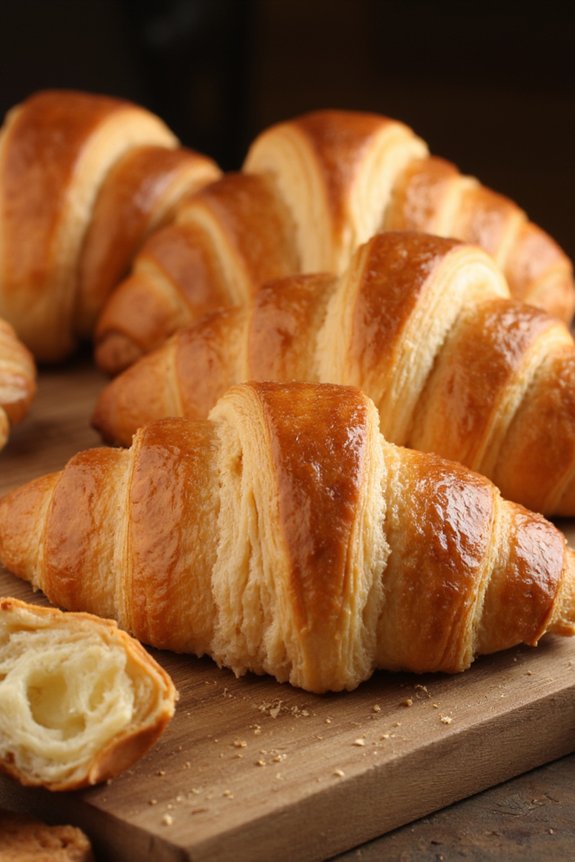
Croissants are a quintessential French pastry, known for their flaky, buttery layers and crescent shape. Making croissants from scratch is a labor of love, requiring time and patience, but the end result is truly rewarding. Perfect for breakfast or as a delightful snack any time of the day, homemade croissants bring the authentic taste of a French bakery right into your kitchen. This recipe yields 12 croissants, perfect for serving 4-6 people.
The process of making croissants involves creating a yeast dough, which is then layered with butter through a technique called lamination. This technique involves folding and rolling the dough multiple times to create the signature flaky layers. Though the process may seem intimidating at first, following the steps carefully will guarantee perfect croissants every time. With the right ingredients and a little practice, you’ll be able to impress your family and friends with your homemade French croissants.
Ingredients (for 4-6 people):
- 4 cups all-purpose flour
- 1/4 cup granulated sugar
- 2 1/4 teaspoons active dry yeast
- 1 1/4 teaspoons salt
- 1 1/4 cups whole milk, warm
- 1 cup unsalted butter, cold
- 1 large egg (for egg wash)
- 1 tablespoon water (for egg wash)
Instructions:
1. Prepare the Dough: In a large mixing bowl, combine the warm milk, sugar, and yeast. Let it sit for about 5 minutes until the mixture becomes frothy. Add the flour and salt, mixing until a dough forms. Knead the dough on a lightly floured surface for about 5-7 minutes until it’s smooth and elastic.
Place the dough in a greased bowl, cover it with a damp cloth, and let it rise at room temperature for 1-2 hours or until doubled in size.
2. Prepare the Butter Block****: While the dough is rising, prepare the butter block. Place the cold butter between two sheets of parchment paper and use a rolling pin to flatten it into a square about 1/2 inch thick. Chill the butter block in the refrigerator while the dough continues to rise.
3. Laminate the Dough: Once the dough has risen, punch it down and roll it out on a lightly floured surface into a large rectangle, about 1/2 inch thick. Place the chilled butter block in the center of the dough.
Fold the dough over the butter, sealing the edges. Roll it out gently into a long rectangle again. Fold the dough into thirds, like a letter. Wrap it in plastic wrap and refrigerate for 30 minutes to an hour.
4. Repeat the Folding: Remove the dough from the refrigerator and roll it out again into a rectangle. Fold into thirds, cover, and chill. Repeat this process 2 more times, chilling the dough between each fold.
5. Shape the Croissants: After the final fold and chill, roll the dough out into a large rectangle, about 1/4 inch thick. Cut the dough into triangles. Roll each triangle from the wide end to the tip, forming a crescent shape.
Place the croissants on a baking sheet lined with parchment paper, leaving space between each.
6. Proof the Croissants: Cover the croissants with a damp cloth and let them proof at room temperature for 1-2 hours, or until they’ve doubled in size.
7. Bake: Preheat the oven to 400°F (200°C). In a small bowl, whisk together the egg and water to create the egg wash. Brush the tops of the croissants with the egg wash.
Bake for 15-20 minutes or until the croissants are golden brown and flaky. Allow them to cool slightly before serving.
Extra Tips: When making croissants, make sure your kitchen environment is cool to prevent the butter from melting into the dough during the lamination process.
If at any point the dough or butter starts to feel too soft, chill it in the refrigerator for a few minutes to firm it up. Additionally, use high-quality butter for the best flavor and results.
Practice patience and precision in rolling and folding the dough, as these steps are essential for achieving the classic layers that define a perfect croissant.
Ratatouille
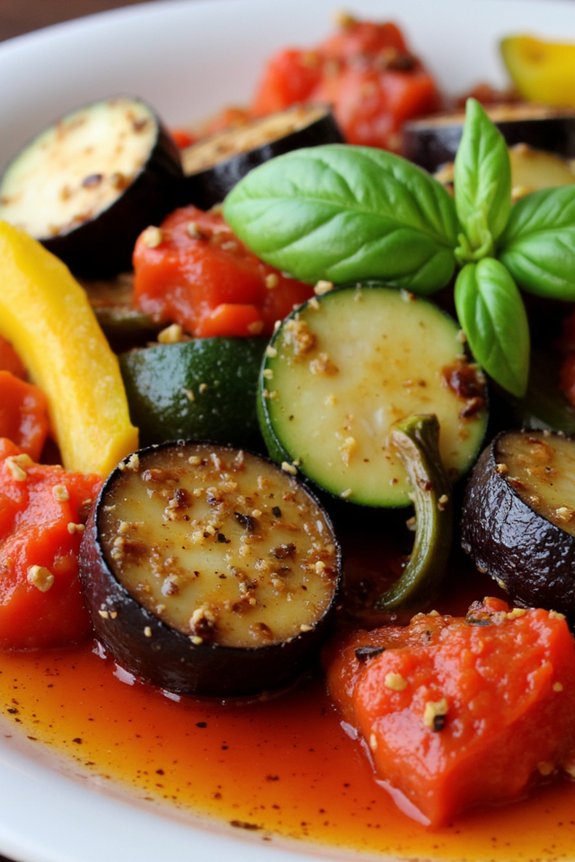
Ratatouille is a classic French Provençal stewed vegetable dish that’s as colorful as it’s flavorful. Originating from Nice, this rustic dish combines fresh summer vegetables like eggplant, zucchini, and bell peppers, cooked slowly to enhance their natural sweetness and create a rich, savory taste. The harmonious blend of vegetables and herbs makes Ratatouille a beloved staple in French cuisine and a perfect accompaniment to any meal.
It’s a versatile dish that can be enjoyed as a main course, side dish, or even as a topping for bread or pasta. The beauty of Ratatouille lies in its simplicity and the way it showcases the natural flavors of the ingredients. Traditionally, each vegetable is cooked separately to maintain its distinct taste and texture, then combined into a delightful medley.
This recipe serves 4-6 people, making it perfect for a family meal or a gathering with friends. Whether you’re a seasoned cook or a beginner in the kitchen, this Ratatouille recipe will guide you through creating a dish that’s both comforting and elegant.
Ingredients for 4-6 servings:
- 1 large eggplant
- 2 medium zucchinis
- 1 red bell pepper
- 1 yellow bell pepper
- 1 large onion
- 4 ripe tomatoes
- 4 cloves of garlic
- 1/4 cup olive oil
- 1 teaspoon dried thyme
- 1 teaspoon dried oregano
- Salt and pepper to taste
- Fresh basil leaves for garnish
Cooking Instructions:
- Prepare the Vegetables: Begin by washing all the vegetables thoroughly. Cut the eggplant and zucchinis into half-inch thick slices. Dice the bell peppers and onion into medium-sized pieces. Peel and chop the garlic cloves finely. Finally, cut the tomatoes into small cubes.
- Sauté the Onion and Garlic: In a large pot or deep skillet, heat the olive oil over medium heat. Add the chopped onion and garlic, and sauté until the onion becomes translucent and the garlic is fragrant, about 5 minutes.
- Add the Bell Peppers: Stir in the diced red and yellow bell peppers. Cook for another 5 minutes, allowing the peppers to soften slightly.
- Cook the Eggplant and Zucchini: Add the sliced eggplant to the pot and cook for about 10 minutes, stirring occasionally until the eggplant begins to soften. Next, add the zucchini slices and continue cooking for another 5 minutes.
- Incorporate the Tomatoes: Add the cubed tomatoes to the mixture, stirring well to combine all the ingredients. Season with salt, pepper, dried thyme, and oregano.
- Simmer the Ratatouille: Lower the heat to a simmer, cover the pot, and let the Ratatouille cook for about 30 minutes. Stir occasionally to make sure all the vegetables are evenly cooked and the flavors meld together.
- Adjust Seasoning and Serve: Taste the Ratatouille and adjust the seasoning if needed. Once the vegetables are tender and the sauce has thickened, remove from heat. Garnish with fresh basil leaves before serving.
Extra Tips:
For a more intense flavor, consider roasting the vegetables in the oven before combining them in the pot. This will caramelize the sugars and add depth to the dish.
Also, try to use vegetables that are in season for the best taste. Ratatouille can be made a day in advance, as the flavors tend to improve overnight.
Finally, serve Ratatouille with crusty bread or as a topping for pasta or grains to make it a complete meal. Enjoy your culinary journey to Provence with this delightful dish!
French Onion Soup
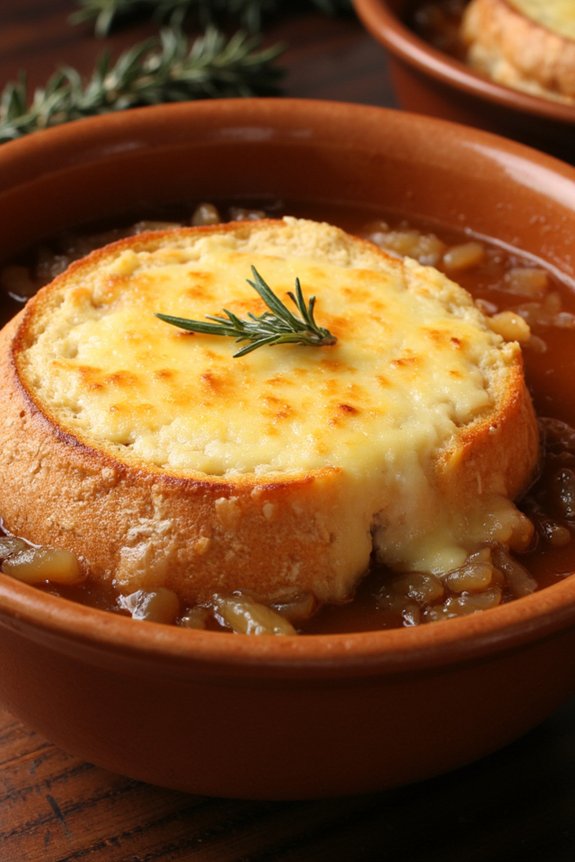
French Onion Soup is a classic French dish that has warmed the hearts and bellies of many around the world. This comforting soup is known for its rich, savory flavor, derived from the perfect combination of caramelized onions, beef broth, and a touch of wine. Traditionally served with a crusty baguette and a generous topping of melted Gruyère cheese, French Onion Soup is the epitome of rustic French cuisine. Perfect for a cozy night in or as a starter for an elegant dinner, this dish is as much about the experience of slow-cooking as it’s about the taste.
The beauty of French Onion Soup lies in its simplicity and the depth of flavor that can be achieved with just a few ingredients. Patience is key in caramelizing the onions, which adds a natural sweetness and richness to the soup. The addition of beef broth and a splash of wine enhances the flavor profile, while the cheesy, toasted bread topping provides a delightful textural contrast. This recipe serves 4-6 people, making it ideal for a family meal or a small gathering with friends.
Ingredients for 4-6 Servings:
- 6 large onions, thinly sliced
- 4 tablespoons unsalted butter
- 2 tablespoons olive oil
- 1 teaspoon salt
- 1/2 teaspoon sugar
- 2 cloves garlic, minced
- 8 cups beef broth
- 1/2 cup dry white wine
- 2 tablespoons all-purpose flour
- 1 bay leaf
- 1/4 teaspoon dried thyme
- Salt and pepper, to taste
- 1 baguette, sliced
- 2 cups grated Gruyère cheese
Cooking Instructions:
- Prepare the Onions: In a large pot over medium heat, melt the butter with the olive oil. Add the sliced onions and sprinkle with salt and sugar. Cook the onions, stirring frequently, for about 25-30 minutes until they’re deeply caramelized and golden brown.
- Add Garlic and Flour: Once the onions are caramelized, add the minced garlic and cook for an additional 1-2 minutes. Sprinkle the flour over the onions, stirring constantly, to create a roux. Cook for another 2 minutes to remove the raw flour taste.
- Deglaze and Simmer: Pour in the white wine to deglaze the pot, scraping up any browned bits from the bottom. Add the beef broth, bay leaf, and dried thyme. Bring the mixture to a boil, then reduce the heat and let it simmer for about 30-40 minutes to allow the flavors to meld. Season with salt and pepper to taste.
- Prepare the Bread: While the soup is simmering, preheat your oven to 350°F (175°C). Arrange the baguette slices on a baking sheet and toast them in the oven for about 10 minutes, flipping halfway through, until crisp and golden.
- Assemble and Serve: Ladle the hot soup into oven-safe bowls. Top each bowl with a toasted baguette slice and a generous amount of grated Gruyère cheese. Place the bowls under the broiler for about 2-3 minutes, or until the cheese is bubbly and golden brown. Serve immediately.
Extra Tips:
For the best results, take your time caramelizing the onions; this is where the soup gets most of its flavor. If you can’t find Gruyère cheese, you can substitute it with Swiss cheese or Emmental. To enhance the flavor further, consider using a homemade beef broth if available. Additionally, if you prefer a thicker soup, adjust the amount of flour to your liking.
Finally, be careful when broiling the cheese-topped soup bowls, as they can quickly go from golden brown to burnt. Enjoy the soup hot with a side salad or extra slices of baguette for dipping.
Quiche Lorraine

Quiche Lorraine is a classic French dish that showcases the simplicity and elegance of French cuisine. Originating from the Lorraine region in northeastern France, this savory tart is known for its creamy custard filling, rich with eggs, cream, and the distinct flavor of smoky bacon or lardons. The flaky pastry crust provides a delightful contrast to the smooth filling, making it a versatile choice for brunch, lunch, or a light dinner.
Traditionally, Quiche Lorraine doesn’t include cheese, allowing the flavors of the bacon and custard to shine through, but modern variations often incorporate Gruyère or Swiss cheese for an added layer of richness.
Preparing a Quiche Lorraine can be a rewarding experience, as it allows you to explore the art of pastry making and the science of creating a perfectly set custard. The key to a successful quiche is balancing the right proportions of eggs and cream, guaranteeing a silky texture without it being too runny or too firm. Additionally, using high-quality ingredients such as fresh cream, farm eggs, and thick-cut bacon can elevate the dish to new heights.
Whether you’re a seasoned cook or a beginner, this recipe will guide you through the steps to create an authentic Quiche Lorraine that can serve 4-6 people.
Ingredients:
- 1 9-inch pie crust (homemade or store-bought)
- 6 slices of thick-cut bacon or 150g lardons
- 1 cup heavy cream
- 1 cup whole milk
- 3 large eggs
- Salt to taste
- Freshly ground black pepper to taste
- Pinch of nutmeg (optional)
- 1 tablespoon unsalted butter
Instructions:
- Preheat the Oven: Begin by preheating your oven to 375°F (190°C). This guarantees that the oven is at the right temperature when you’re ready to bake the quiche, promoting even cooking and a flaky crust.
- Prepare the Pie Crust: Roll out your pie dough and gently press it into a 9-inch pie pan. Trim any excess dough hanging over the edges. Prick the bottom with a fork to prevent the crust from puffing up during baking. Line the crust with parchment paper and fill it with pie weights or dried beans to blind bake it. Bake for 10-15 minutes until the edges are lightly golden. Remove from the oven and allow to cool.
- Cook the Bacon: While the crust is baking, cook the bacon in a skillet over medium heat until crisp. Once cooked, transfer the bacon to a paper towel-lined plate to drain excess fat. When cool enough to handle, chop the bacon into small pieces.
- Prepare the Custard: In a mixing bowl, whisk together the heavy cream, milk, and eggs until well combined. Season with salt, pepper, and a pinch of nutmeg if using. The nutmeg adds a subtle warmth to the custard.
- Assemble the Quiche: Scatter the cooked bacon evenly over the bottom of the cooled pie crust. Pour the custard mixture over the bacon, distributing it evenly.
- Bake the Quiche: Place the assembled quiche in the preheated oven and bake for 30-35 minutes, or until the custard is set but still slightly wobbly in the center. The top should be lightly golden.
- Cool and Serve: Remove the quiche from the oven and allow it to cool for at least 10 minutes before slicing. This resting time helps the custard set further, making it easier to slice.
Extra Tips: When making Quiche Lorraine, it’s essential not to overbake it, as the custard can become tough and lose its creamy texture. Also, let the quiche cool down a little before serving; this not only enhances the flavors but also guarantees cleaner slices. If you’re making your own pastry, chilling the dough before rolling it out can prevent it from shrinking during baking. Finally, feel free to experiment with adding herbs like thyme or chives for a fresh twist on this timeless dish.
Beef Bourguignon
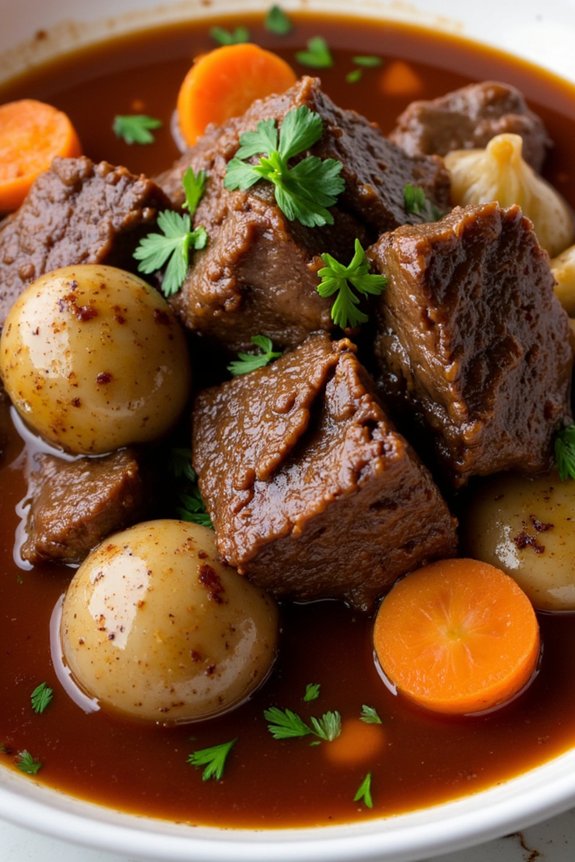
Beef Bourguignon is a classic French dish that combines the rich flavors of beef, red wine, and aromatic vegetables simmered to perfection. Originating from the Burgundy region of France, this dish is traditionally made with Burgundy wine. The slow cooking process guarantees that the beef becomes tender and absorbs the flavors of the wine and herbs, making it a perfect comfort food for any occasion.
This hearty stew is ideal for a cozy dinner with family or friends, served with crusty bread or creamy mashed potatoes.
One of the keys to a successful Beef Bourguignon is to use a quality cut of beef, such as chuck or brisket, which stands up well to the long cooking time. The recipe also includes lardons (or bacon), mushrooms, onions, and carrots, which add depth and texture to the dish. The use of a bouquet garni, a bundle of herbs, further enhances the aromatic profile.
This recipe serves 4-6 people, and it’s advised to prepare it a day in advance to allow the flavors to meld even more.
Ingredients:
- 2 lbs beef chuck or brisket, cut into 2-inch cubes
- Salt and freshly ground black pepper
- 2 tablespoons olive oil
- 4 oz bacon or lardons, diced
- 1 large onion, chopped
- 2 cloves garlic, minced
- 2 tablespoons all-purpose flour
- 2 cups red wine (preferably Burgundy)
- 2 cups beef stock
- 1 tablespoon tomato paste
- 1 bouquet garni (a bundle of thyme, bay leaf, and parsley)
- 1 lb carrots, peeled and sliced
- 8 oz mushrooms, quartered
- 12 pearl onions, peeled
- 2 tablespoons butter
- Fresh parsley, chopped (for garnish)
Cooking Instructions:
- Prepare the Beef: Season the beef cubes with salt and pepper. In a large Dutch oven or heavy-bottomed pot, heat the olive oil over medium-high heat. Brown the beef in batches, avoiding overcrowding the pot. Remove the beef and set aside.
- Cook the Bacon: In the same pot, add the bacon or lardons and cook until crispy. Remove and set aside with the beef.
- Sauté Aromatics: Lower the heat to medium and add the chopped onion to the pot. Sauté until translucent, then add the garlic and cook for another minute.
- Deglaze and Thicken: Sprinkle the flour over the onions and stir well. Gradually add the red wine, scraping up any brown bits from the bottom of the pot. Bring to a simmer, then add the beef stock and tomato paste, stirring to combine.
- Simmer the Stew: Return the beef and bacon to the pot. Add the bouquet garni, sliced carrots, and pearl onions. Cover and simmer on low heat for about 2 hours, or until the beef is tender.
- Cook the Mushrooms: In a separate pan, melt the butter over medium heat and sauté the mushrooms until golden and tender. Add the mushrooms to the stew during the last 30 minutes of cooking.
- Final Adjustments: Remove the bouquet garni, taste, and adjust seasoning with salt and pepper if needed. Garnish with fresh parsley before serving.
Extra Tips:
For a deeper flavor, consider marinating the beef in red wine for a few hours or overnight before cooking. This will enhance the taste and tenderness of the meat.
When selecting the wine, choose one that you enjoy drinking, as its flavor will be prominent in the finished dish. To save time on the day of serving, prepare the stew a day in advance and let it rest in the refrigerator overnight. Reheat gently before serving, allowing the flavors to develop even further.
Tarte Tatin
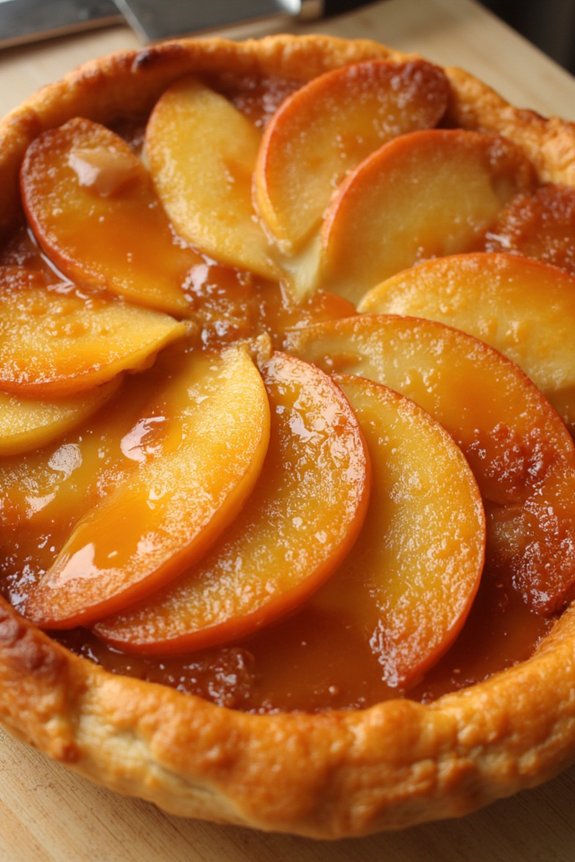
This dish is perfect for those who enjoy a dessert that isn’t overly sweet but full of rich, warm flavors. The Tarte Tatin is typically made with firm, tart apples such as Granny Smiths, which hold their shape well during cooking and provide a pleasing tang to balance the sweetness of the caramel.
Whether served warm with a dollop of crème fraîche or a scoop of vanilla ice cream, or simply enjoyed on its own, this dessert is sure to impress your guests with its elegant presentation and delightful taste.
Ingredients for 4-6 servings:
- 6 to 8 medium-sized tart apples (such as Granny Smith)
- 1 cup granulated sugar
- 1/2 cup unsalted butter
- 1 sheet of puff pastry (store-bought or homemade)
- 1 teaspoon vanilla extract
- A pinch of salt
Instructions:
- Prepare the Apples: Peel, core, and halve the apples. It’s important to make even cuts so that the apples cook evenly. Set them aside as you prepare the caramel.
- Make the Caramel: In an ovenproof skillet (about 10 inches in diameter), melt the sugar over medium heat. Stir occasionally until it turns a light amber color. Be careful not to burn the sugar as it can quickly become bitter.
- Add Butter and Vanilla: Once the sugar has caramelized, add the butter, vanilla extract, and a pinch of salt. Stir until the butter is fully melted and the mixture is smooth.
- Arrange the Apples: Carefully arrange the apple halves in the skillet, cut-side up. Pack them tightly as they’ll shrink during cooking. Allow them to cook in the caramel for about 10 minutes, basting them occasionally with the caramel.
- Preheat the Oven: While the apples are cooking, preheat your oven to 375°F (190°C).
- Prepare the Pastry: Roll out the puff pastry to fit over the skillet. Gently lay the pastry over the apples, tucking the edges inside the skillet. Be careful as the skillet and caramel will be hot.
- Bake the Tarte: Place the skillet in the preheated oven and bake for 25-30 minutes, or until the pastry is golden brown and puffed.
- Cool and Invert the Tart: Allow the tart to cool for about 10 minutes. Run a knife around the edge to loosen the pastry. Carefully invert the tart onto a serving plate, so the apples are on top.
Extra Tips: When making a Tarte Tatin, it’s essential to use an ovenproof skillet, as the dish shifts from stovetop to oven. Additionally, handle the hot caramel with care to prevent burns.
If you prefer a sweeter tart, you can sprinkle a bit of brown sugar over the apples before adding the pastry. Also, chilling the puff pastry slightly before using can help achieve a flakier crust. Enjoy your Tarte Tatin fresh, as the pastry tends to soften with time.
Bouillabaisse
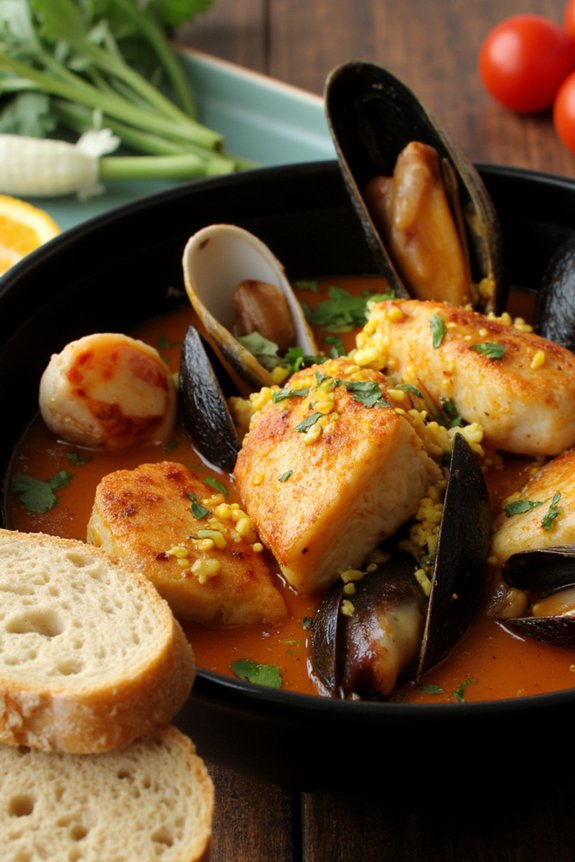
Bouillabaisse is a traditional Provençal fish stew originating from the port city of Marseille. It’s a flavorful and aromatic dish that combines a variety of fresh fish and shellfish simmered in a broth of aromatic vegetables, spices, and herbs.
Bouillabaisse is more than just a seafood stew; it’s a cultural symbol of the Mediterranean and often enjoyed as a leisurely meal with family and friends. The key to a perfect Bouillabaisse is using the freshest seafood available, as well as a balanced combination of herbs and spices that complement the natural flavors of the sea.
The dish is traditionally served with a side of rouille, a garlicky saffron mayonnaise, and crusty bread to soak up the flavorful broth. While the recipe can seem complex due to its numerous ingredients and steps, it’s a delightful culinary experience worth the effort.
Preparing Bouillabaisse isn’t just about cooking; it’s about bringing together the vibrant tastes and aromas of the South of France onto your dining table. This recipe will guide you through making a Bouillabaisse that serves 4-6 people.
Ingredients:
- 2 tablespoons olive oil
- 1 large onion, thinly sliced
- 2 leeks, white and light green parts only, thinly sliced
- 2 garlic cloves, minced
- 1 fennel bulb, thinly sliced
- 1 large tomato, diced
- 2 tablespoons tomato paste
- 1 teaspoon saffron threads
- 1 teaspoon orange zest
- 1 teaspoon fennel seeds
- 1 bay leaf
- 1/4 teaspoon cayenne pepper
- 1 cup dry white wine
- 6 cups fish stock
- 1 pound monkfish, cut into chunks
- 1 pound red snapper, cut into chunks
- 1 pound mussels, cleaned and debearded
- 1 pound clams, scrubbed clean
- 1/2 pound shrimp, peeled and deveined
- Salt and freshly ground black pepper to taste
- Rouille sauce
- Crusty bread
Instructions:
- Prepare the Vegetables: Heat olive oil in a large pot over medium heat. Add the onion, leeks, garlic, and fennel. Cook until the vegetables are soft and translucent, about 10 minutes.
- Add Tomatoes and Spices: Stir in the diced tomato, tomato paste, saffron threads, orange zest, fennel seeds, bay leaf, and cayenne pepper. Cook for another 5 minutes until the mixture is fragrant.
- Deglaze and Simmer: Pour in the white wine, scraping up any browned bits from the bottom of the pot. Allow the wine to simmer and reduce by half.
- Make the Broth: Add the fish stock to the pot. Bring the mixture to a boil, then reduce the heat to a simmer. Season with salt and pepper to taste.
- Cook the Seafood: Add the monkfish and red snapper chunks to the simmering broth. Cook for 5 minutes, then add the mussels, clams, and shrimp. Cover the pot and cook until the shellfish open and the shrimp turn pink, about 5-7 minutes. Discard any mussels or clams that don’t open.
- Serve: Ladle the Bouillabaisse into large bowls, ensuring each serving has a good mix of fish and shellfish. Serve hot with rouille sauce and crusty bread on the side.
Extra Tips: For the best results, make sure to use the freshest seafood you can find. The flavors of Bouillabaisse rely heavily on the quality of the fish and shellfish.
If saffron isn’t available, you can substitute it with a pinch of turmeric for color, though it won’t mimic the exact flavor. To enhance the dining experience, chill the white wine before cooking and serve the same wine with the meal.
Ultimately, don’t rush the simmering process; allowing the flavors to meld together creates a more robust broth.
Madeleines
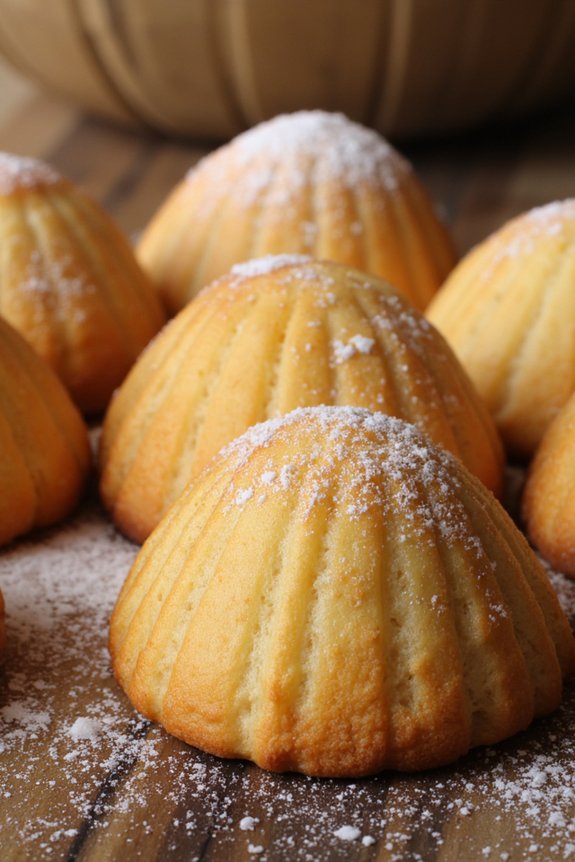
Madeleines are delightful small sponge cakes with a distinctive shell-like shape, originating from the Lorraine region of France. These delicate treats are renowned for their buttery texture and subtle lemon flavor, traditionally enjoyed with a cup of tea or coffee. The key to perfect madeleines lies in the careful preparation of the batter and the unique baking technique that creates their signature hump.
To achieve the classic madeleine appearance and taste, it’s vital to use a madeleine mold, as this will give them their iconic shape. The batter, rich with butter and eggs, is flavored with lemon zest and vanilla, resulting in a light and airy cake. Although they require a bit of attention, the end result is a delightful, elegant treat that will impress your guests and transport them to a quaint French café.
Ingredients for 4-6 servings:
- 1 cup (120g) all-purpose flour
- 1/2 teaspoon baking powder
- 1/4 teaspoon salt
- 2 large eggs
- 1/2 cup (100g) granulated sugar
- 1 teaspoon vanilla extract
- Zest of 1 lemon
- 1/2 cup (115g) unsalted butter, melted and cooled
- Powdered sugar, for dusting
Cooking Instructions:
- Prepare the Batter: In a small bowl, whisk together the flour, baking powder, and salt. In a separate large bowl, beat the eggs and granulated sugar with an electric mixer on medium-high speed until pale and thick, about 3-4 minutes. Add the vanilla extract and lemon zest, mixing until combined.
- Combine Ingredients: Gently fold the dry ingredients into the egg mixture using a spatula, being careful not to deflate the batter. Once combined, gradually fold in the melted butter until the batter is smooth and well incorporated.
- Chill the Batter: Cover the bowl with plastic wrap and refrigerate the batter for at least 1 hour, or up to overnight. This step is vital for developing the characteristic hump of the madeleines.
- Preheat the Oven: When ready to bake, preheat your oven to 375°F (190°C). Grease and flour your madeleine mold to prevent sticking.
- Fill the Mold: Spoon the chilled batter into the prepared madeleine mold, filling each cavity about three-quarters full.
- Bake the Madeleines: Bake in the preheated oven for 8-10 minutes, or until the edges are golden brown and the centers spring back when lightly touched. Be sure to monitor closely to avoid overbaking.
- Cool and Serve: Remove the madeleines from the oven and let them cool in the mold for a few minutes. Gently unmold them onto a wire rack to cool completely. Once cooled, dust with powdered sugar before serving.
Extra Tips:
For the best results, verify that your eggs and butter are at room temperature before starting the recipe. This helps achieve a smoother batter and better rise. Additionally, don’t skip the chilling step, as it’s key to forming the signature hump of the madeleines.
If you don’t have a madeleine mold, mini muffin tins can be used as an alternative, although the shape will differ. Finally, madeleines are best enjoyed fresh but can be stored in an airtight container for up to 2 days.
Crème Brûlée
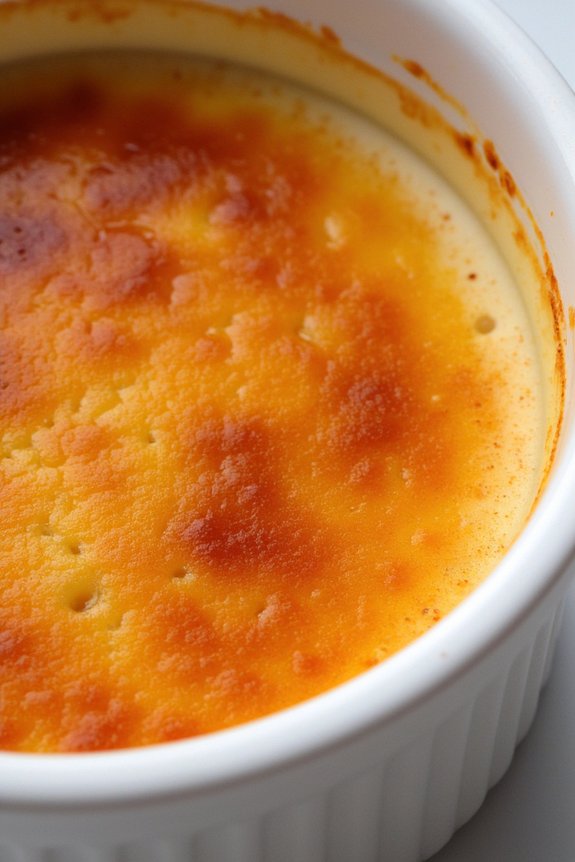
Crème Brûlée is a classic French dessert known for its creamy custard base and a contrasting layer of hardened caramelized sugar on top. This indulgent treat has been adored for centuries, offering a delightful combination of textures and flavors that tantalize the taste buds.
The magic of Crème Brûlée lies in its simplicity, using just a few quality ingredients to create a sophisticated dessert that’s perfect for any occasion, whether it’s a romantic dinner or a festive gathering.
The custard base of Crème Brûlée is typically flavored with vanilla, providing a rich and smooth taste that pairs beautifully with the caramelized sugar crust. The key to achieving the flawless Crème Brûlée is in the baking process, where the custard is gently baked until just set, guaranteeing a silky and smooth texture.
Once chilled, the sugar topping is caramelized to create a thin, brittle crust that cracks delightfully when tapped with a spoon. This recipe serves 4-6 people, making it ideal for a small group to enjoy.
Ingredients (serving size: 4-6 people):
- 2 cups heavy cream
- 1 vanilla bean or 1 teaspoon vanilla extract
- 6 large egg yolks
- 1/2 cup granulated sugar (plus extra for topping)
- A pinch of salt
Cooking Instructions:
- Preheat the Oven: Preheat your oven to 325°F (160°C). Arrange 4-6 ramekins in a baking dish with high sides.
- Infuse the Cream: In a medium saucepan, combine the heavy cream and the vanilla bean (split and scraped) or vanilla extract. Heat the cream over medium heat until it just starts to simmer. Remove from heat and let it sit for 10 minutes to allow the vanilla to infuse.
- Prepare the Custard Mixture: In a mixing bowl, whisk together the egg yolks, 1/2 cup granulated sugar, and a pinch of salt until the mixture is pale and slightly thickened.
- Combine Ingredients: Gradually pour the warm cream into the egg yolk mixture, whisking constantly to prevent the eggs from cooking. Mix until well combined.
- Strain the Mixture: Strain the custard mixture through a fine-mesh sieve into a clean bowl to remove any solids or foam. This step guarantees a smooth custard.
- Fill the Ramekins: Divide the custard mixture evenly among the ramekins, filling each about 3/4 full.
- Create a Water Bath: Carefully pour hot water into the baking dish around the ramekins until it reaches about halfway up the sides of the ramekins. This water bath will help the custard cook evenly.
- Bake: Place the baking dish in the preheated oven and bake for 30-35 minutes, or until the custard is set but still slightly jiggly in the center.
- Cool and Chill: Remove the ramekins from the water bath and let them cool to room temperature. Then, refrigerate for at least 2 hours or until thoroughly chilled.
- Caramelize the Sugar: Just before serving, sprinkle a thin, even layer of granulated sugar over each custard. Use a kitchen torch to caramelize the sugar until it turns a deep golden brown. Alternatively, you can place the ramekins under a broiler, watching carefully to prevent burning.
Extra Tips:
For the best results, use fresh, quality ingredients, especially when it comes to the vanilla and cream. If using a broiler to caramelize the sugar, make sure the ramekins are placed on a baking sheet and watch them closely to avoid burning.
The custard can be made a day in advance and stored in the refrigerator, with the sugar caramelized just before serving for ideal texture. If you don’t have a kitchen torch, a broiler can be an effective alternative, but it requires careful attention to prevent over-caramelizing.
Soufflé
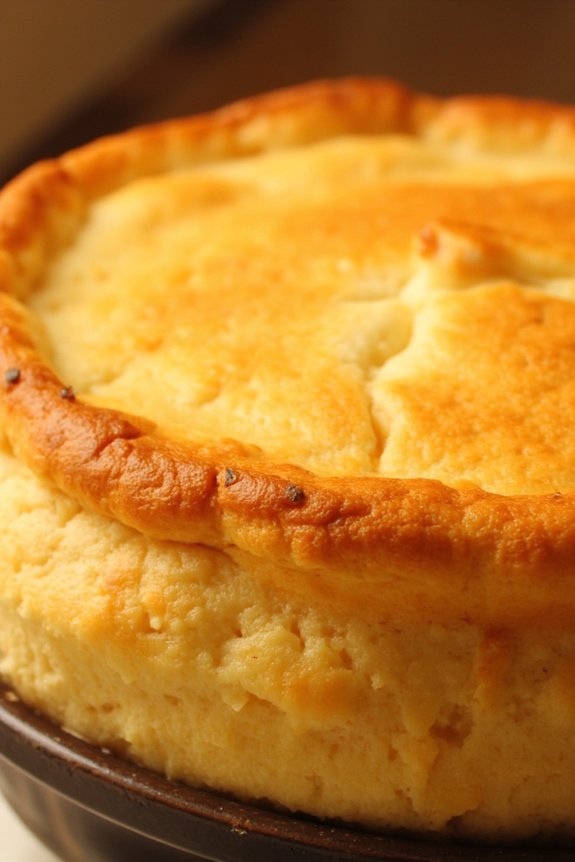
A cheese soufflé is a classic French dish that embodies the art of French cooking with its light, airy texture and rich, cheesy flavor. The name “soufflé” is derived from the French verb “souffler,” meaning “to blow” or “to puff,” which perfectly describes the dish’s characteristic rise and fluffiness.
This impressive yet approachable dish is perfect for serving as a starter or as a light main course, showcasing the delightful combination of eggs and cheese.
Preparing a cheese soufflé involves creating a delicate balance between the richness of the cheese and the airiness of whipped egg whites. The soufflé is baked until it achieves a golden-brown crust, while the inside remains soft and creamy.
It’s essential to serve a soufflé immediately after it comes out of the oven, as it will begin to deflate as it cools. This recipe will guide you through making a cheese soufflé that serves 4-6 people, guaranteeing that your dish is both delicious and visually stunning.
Ingredients (Serves 4-6):
- 1 cup whole milk
- 3 tablespoons unsalted butter
- 3 tablespoons all-purpose flour
- 1/2 teaspoon salt
- 1/4 teaspoon ground nutmeg
- 1/4 teaspoon black pepper
- 4 large eggs, separated
- 1 cup grated Gruyère cheese
- 1/4 cup grated Parmesan cheese
- 1/4 teaspoon cream of tartar
Instructions:
1. Preheat the Oven: Start by preheating your oven to 375°F (190°C). Grease a 1.5-quart soufflé dish with butter and lightly dust with flour to prevent sticking.
2. Prepare the Béchamel Sauce****: In a medium saucepan, melt the butter over medium heat. Stir in the flour and cook for about 2 minutes until it forms a smooth paste. Gradually add the milk, whisking continuously to avoid lumps, and cook until the mixture thickens and begins to bubble.
Season with salt, nutmeg, and pepper.
3. Incorporate Egg Yolks: Remove the saucepan from heat and let it cool slightly. Stir in the egg yolks, one at a time, making sure each yolk is fully incorporated before adding the next.
Mix in the Gruyère and Parmesan cheeses until melted and smooth.
4. Beat Egg Whites: In a separate bowl, beat the egg whites with cream of tartar until stiff peaks form. This will give the soufflé its signature rise and lightness.
5. Fold Egg Whites into Béchamel: Gently fold one-third of the egg whites into the cheese mixture to lighten it.
Carefully fold in the remaining egg whites, taking care not to deflate them.
6. Fill the Soufflé Dish: Pour the mixture into the prepared soufflé dish, filling it about three-quarters full. Smooth the top with a spatula.
7. Bake the Soufflé: Place the soufflé dish in the preheated oven and bake for 25-30 minutes, or until the soufflé has risen and the top is golden brown.
Avoid opening the oven door during baking to prevent the soufflé from collapsing.
8. Serve Immediately: Once baked, remove the soufflé from the oven and Serve Immediately for the best texture and presentation.
Extra Tips:
To guarantee success with your cheese soufflé, make sure your egg whites are beaten to stiff peaks, as this is vital for achieving the desired rise and volume.
Additionally, when folding the egg whites into the béchamel sauce, use a gentle hand to maintain their airiness. If you’re feeling adventurous, you can experiment with different cheeses or add finely chopped herbs to the base for added flavor.
