


Wandering through the charming villages of rural France always inspires me with the simplicity and depth of the local cuisine. Each dish is a testament to tradition and a love for the land. Picture the vibrant colors of Ratatouille or the comforting aroma of Coq Au Vin simmering away. These recipes are more than just meals; they’re experiences. Ready to sprinkle a little French countryside magic into your kitchen?
Ratatouille: A Vegetable Medley
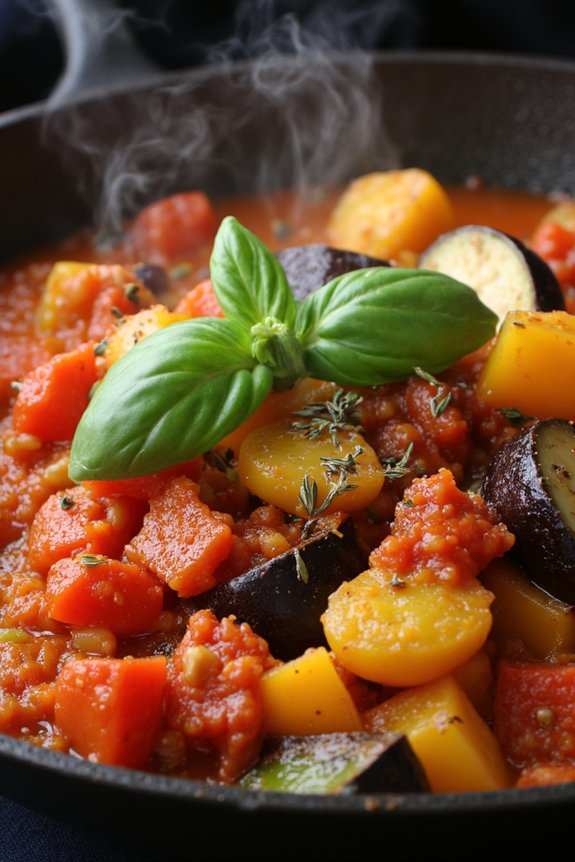
Ratatouille is a classic French dish that celebrates the vibrant flavors of summer vegetables. Originating from the Provence region, this dish is a perfect example of rustic French countryside cooking.
It’s a simple yet delicious medley of eggplant, zucchini, bell peppers, tomatoes, and herbs, all simmered together to create a flavorful and aromatic stew. Ratatouille can be served as a main course or as a side dish, and it’s a great way to enjoy the bounty of fresh produce available during the warmer months.
This versatile dish can be made in various ways, from a layered casserole to a more traditional stew. The key to a good ratatouille is to gently cook each vegetable to bring out its natural sweetness and to allow the flavors to meld together harmoniously.
The result is a comforting and colorful dish that’s perfect for a family meal. Here’s a recipe to serve 4-6 people that captures the essence of this French classic.
Ingredients:
- 2 medium eggplants, diced
- 2 medium zucchinis, sliced
- 2 red bell peppers, diced
- 1 yellow bell pepper, diced
- 4 medium-sized ripe tomatoes, diced
- 1 large onion, chopped
- 4 cloves garlic, minced
- 1/4 cup olive oil
- 1 teaspoon dried thyme
- 1 teaspoon dried oregano
- 2 tablespoons fresh basil, chopped
- Salt and pepper to taste
Cooking Instructions:
- Prepare the vegetables: Begin by washing and drying all the vegetables. Dice the eggplants, zucchinis, red and yellow bell peppers, and tomatoes into uniform pieces to guarantee even cooking.
- Sauté the onion and garlic: In a large, heavy-bottomed pot, heat the olive oil over medium heat. Add the chopped onion and sauté for about 5 minutes until translucent. Add the minced garlic and continue to sauté for another minute, making sure not to burn the garlic.
- Cook the eggplant: Add the diced eggplant to the pot and stir to coat it with the onion, garlic, and oil mixture. Cook for about 5-7 minutes, stirring occasionally, until the eggplant begins to soften.
- Add the zucchinis and bell peppers: Stir in the sliced zucchinis and diced bell peppers. Continue to cook for another 5 minutes, allowing the vegetables to soften and begin to release their juices.
- Incorporate the tomatoes and herbs: Add the diced tomatoes, dried thyme, and oregano to the pot. Stir well to combine all the ingredients. Season with salt and pepper to taste.
- Simmer the ratatouille: Lower the heat to a simmer and cover the pot. Allow the ratatouille to cook gently for 30-40 minutes, stirring occasionally, until all the vegetables are tender and the flavors have melded together.
- Finish with fresh basil: Just before serving, stir in the chopped fresh basil to add a bright, aromatic note to the dish.
Extra Tips:
For a richer flavor, consider roasting the vegetables before adding them to the pot. This can enhance the natural sweetness and add a slightly smoky taste to the dish.
Ratatouille tastes even better the next day, as the flavors have more time to develop, so it’s a great dish to make ahead. If you prefer a smoother texture, you can mash some of the cooked vegetables with a spoon before serving. Enjoy your ratatouille with crusty bread or as an accompaniment to grilled meats or fish.
Coq Au Vin: a Wine-Infused Delight
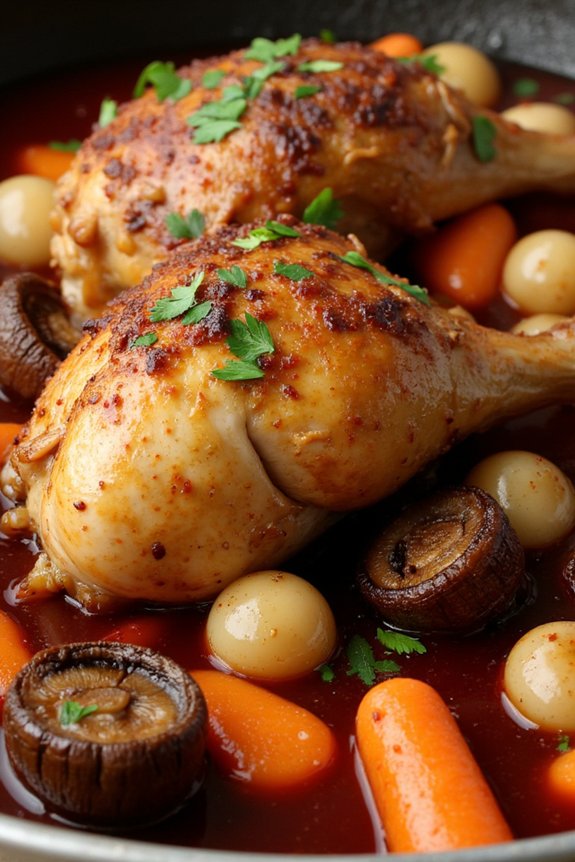
Coq Au Vin is a quintessential French dish that brings the rustic flavors of the countryside right to your table. This classic recipe involves slow-cooking chicken in a rich, wine-infused broth that’s both comforting and sophisticated. Originating from Burgundy, France, Coq Au Vin was traditionally made with rooster, but nowadays, chicken is commonly used due to its tender texture and widespread availability. The slow braising process allows the chicken to absorb the earthy flavors from the wine, aromatic herbs, and vegetables, resulting in a complex dish that’s perfect for any occasion.
The beauty of Coq Au Vin lies in its simplicity and the way it transforms humble ingredients into an extraordinary meal. This dish is typically prepared with red wine, which gives it a deep, robust flavor and a vibrant color. The addition of ingredients like mushrooms, pearl onions, and bacon adds layers of flavor and texture, making each bite a delightful experience. Perfect for a dinner party or a cozy family meal, Coq Au Vin is a representation of the art of French cooking, where patience and quality ingredients come together to create something truly special.
Ingredients (Serves 4-6)
- 1 whole chicken, cut into 8 pieces
- Salt and freshly ground black pepper, to taste
- 2 tablespoons olive oil
- 4 ounces bacon, diced
- 1 onion, chopped
- 2 carrots, sliced
- 2 cloves garlic, minced
- 2 tablespoons all-purpose flour
- 2 cups red wine (preferably Burgundy or Pinot Noir)
- 1 cup chicken stock
- 1 tablespoon tomato paste
- 1 bouquet garni (a bundle of thyme, parsley, and bay leaf)
- 8 ounces pearl onions, peeled
- 8 ounces mushrooms, quartered
- 2 tablespoons unsalted butter
- 2 tablespoons fresh parsley, chopped (for garnish)
Cooking Instructions
- Prepare the Chicken: Season the chicken pieces with salt and pepper. In a large Dutch oven or heavy pot, heat the olive oil over medium-high heat. Brown the chicken pieces in batches until golden on all sides. Remove and set aside.
- Cook the Bacon and Vegetables: In the same pot, add the diced bacon and cook until crispy. Add the chopped onion and carrots to the pot, and cook until the onions are translucent. Stir in the minced garlic and cook for an additional minute.
- Thicken the Sauce: Sprinkle the flour over the vegetables and bacon, stirring constantly to form a roux. Cook for 2-3 minutes until the flour is lightly browned.
- Deglaze with Wine: Gradually pour in the red wine, scraping up any browned bits from the bottom of the pot. Allow the wine to simmer for a few minutes to reduce slightly.
- Simmer the Coq Au Vin: Return the chicken pieces to the pot. Add the chicken stock, tomato paste, and bouquet garni. Bring the mixture to a simmer, then cover and reduce the heat to low. Cook for about 1.5 to 2 hours, or until the chicken is tender and cooked through.
- Cook the Mushrooms and Pearl Onions: In a separate pan, melt the butter over medium heat. Add the pearl onions and mushrooms, cooking until they’re browned and tender. Stir them into the pot during the last 30 minutes of cooking.
- Finish and Serve: Remove the bouquet garni from the pot. Taste and adjust seasoning if necessary. Garnish with fresh parsley before serving. Coq Au Vin pairs beautifully with crusty bread or mashed potatoes to soak up the delicious sauce.
Extra Tips
For the best results, use a quality red wine that you’d enjoy drinking, as this will greatly influence the flavor of the dish. If time allows, marinate the chicken in the wine overnight before cooking to enhance the depth of flavor.
Additionally, using a Dutch oven or heavy-bottomed pot guarantees even heat distribution, which is vital for proper braising. Don’t rush the cooking process; slow and steady wins the race when it comes to achieving the tender, flavorful chicken that Coq Au Vin is known for.
Bouillabaisse: A Fisherman’s Feast
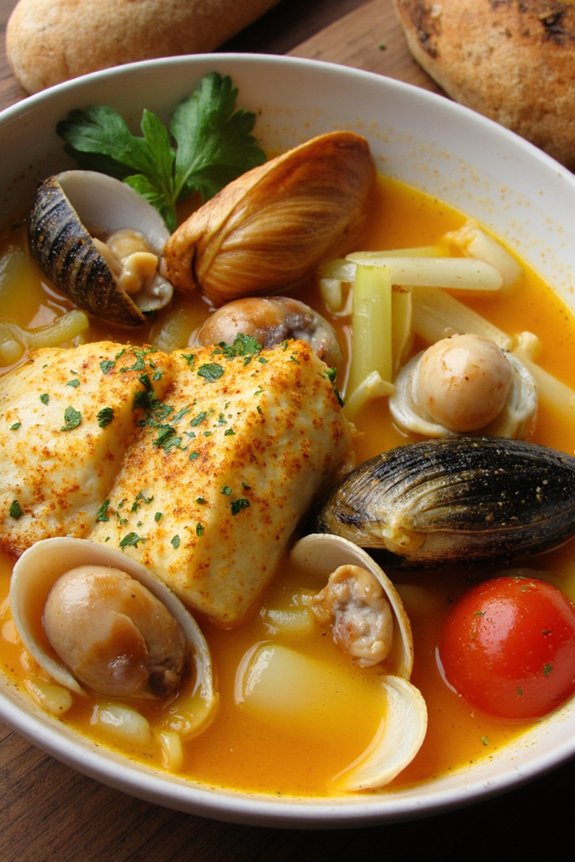
Bouillabaisse is a traditional Provençal fish stew originating from the port city of Marseille. Initially crafted by fishermen using the bony rockfish they were unable to sell, this hearty dish has become a celebrated feature of French cuisine. The essence of bouillabaisse lies in its robust broth, brimming with aromatic herbs and spices, and the variety of fresh seafood that accompanies it. This classic dish captures the essence of the French countryside, offering a complex tapestry of flavors that balance the sweet, briny taste of the sea with the warmth of Mediterranean ingredients.
As you prepare bouillabaisse, you’ll commence on a culinary journey that reflects the rich history and vibrant culture of southern France. The key to a successful bouillabaisse is in the quality and freshness of the ingredients, particularly the seafood. This recipe is perfect for serving 4-6 people, making it ideal for a family gathering or an intimate dinner party. The following list and instructions will guide you through crafting this delicious, soul-warming stew.
Ingredients (Serves 4-6):
- 2 tablespoons olive oil
- 1 large onion, finely chopped
- 2 leeks, white parts only, sliced
- 3 cloves garlic, minced
- 1 fennel bulb, sliced
- 1 large tomato, diced
- 2 teaspoons orange zest
- 1 teaspoon saffron threads
- 1 teaspoon dried thyme
- 1 bay leaf
- 1 teaspoon fennel seeds
- 1/2 teaspoon cayenne pepper
- 1 cup dry white wine
- 4 cups fish stock
- 1 1/2 pounds assorted fresh fish (e.g., red snapper, cod, or halibut), cut into chunks
- 1 pound mixed shellfish (e.g., mussels, clams, shrimp)
- Salt and pepper to taste
- 1/4 cup fresh parsley, chopped
- 1 baguette, sliced
- Rouille sauce (optional)
Instructions:
- Prepare the Base: In a large pot, heat the olive oil over medium heat. Add the chopped onion, leeks, and garlic, sautéing until the vegetables are soft and translucent, about 5 minutes.
- Add Aromatics: Stir in the sliced fennel and diced tomato, cooking for another 3 minutes. Add the orange zest, saffron, thyme, bay leaf, fennel seeds, and cayenne pepper, and cook for an additional 2 minutes to release their flavors.
- Build the Broth: Pour in the white wine, allowing it to simmer for 2 minutes. Add the fish stock, bring to a gentle boil, then reduce the heat to low and let it simmer for 20 minutes to allow the flavors to meld.
- Cook the Seafood: Add the fish chunks to the pot and let them simmer gently for 5 minutes. Then, add the shellfish, covering the pot with a lid, and cook until the shellfish open and the fish is cooked through, approximately 5 more minutes. Discard any shellfish that don’t open.
- Season and Finish: Taste the bouillabaisse and season with salt and pepper as needed. Stir in the fresh parsley just before serving.
- Serve: Ladle the bouillabaisse into bowls, accompanied by slices of baguette and a dollop of rouille sauce if desired.
Extra Tips:
When making bouillabaisse, the choice of seafood is essential. Opt for a variety of fresh, firm fish and shellfish to create a more complex flavor profile. If possible, purchase seafood from a reputable fishmonger to guarantee quality and freshness.
Also, saffron is a key ingredient that imparts a distinct color and aroma to the dish, so it’s important not to skip or skimp on it. For the best experience, serve your bouillabaisse with crisp white wine and enjoy it on a cool evening to fully appreciate its comforting qualities.
Quiche Lorraine: A Savory Classic

Quiche Lorraine is a timeless dish originating from the Lorraine region of France. Known for its rich, creamy filling and flaky crust, this quiche is a versatile delight perfect for breakfast, brunch, or even a light dinner. The beauty of a Quiche Lorraine lies in its simplicity and the harmonious blend of hearty ingredients like bacon, eggs, and cheese, encased in a buttery pastry.
This dish has been a staple in French cuisine for generations and continues to be loved worldwide for its comforting and satisfying flavors. Crafting a Quiche Lorraine involves creating a delicate balance between the creamy custard filling and the crisp pastry shell. The key is to achieve a golden brown crust while ensuring the filling remains soft and tender.
The traditional recipe features a combination of eggs, cream, and milk, with savory bacon lardons providing a smoky depth. Gruyère or Swiss cheese further enriches the flavor profile, making each bite a delightful experience. Whether served warm or at room temperature, Quiche Lorraine is a dish that brings the essence of the French countryside to your table.
Ingredients (Serving Size: 4-6 People):
- 1 pre-made pie crust (9-inch)
- 6 slices of bacon
- 1 cup of grated Gruyère or Swiss cheese
- 3 large eggs
- 1 cup of heavy cream
- 1/2 cup of milk
- 1/4 teaspoon of salt
- 1/4 teaspoon of ground black pepper
- A pinch of ground nutmeg
Cooking Instructions:
- Prepare the Pie Crust: Preheat your oven to 375°F (190°C). Place the pre-made pie crust into a 9-inch tart pan or pie dish, pressing it into the sides. Trim any excess dough and prick the base with a fork to prevent bubbling during baking.
- Blind Bake the Crust: Line the crust with parchment paper and fill it with pie weights or dried beans. Bake for 10-15 minutes until the edges begin to turn golden. Remove the weights and parchment, then bake for another 5 minutes. Set aside to cool.
- Cook the Bacon: In a skillet over medium heat, cook the bacon slices until crispy. Remove from the skillet and place on paper towels to drain excess fat. Once cooled, chop the bacon into small pieces.
- Assemble the Filling: In a large bowl, whisk together the eggs, heavy cream, milk, salt, pepper, and nutmeg until well combined.
- Layer the Ingredients: Sprinkle the grated cheese evenly over the cooled pie crust. Scatter the bacon pieces on top of the cheese, ensuring an even distribution.
- Add the Custard: Slowly pour the egg mixture over the cheese and bacon layers, filling the crust without overflowing.
- Bake the Quiche: Place the assembled quiche in the preheated oven and bake for 35-40 minutes, or until the filling is set and the top is golden brown. A knife inserted into the center should come out clean.
- Cool and Serve: Allow the quiche to cool for at least 10 minutes before slicing. Serve warm or at room temperature.
Extra Tips:
For an extra flaky crust, consider making your own pastry dough from scratch using a combination of butter and shortening. If you’re feeling adventurous, add a handful of sautéed onions or mushrooms for additional flavor.
Remember to adjust the seasoning to your taste, as bacon and cheese can vary in saltiness. If you don’t have Gruyère, a good quality Swiss cheese or even cheddar can be a suitable substitute. Enjoy your Quiche Lorraine with a side salad for a complete meal!
Tartiflette: A Cheese Lover’s Dream

Tartiflette is a quintessential French dish originating from the Savoie region, nestled in the French Alps. This dish is a warm, comforting combination of creamy potatoes, smoky bacon, sweet onions, and oozing Reblochon cheese.
Often enjoyed during the cold winter months, Tartiflette brings together rich, savory flavors that are guaranteed to satisfy any cheese lover’s cravings. Traditionally served with a crisp green salad and a glass of white wine, this dish is perfect for family gatherings or a cozy night in.
The star of Tartiflette is the Reblochon cheese, which melts beautifully over the potatoes and bacon, creating a luscious, indulgent topping. The creamy texture and nutty flavor of the cheese complement the hearty ingredients, resulting in a dish that’s both rustic and elegant.
Whether you’re looking to explore traditional French cooking or simply indulge in a delicious cheese-centric meal, Tartiflette is bound to impress.
Ingredients for 4-6 servings:
- 2 pounds of waxy potatoes, peeled and sliced
- 1 large Reblochon cheese (approximately 500g), halved horizontally
- 1 cup of crème fraîche
- 1 pound of smoked bacon lardons or thick-cut bacon, diced
- 2 large onions, thinly sliced
- 2 cloves of garlic, minced
- 1/2 cup of dry white wine
- Salt and black pepper to taste
- 2 tablespoons of butter
Cooking Instructions:
1. Prepare the Potatoes: Begin by boiling the sliced potatoes in a large pot of salted water. Cook them for about 10-12 minutes until they’re tender but still hold their shape. Drain and set aside.
2. Cook the Bacon and Onions: In a large skillet, melt the butter over medium heat. Add the diced bacon and cook until it starts to brown. Then, add the sliced onions and garlic, sautéing until the onions are soft and translucent.
Pour in the white wine and let it simmer for a few minutes until slightly reduced.
3. Layer the Ingredients: Preheat your oven to 375°F (190°C). In a large baking dish, arrange half of the cooked potatoes in an even layer. Spoon half of the bacon and onion mixture over the potatoes. Drizzle half of the crème fraîche over the top.
Repeat the layering with the remaining potatoes, bacon mixture, and crème fraîche.
4. Add the Cheese: Place the halved Reblochon cheese, rind side up, on top of the final layer. Confirm the cheese covers as much of the surface as possible to guarantee even melting.
5. Bake: Place the baking dish in the preheated oven and bake for about 25-30 minutes, or until the cheese is melted, bubbling, and golden brown.
6. Serve: Remove from the oven and let the Tartiflette cool for a few minutes before serving. This dish pairs well with a simple green salad and a glass of crisp white wine.
Extra Tips:
For the best results, use waxy potatoes such as Yukon Gold, which hold their shape well when cooked. If you can’t find Reblochon cheese, you can substitute it with another soft, flavorful cheese such as Brie or Camembert.
To add an extra layer of flavor, consider using smoked bacon or even pancetta. When slicing the potatoes and onions, try to keep them uniform in size to guarantee even cooking.
Finally, remember that the quality of the wine can impact the flavor of the dish, so opt for a decent dry white wine that you enjoy drinking.
Cassoulet: A Hearty Bean Stew
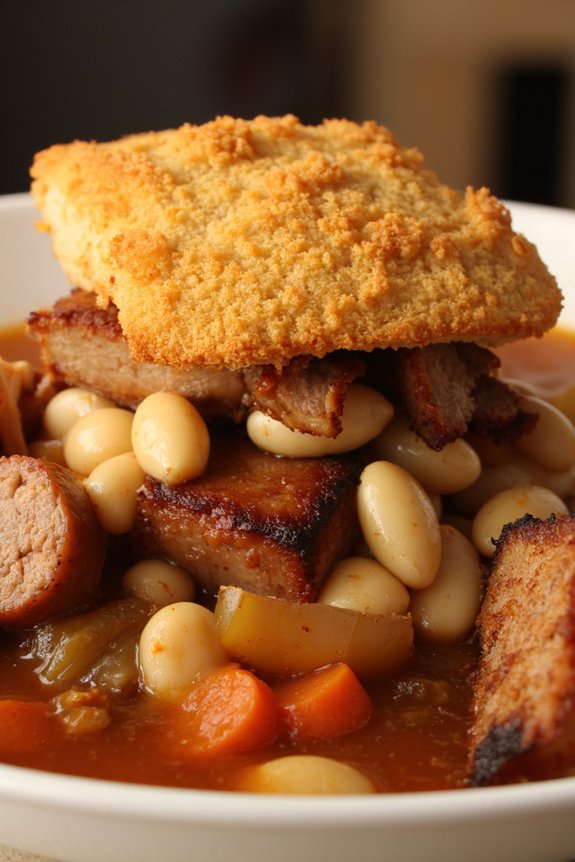
Cassoulet is a traditional French dish that embodies the rustic charm of the countryside. Originating from the Languedoc region, this slow-cooked bean stew is known for its rich, savory flavors and hearty ingredients. Typically made with white beans, various meats, and aromatic herbs, cassoulet is a comforting meal that brings warmth to the table.
It’s a dish that requires patience and a little bit of love, as the slow cooking process allows the flavors to meld together beautifully, resulting in a stew that’s both satisfying and delicious.
Preparing cassoulet is an opportunity to embrace the art of slow cooking and to appreciate the depth of flavors that can be achieved through this method. The dish is traditionally cooked in an earthenware pot, which helps to retain heat and distribute it evenly.
While there are many regional variations of cassoulet, the core ingredients typically include white beans, duck or goose confit, pork sausages, and sometimes lamb. The beauty of cassoulet lies in its adaptability, allowing cooks to use what’s available while still achieving that classic French countryside taste.
Ingredients for 4-6 servings:
- 1 pound dried white beans (such as cannellini or Great Northern beans)
- 2 duck legs, confit
- 1 pound pork sausages
- 1/2 pound pork belly or pancetta
- 1 onion, chopped
- 2 carrots, diced
- 4 cloves garlic, minced
- 1 bouquet garni (a bundle of herbs such as thyme, bay leaf, and parsley tied together)
- 6 cups chicken or vegetable broth
- 1 cup breadcrumbs
- Salt and pepper to taste
- Olive oil
Cooking Instructions:
- Prepare the Beans: Soak the dried white beans overnight in a large bowl of water. The next day, drain and rinse the beans thoroughly.
- Cook the Beans: In a large pot, add the beans and cover them with fresh water. Bring to a boil, then reduce the heat and simmer for about 1 hour or until the beans are just tender. Drain and set aside.
- Brown the Meats: In a large dutch oven or casserole pot, heat a tablespoon of olive oil over medium heat. Add the pork sausages and cook until browned on all sides. Remove and set aside. In the same pot, add the pork belly or pancetta and cook until crispy. Remove and set aside.
- Sauté Vegetables: In the same pot with the rendered fat, add the chopped onion, carrots, and minced garlic. Sauté until the onion is translucent and the vegetables are soft.
- Assemble the Cassoulet: Preheat your oven to 300°F (150°C). Return the browned meats to the pot with the vegetables. Add the cooked beans, confit duck legs, and bouquet garni. Pour in the chicken or vegetable broth, making sure all ingredients are well submerged. Season with salt and pepper.
- Bake the Cassoulet: Cover the pot with a lid or aluminum foil and place it in the preheated oven. Bake for 2 hours, checking occasionally to confirm the stew isn’t drying out. Add more broth if necessary.
- Add Breadcrumbs: After 2 hours, remove the lid and sprinkle the top of the cassoulet with breadcrumbs. Increase the oven temperature to 350°F (175°C) and return the pot to the oven, uncovered, for an additional 30 minutes until the breadcrumbs are golden and crispy.
- Serve: Remove the bouquet garni before serving. Serve hot, scooping generous portions of beans, meats, and a bit of the crispy breadcrumb topping onto each plate.
Extra Tips:
When making cassoulet, it’s important to taste as you go to adjust the seasoning. The dish should be well-seasoned to bring out the flavors of the meats and beans.
If you’re short on time, you can use canned white beans; just be sure to rinse them well before adding them to the pot. For an extra depth of flavor, consider adding a splash of white wine to the vegetables before adding the meats and beans.
Finally, cassoulet is even better the next day, so don’t hesitate to make it ahead and reheat it gently before serving. Enjoy your hearty and delicious journey to the French countryside!
Salade Niçoise: A Refreshing Ensemble
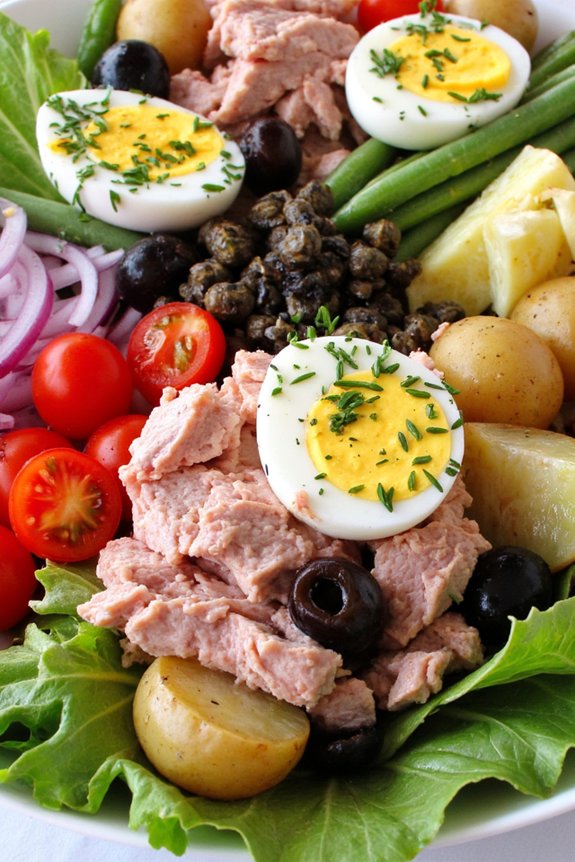
Salade Niçoise is a classic French dish that hails from the sunny region of Provence, specifically the city of Nice. Known for its vibrant colors and invigorating flavors, this salad is a delightful ensemble of fresh vegetables, protein-packed tuna, and the briny kick of olives and anchovies.
It’s a perfect dish for a light lunch or a starter at dinner, offering a harmonious balance of textures and tastes that celebrate the essence of French countryside cooking. This salad isn’t only delicious but also visually appealing, making it an excellent choice for entertaining guests or enjoying a peaceful meal at home.
The ingredients traditionally include tomatoes, green beans, hard-boiled eggs, tuna, and a variety of olives, all tossed together with a tangy vinaigrette. While there are many variations of this beloved dish, this recipe stays true to its roots, offering a taste of Provence with every bite.
Ingredients for 4-6 servings:
- 1 lb. small new potatoes
- 8 oz. green beans, trimmed
- 4 large eggs
- 1 cup cherry tomatoes, halved
- 1 small red onion, thinly sliced
- 1/4 cup Niçoise or Kalamata olives
- 2 cans of tuna in olive oil, drained
- 6 anchovy fillets (optional)
- 4 cups mixed salad greens
- 2 tbsp capers
- 1/4 cup extra virgin olive oil
- 2 tbsp red wine vinegar
- 1 tbsp Dijon mustard
- Salt and freshly ground black pepper to taste
- 2 tbsp chopped fresh parsley
Cooking Instructions:
- Prepare the Potatoes: Boil the new potatoes in a large pot of salted water until they’re tender, about 15 minutes. Drain and set aside to cool. Once cooled, slice them into halves or quarters, depending on their size.
- Blanch the Green Beans: In the same pot, bring water to a boil and blanch the green beans for about 4 minutes, until they’re bright green and tender-crisp. Immediately transfer them to a bowl of ice water to stop the cooking process. Drain and set aside.
- Cook the Eggs: In a saucepan, cover the eggs with cold water. Bring to a boil over medium-high heat. Once boiling, remove from heat and let the eggs sit in the hot water for 9 minutes. Transfer them to ice water to cool, then peel and quarter them.
- Make the Vinaigrette: In a small bowl, whisk together the olive oil, red wine vinegar, Dijon mustard, salt, and pepper until emulsified.
- Assemble the Salad: On a large platter or individual plates, arrange the salad greens as a bed. Add the potatoes, green beans, cherry tomatoes, red onion, olives, and capers in sections over the greens.
- Add the Protein: Flake the drained tuna and place it in the center of the salad. Arrange the quartered eggs and anchovy fillets around the salad.
- Dress the Salad: Drizzle the vinaigrette evenly over the salad and garnish with freshly chopped parsley.
Extra Tips:
For the freshest Salade Niçoise, use high-quality ingredients, especially the tuna and olives, as they’re key to the dish’s authentic taste.
Feel free to customize the salad by adding other seasonal vegetables like bell peppers or radishes for added crunch. When boiling the eggs, make sure to use a timer to avoid overcooking, which can lead to a greenish yolk.
To save time, prepare the components in advance and assemble just before serving to maintain the salad’s vibrant colors and textures.
Pissaladière: An Onion and Anchovy Tart
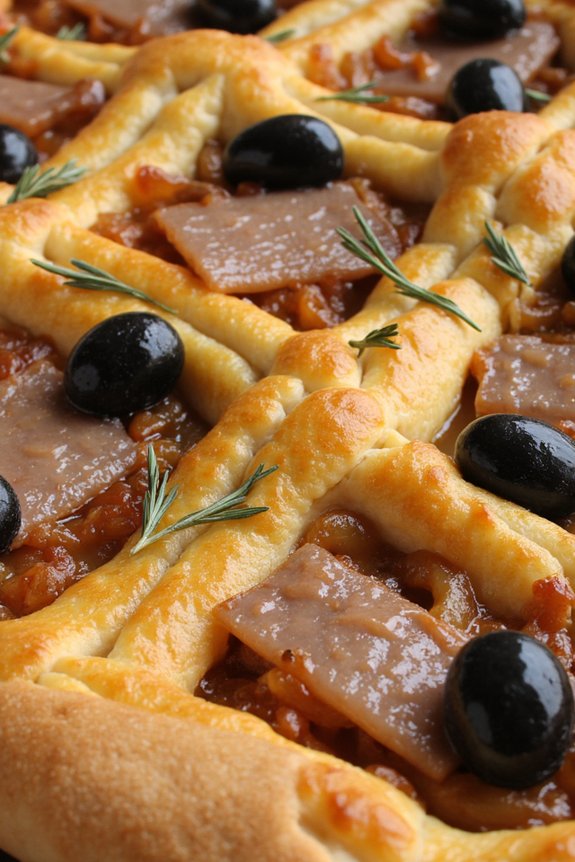
Pissaladière is a traditional dish from the South of France, particularly associated with the region of Provence. This delicious tart is characterized by its rich topping of caramelized onions, anchovies, and olives spread over a thick, bread-like dough.
This dish is reminiscent of pizza but with a distinctively French twist, offering a savory, umami-laden flavor profile that pairs beautifully with a light salad or a glass of white wine. Traditionally enjoyed as an appetizer or a light meal, the Pissaladière is perfect for gatherings, offering a taste of rustic French countryside cuisine.
The foundation of a good Pissaladière is its dough, which is similar to pizza dough but slightly thicker, lending a chewy and satisfying texture. The topping, a blend of sweet, slow-cooked onions, salty anchovies, and briny olives, is a showcase of the simplicity and depth of French cooking.
The slow caramelization of onions brings out their natural sweetness, which balances the saltiness of the anchovies and olives. This recipe serves 4-6 people, making it an ideal choice for sharing with friends and family.
Ingredients for 4-6 Servings:
- 500g all-purpose flour
- 10g instant yeast
- 300ml warm water
- 1 teaspoon salt
- 2 tablespoons olive oil
- 1.5kg yellow onions, thinly sliced
- 2 tablespoons olive oil (for onions)
- Salt and pepper to taste
- 100g anchovy fillets
- 100g black olives, pitted
- Fresh thyme sprigs
Cooking Instructions:
1. Prepare the Dough: In a large bowl, combine the flour, yeast, and salt. Gradually add the warm water and olive oil, mixing until a dough forms. Knead the dough on a floured surface for about 10 minutes until smooth and elastic.
Place the dough in a lightly oiled bowl, cover it with a damp cloth, and let it rise in a warm place for about 1 hour, or until doubled in size.
2. Caramelize the Onions: While the dough is rising, heat 2 tablespoons of olive oil in a large skillet over medium-low heat. Add the sliced onions and a pinch of salt. Cook gently, stirring occasionally, for about 45 minutes to 1 hour, until the onions are soft and golden brown.
Season with salt and pepper to taste.
3. Preheat the Oven: Preheat your oven to 220°C (428°F).
4. Roll Out the Dough: Once the dough has risen, punch it down and transfer it to a floured surface. Roll it out into a rectangle about 1 cm thick. Transfer the dough to a baking sheet lined with parchment paper.
5. Assemble the Pissaladière: Spread the caramelized onions evenly over the dough, leaving a small border around the edges. Arrange the anchovy fillets in a crisscross pattern over the onions.
Place an olive in each square formed by the anchovies. Scatter fresh thyme leaves over the top.
6. Bake the Tart: Bake in the preheated oven for 15-20 minutes, or until the dough is golden and cooked through.
7. Serve: Let the Pissaladière cool slightly before slicing. Serve warm or at room temperature.
Extra Tips:
For an even richer flavor, consider using a mix of olive types, such as Niçoise or Kalamata, to add complexity to the tart. If you prefer a less salty version, you can soak the anchovy fillets in milk for 10 minutes before using them, which will mellow their flavor.
Additionally, make sure not to rush the caramelization of the onions; the slow cooking process is key to achieving their sweet and complex taste. Finally, this dish can be made a few hours in advance and served at room temperature, making it convenient for entertaining.
Confit De Canard: a Time-Honored Tradition
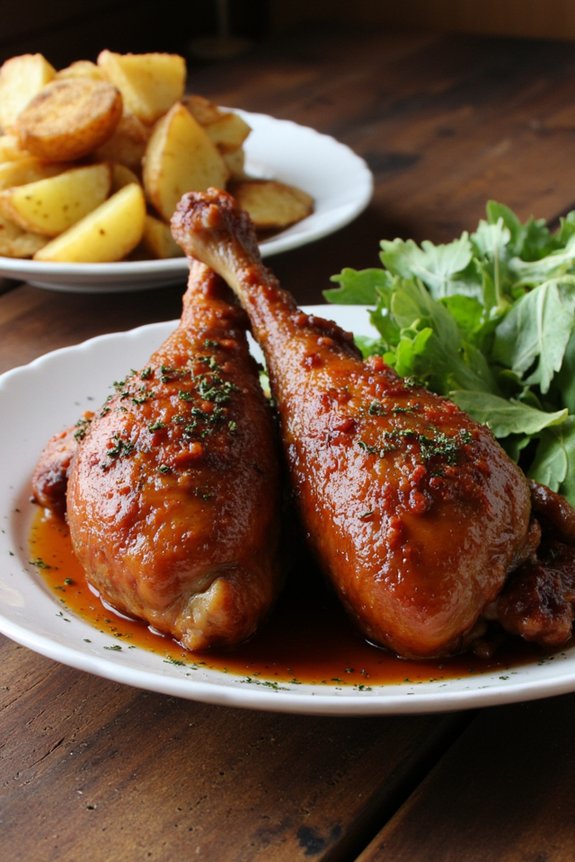
Confit de Canard, or duck confit, is a quintessential French dish that beautifully encapsulates the rustic flavors of the French countryside. This ancient method of preserving duck in its own fat has stood the test of time, offering a rich, succulent delicacy that’s both comforting and indulgent.
Traditionally, duck confit was a preservation technique used by French families to store duck meat for the winter months. Today, it’s celebrated as a gourmet dish, enjoyed for its tender meat that effortlessly falls off the bone, encased in a crisp, golden skin.
The process of making Confit de Canard is a labor of love, requiring patience to allow the flavors to develop and meld together. This version of the recipe serves 4-6 people and involves gently curing the duck legs in a mixture of salt, herbs, and garlic, followed by a slow, loving cook in duck fat. The result is a dish that’s as sumptuous as it’s steeped in tradition, perfect for a special meal with loved ones.
Ingredients (Serves 4-6):
- 4-6 duck legs
- 1/4 cup kosher salt
- 6 cloves garlic, smashed
- 4 sprigs fresh thyme
- 2 bay leaves
- 1 tablespoon black peppercorns
- 4 cups duck fat (or enough to fully submerge the duck legs)
Cooking Instructions:
- Prepare the Duck Legs:
- Rinse the duck legs under cold water and pat them dry with paper towels. This will help the salt and herbs adhere better.
- Cure the Duck:
- In a large bowl or baking dish, combine the kosher salt, smashed garlic, thyme sprigs, bay leaves, and black peppercorns. Rub this mixture evenly all over the duck legs, guaranteeing they’re well-coated.
- Cover the dish with plastic wrap and refrigerate for at least 24 hours. This curing process helps to draw out moisture and infuse the meat with flavor.
- Rinse and Dry:
- After the curing period, remove the duck legs from the refrigerator and rinse off the salt mixture under cold water. Pat them thoroughly dry with paper towels.
- Cook the Duck:
- Preheat your oven to 225°F (110°C).
- In a deep, oven-safe pot, melt the duck fat over low heat until fully liquid.
- Add the duck legs to the pot, ensuring they’re completely submerged in the fat.
- Transfer the pot to the preheated oven and cook for 2.5 to 3 hours, or until the meat is tender and easily falls off the bone.
- Finish and Serve:
- Once cooked, remove the duck legs from the fat and let them drain on a wire rack.
- Just before serving, heat a non-stick skillet over medium-high heat and crisp the skin of the duck legs until golden brown.
- Serve the duck confit hot, perhaps with a side of roasted potatoes or a fresh green salad.
Extra Tips:
When making Confit de Canard, patience is key. Allowing the duck to cure properly guarantees maximum flavor.
If duck fat is unavailable, you can substitute with a mix of vegetable oil and lard, but the authentic flavor comes from using real duck fat.
It’s also worth noting that confit can be stored in the refrigerator for up to a month as long as the meat is completely covered in fat, making it a versatile dish to prepare in advance.
Enjoy the process and savor the rich flavors of this classic French dish.
Tarte Tatin: An Upside-Down Apple Tart
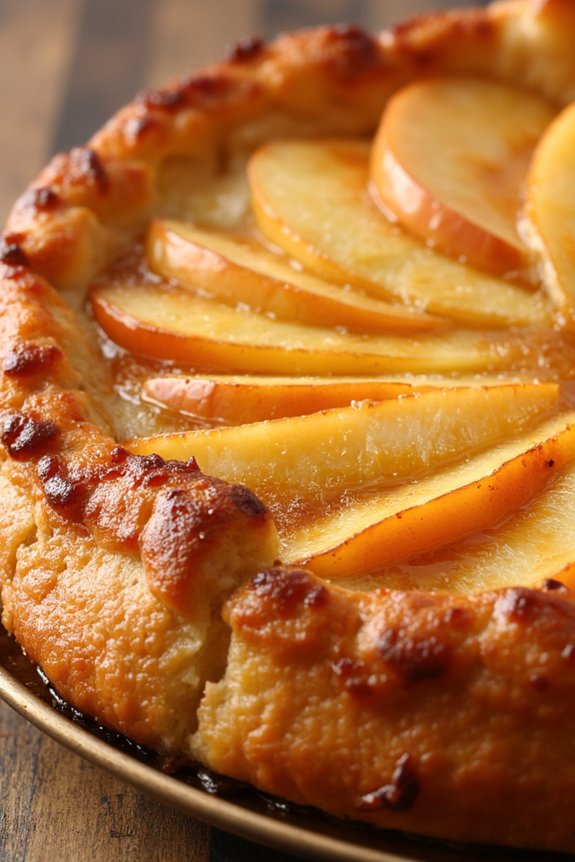
Tarte Tatin is a classic French dessert that originated in the Loire Valley. It’s a delightful upside-down apple tart that boasts a rich, caramelized flavor and a crispy, buttery crust. The story goes that it was created by accident in the late 19th century by the Tatin sisters, who ran a hotel. Their mistake turned into a masterpiece when they served the tart to their guests, who were enamored by its taste and texture.
This dish remains a beloved staple in French cuisine, celebrated for its simplicity yet exquisite taste.
This upside-down tart requires carefully caramelizing apples in sugar and butter before baking them under a layer of pastry. Once baked, the tart is inverted, revealing beautifully caramelized apples atop a golden crust. The contrast between the tender apples and the flaky pastry is what makes Tarte Tatin so special. It’s perfect for a cozy gathering, offering a touch of rustic elegance to your dessert table. Preparing this dish involves a few steps, but the end result is well worth the effort.
Ingredients (serves 4-6):
- 6-8 medium-sized apples (such as Granny Smith or Golden Delicious)
- 1 cup granulated sugar
- 1/2 cup unsalted butter
- 1 sheet of puff pastry (store-bought or homemade)
- 1 teaspoon vanilla extract
- 1 teaspoon ground cinnamon
- A pinch of salt
Cooking Instructions:
- Preheat and Prepare: Preheat your oven to 375°F (190°C). Peel and core the apples, cutting them into quarters.
- Caramelize the Sugar: In a heavy, oven-safe skillet (preferably cast iron), melt the butter over medium heat. Add the sugar and stir until it dissolves, turning a golden brown. Be careful not to burn the sugar.
- Cook the Apples: Add the apple quarters to the caramel in a circular pattern, ensuring they’re tightly packed. Cook for about 10 minutes, turning occasionally, until they begin to soften slightly. Add the vanilla extract, cinnamon, and a pinch of salt.
- Prepare the Pastry: Roll out the puff pastry to fit over the skillet. Once the apples are ready, carefully lay the pastry over the apples, tucking the edges down around the fruit.
- Bake the Tart: Transfer the skillet to the oven and bake for 25-30 minutes, or until the pastry is golden brown and puffed.
- Cool and Invert: Remove the skillet from the oven and let it cool for about 5 minutes. Carefully invert the tart onto a serving plate, ensuring the caramelized apples are on top.
Extra Tips:
When making Tarte Tatin, the choice of apples is essential. They should hold their shape during cooking, so varieties like Granny Smith or Golden Delicious are ideal.
If you prefer a deeper flavor, consider adding a splash of brandy or Calvados to the caramel before adding the apples. Always exercise caution when inverting the hot tart, as the caramel is extremely hot and can cause burns.
Serve your Tarte Tatin warm, perhaps with a dollop of crème fraîche or vanilla ice cream for an extra touch of indulgence.
