


There’s a special charm in French cooking that always draws me in, especially when it comes to pork recipes. These dishes perfectly blend comforting flavors with a touch of elegance. Picture a cozy dinner where the aroma of a slow-cooked pork stew fills the air or the delight of tasting a tenderloin in a creamy mustard sauce. If you’re as intrigued by these classic recipes as I am, let’s embark on this flavorful journey together.
Coq Au Vin With Pork
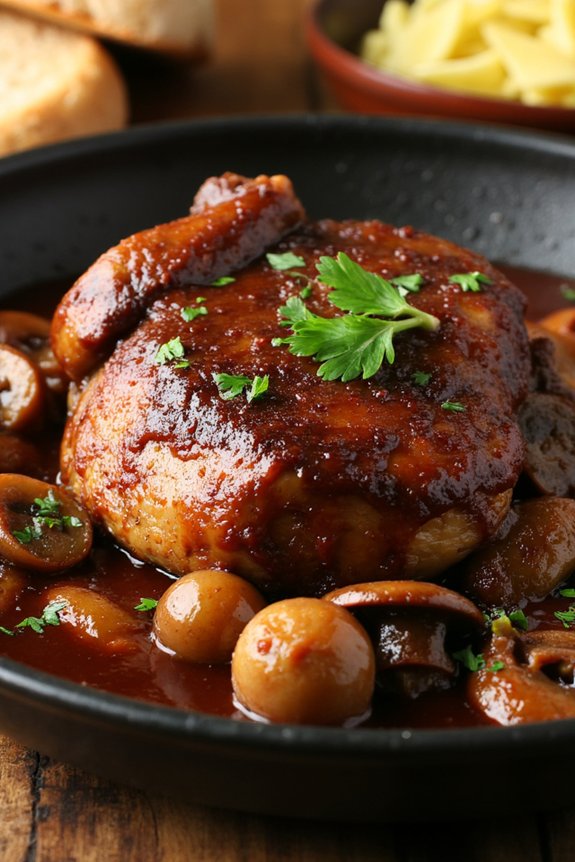
Coq Au Vin With Pork is a delightful twist on the classic French dish, adding a unique depth of flavor by incorporating pork. Traditionally, Coq Au Vin is made with chicken or rooster, but this variation uses pork to enrich the dish with a succulent, savory profile.
The recipe involves simmering the pork with red wine, aromatic vegetables, and herbs, allowing the flavors to meld together beautifully over a slow cooking process. The result is a dish that’s both hearty and sophisticated, perfect for a cozy dinner with family or friends.
This recipe is designed for a serving size of 4-6 people, making it an excellent choice for a gathering or a special occasion. By following the steps, you’ll create a dish that’s brimming with rich, comforting flavors and is sure to impress your guests.
The key to a successful Coq Au Vin With Pork lies in the slow cooking process, which allows the pork and vegetables to absorb the wine and aromatic herbs, resulting in a tender and flavorful meal.
Ingredients:
- 2 lbs pork shoulder, cut into 2-inch pieces
- Salt and black pepper, to taste
- 2 tablespoons olive oil
- 8 oz bacon, diced
- 1 large onion, chopped
- 3 cloves garlic, minced
- 2 tablespoons all-purpose flour
- 2 cups red wine (preferably Burgundy)
- 2 cups chicken or beef broth
- 2 tablespoons tomato paste
- 1 bouquet garni (a bundle of herbs like thyme, parsley, and bay leaf)
- 12 pearl onions, peeled
- 8 oz mushrooms, quartered
- 2 tablespoons butter
- 2 tablespoons chopped fresh parsley, for garnish
Cooking Instructions:
- Prepare the Pork: Season the pork shoulder pieces with salt and black pepper. Set aside.
- Brown the Bacon: In a large Dutch oven or heavy pot, heat the olive oil over medium heat. Add the diced bacon and cook until crisp. Remove the bacon with a slotted spoon and set aside, leaving the fat in the pot.
- Sear the Pork: Increase the heat to medium-high and add the pork pieces to the pot. Sear the pork on all sides until browned, about 5-7 minutes. Remove the pork from the pot and set aside.
- Sauté the Vegetables: In the same pot, add the chopped onion and garlic. Cook until the onion is translucent, about 5 minutes. Stir in the flour and cook for another minute.
- Deglaze the Pot: Slowly pour in the red wine, stirring to deglaze the pot and scrape up any browned bits from the bottom. Let the wine simmer for a couple of minutes.
- Simmer the Stew: Return the pork and bacon to the pot. Add the chicken or beef broth, tomato paste, and bouquet garni. Bring to a simmer, cover, and lower the heat to maintain a gentle simmer. Cook for 1.5 to 2 hours, or until the pork is tender.
- Cook the Vegetables: In a separate skillet, melt the butter over medium heat. Add the pearl onions and mushrooms. Sauté until the onions are golden and the mushrooms are tender, about 10 minutes.
- Combine and Finish: Remove the bouquet garni from the stew. Stir in the sautéed onions and mushrooms. Let the stew simmer for an additional 15 minutes. Adjust seasoning with salt and pepper, if needed.
- Serve: Garnish with chopped fresh parsley and serve hot with crusty bread or over egg noodles.
Extra Tips: For the best results, use a good quality red wine, as the flavor will be prominent in the dish. If possible, prepare the dish a day in advance to allow the flavors to deepen overnight; simply reheat gently before serving.
Additionally, feel free to customize the bouquet garni with your favorite herbs to suit your taste. Finally, if you prefer a thicker sauce, you can remove the lid in the last 30 minutes of cooking to allow some of the liquid to evaporate.
Classic French Cassoulet

The Classic French Cassoulet is a hearty, slow-cooked casserole originating from the south of France. Traditionally, it’s a rich combination of white beans stewed with various meats, including pork, duck, and sausages. The dish gets its name from the earthenware pot, the “cassole,” in which it was originally cooked.
Cassoulet is the epitome of rustic French cooking, with its roots deeply embedded in the countryside, showcasing a medley of flavors that develop over slow cooking. This comforting dish is perfect for a family meal during the colder months. The layers of flavor achieved by slowly cooking the beans with savory meats and aromatic herbs make it a culinary masterpiece.
While there are many regional variations of cassoulet, this recipe stays true to tradition with pork as the primary meat, complemented by Toulouse sausages and duck confit. The result is a mouthwatering dish that brings a taste of France to your dining table.
Ingredients (Serves 4-6):
- 500g dried white beans (such as cannellini or Great Northern beans)
- 1 large onion, chopped
- 2 carrots, peeled and chopped
- 4 cloves garlic, minced
- 2 tablespoons tomato paste
- 1 bouquet garni (a bundle of herbs, typically thyme, bay leaf, and parsley)
- 300g pork belly, cut into chunks
- 4 Toulouse sausages
- 2 duck confit legs
- 1 cup breadcrumbs
- Salt and pepper to taste
- 3 tablespoons duck fat or olive oil
- 1 liter chicken stock
- 1 cup dry white wine
Cooking Instructions:
- Prepare the Beans: Soak the dried white beans in a large bowl of water overnight. Drain and rinse them well before cooking.
- Cook the Beans: Place the soaked beans in a large pot and cover them with water. Bring to a boil, reduce heat, and let them simmer for about 1 hour until they’re tender. Drain and set aside.
- Brown the Meats: In a large casserole dish or Dutch oven, heat the duck fat or olive oil over medium heat. Add the pork belly pieces and sausages, browning them on all sides. Remove and set aside.
- Sauté Vegetables: In the same pot, add the chopped onion, carrots, and minced garlic. Sauté until the vegetables are softened and fragrant.
- Deglaze the Pot: Stir in the tomato paste and cook for another minute. Pour in the white wine, scraping up any browned bits from the bottom of the pot.
- Assemble the Cassoulet: Return the browned meats to the pot. Add the drained beans, bouquet garni, and chicken stock. Season with salt and pepper.
- Slow Cook: Bring the mixture to a simmer. Cover the pot with a lid and transfer it to a preheated oven at 150°C (300°F). Cook for 2-3 hours, until the beans are creamy and the flavors have melded together.
- Add Duck Confit: About 30 minutes before the end of cooking, add the duck confit legs to the cassoulet.
- Finish with Breadcrumbs: Remove the lid and sprinkle the cassoulet with breadcrumbs. Increase the oven temperature to 180°C (350°F) and cook for an additional 15-20 minutes until the top is golden and crispy.
Extra Tips:
For an authentic cassoulet experience, it’s essential to use high-quality meats and to take your time with the cooking process. If you’re unable to find Toulouse sausages, any good quality pork sausage will do.
The cassoulet can be prepared in advance and tastes even better the next day, as the flavors continue to develop. Don’t forget to serve it with a crusty baguette to soak up the delicious juices.
Pork Rillettes
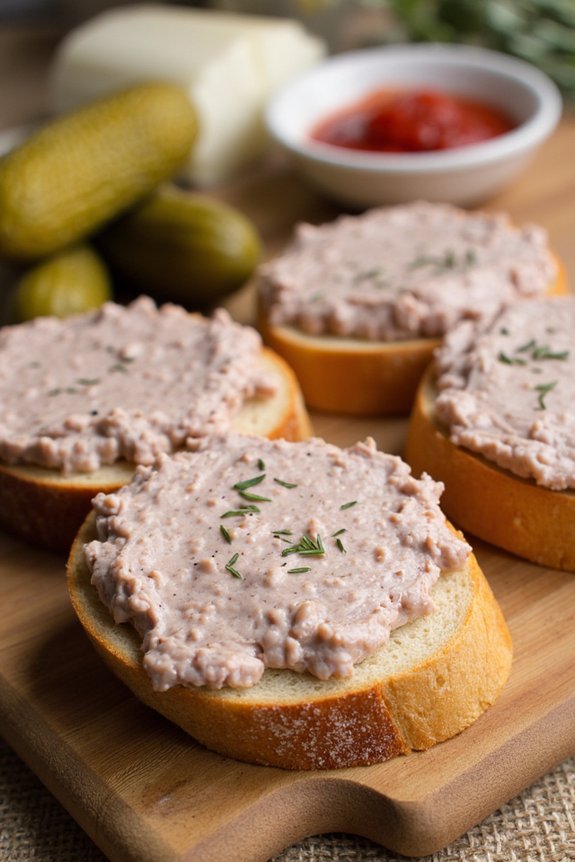
Pork rillettes are a classic French preparation that transforms pork into a rich, savory spread perfect for smearing on crusty bread. This dish originates from the Loire and Tours regions of France and is known for its slow-cooked, tender texture and deep flavor. The pork is slowly cooked in its own fat, resulting in a luxurious and decadent dish that’s perfect for entertaining or as a gourmet snack.
Traditionally, pork rillettes are made by cooking pork with a mixture of spices and herbs until it’s fall-apart tender. The meat is then shredded and mixed with some of the cooking fat, creating a spreadable consistency. This dish is typically served cold or at room temperature, allowing the flavors to meld together beautifully. It’s a delightful addition to any charcuterie board and pairs wonderfully with pickles, mustard, and crusty French bread.
Ingredients (Serves 4-6):
- 2 pounds pork shoulder, trimmed and cut into 2-inch pieces
- 1 cup pork fat or lard
- 2 cups water
- 2 cloves garlic, crushed
- 2 bay leaves
- 1 teaspoon fresh thyme leaves
- 1 teaspoon salt
- 1/2 teaspoon black pepper
- 1/4 teaspoon ground nutmeg
Cooking Instructions:
- Preparation: Begin by cutting the pork shoulder into 2-inch pieces and trimming off any excess fat. This helps guarantee even cooking and a smoother texture in the final product.
- Cooking the Pork: In a large, heavy-bottomed pot or Dutch oven, combine the pork pieces, pork fat, water, garlic, bay leaves, thyme, salt, pepper, and nutmeg. Bring the mixture to a gentle simmer over medium heat.
- Slow Cooking: Once the mixture begins to simmer, reduce the heat to low. Cover the pot and cook the pork slowly for about 3 to 4 hours. Stir occasionally to prevent sticking and guarantee even cooking. The pork should become very tender and easy to shred.
- Shredding the Pork: Remove the pot from the heat and allow the pork to cool slightly. Using two forks, shred the pork directly in the pot. The meat should fall apart easily at this stage.
- Mixing and Adjusting Consistency: Mix the shredded pork with the remaining fat in the pot until it reaches a spreadable consistency. If the mixture seems too dry, add more melted pork fat or lard to achieve the desired texture.
- Storing the Rillettes: Transfer the pork rillettes to a clean jar or container. Press the mixture down to eliminate any air pockets and cover the top with a thin layer of melted fat to preserve it. Seal the container and refrigerate for at least 24 hours to allow the flavors to develop.
- Serving: Serve the pork rillettes cold or at room temperature with slices of crusty bread, pickles, and mustard on the side.
Extra Tips:
When making pork rillettes, patience is key. Allowing the pork to cook slowly helps develop a richer flavor and a more tender texture.
Be sure to taste the rillettes before storing them; adjust the seasoning as needed to suit your preferences. If you have time, letting the rillettes sit in the refrigerator for a couple of days allows the flavors to meld even more, resulting in an even more delicious spread.
Remember that a thin layer of fat on top acts as a preservative, helping the rillettes last longer in the fridge.
Pork Tenderloin With Creamy Mustard Sauce

Pork Tenderloin with Creamy Mustard Sauce is a classic French dish that beautifully combines tender, juicy pork with a rich, tangy sauce. The mustard sauce adds a layer of sophistication and depth of flavor, making it perfect for a special occasion or a delightful weeknight dinner.
The pork tenderloin, known for its tenderness and lean quality, pairs exquisitely with the creamy sauce, creating a harmonious balance that’s both comforting and elegant.
This dish isn’t only delicious but also relatively simple to prepare, making it accessible for home cooks of all levels. With a few quality ingredients and a bit of time, you can create a meal that will impress your family and friends.
The key to success is confirming the pork is cooked to perfection and the sauce is well-seasoned and smooth. Let’s plunge into the recipe and bring a taste of French cuisine to your home kitchen.
Ingredients (Serves 4-6):
- 2 pork tenderloins (about 1.5 pounds total)
- Salt and freshly ground black pepper
- 2 tablespoons olive oil
- 1 tablespoon unsalted butter
- 1 small shallot, finely chopped
- 1/2 cup chicken broth
- 1/2 cup heavy cream
- 2 tablespoons Dijon mustard
- 1 tablespoon whole-grain mustard
- 1 tablespoon chopped fresh parsley (optional, for garnish)
Cooking Instructions:
- Prepare the Pork Tenderloins:
- Preheat your oven to 400°F (200°C). Season the pork tenderloins generously with salt and freshly ground black pepper.
- Sear the Pork:
- In a large ovenproof skillet, heat the olive oil over medium-high heat. Add the pork tenderloins and sear them on all sides until they’re golden brown, about 8-10 minutes total. Remove the pork from the skillet and set aside.
- Make the Sauce Base:
- In the same skillet, melt the butter over medium heat. Add the chopped shallot and sauté until softened and translucent, about 2-3 minutes.
- Deglaze the Pan:
- Pour in the chicken broth, scraping up any browned bits from the bottom of the skillet with a wooden spoon. Allow the broth to reduce by half.
- Add Cream and Mustard:
- Lower the heat and stir in the heavy cream, Dijon mustard, and whole-grain mustard. Mix well until the sauce is smooth and creamy.
- Cook the Pork:
- Return the pork tenderloins to the skillet, spooning some of the sauce over them. Transfer the skillet to the preheated oven and roast for about 15-20 minutes, or until the internal temperature of the pork reaches 145°F (63°C).
- Rest and Serve:
- Remove the skillet from the oven and let the pork rest for a few minutes. Slice the pork tenderloins into medallions, and serve them drizzled with the creamy mustard sauce. Garnish with chopped fresh parsley if desired.
Extra Tips:
To confirm the pork tenderloin remains juicy and tender, avoid overcooking it; using a meat thermometer is highly recommended for accuracy.
When searing the pork, confirm the skillet is hot enough to create a nice crust without burning the meat. If the sauce becomes too thick, you can thin it out with a bit more chicken broth.
Feel free to adjust the amount of mustard to suit your taste preference, adding more for an extra tangy kick. Serve this dish with your favorite sides, such as mashed potatoes or green beans, to complete the meal.
French Pork Stew With Red Wine
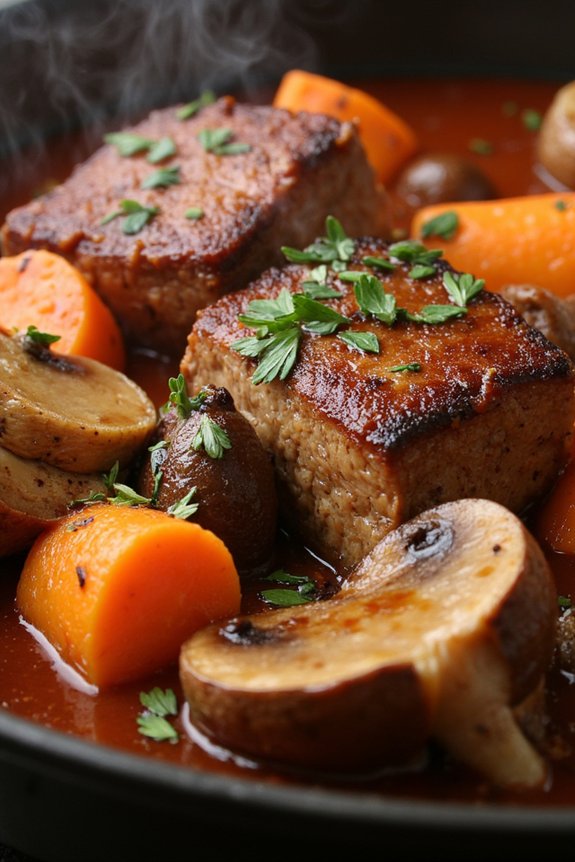
French Pork Stew With Red Wine, also known as “Ragoût de Porc au Vin Rouge,” is a classic dish that embodies the rich and hearty flavors of French cuisine. This comforting stew is perfect for a cozy evening meal, offering a symphony of flavors that meld beautifully as they simmer together. The combination of tender pork, aromatic vegetables, and robust red wine creates a harmonious blend that’s sure to satisfy both family and guests alike.
Traditionally, this dish is prepared slowly to allow the ingredients to fully integrate, resulting in a depth of flavor that’s both warming and exquisite. This recipe will serve 4-6 people, making it ideal for a family dinner or a small gathering. The use of red wine not only adds complexity but also tenderizes the pork, guaranteeing each bite is succulent and flavorful.
Pair this dish with a crusty baguette or a side of creamy mashed potatoes to soak up the delicious sauce, and you have a meal that’s quintessentially French and utterly delightful.
Ingredients:
- 2 pounds pork shoulder, cut into 1-inch cubes
- Salt and pepper, to taste
- 2 tablespoons olive oil
- 1 large onion, diced
- 2 carrots, peeled and sliced
- 2 cloves garlic, minced
- 2 tablespoons tomato paste
- 2 cups red wine (such as Merlot or Pinot Noir)
- 2 cups beef stock
- 1 tablespoon fresh thyme leaves
- 2 bay leaves
- 1 cup mushrooms, sliced
- 1 tablespoon all-purpose flour
- 2 tablespoons fresh parsley, chopped (for garnish)
Cooking Instructions:
- Prepare the Pork: Season the pork cubes with salt and pepper. This step is essential as it adds initial flavor to the meat and helps in forming a nice crust when seared.
- Sear the Pork: In a large Dutch oven or heavy-bottomed pot, heat the olive oil over medium-high heat. Add the pork in batches, making sure not to overcrowd the pan, and sear until browned on all sides. Remove the pork and set aside.
- Sauté the Vegetables: In the same pot, add the diced onion, sliced carrots, and minced garlic. Cook for about 5 minutes, stirring occasionally, until the vegetables are softened and the onions are translucent.
- Tomato Paste and Wine: Stir in the tomato paste and cook for an additional 2 minutes to caramelize it slightly. Then, pour in the red wine, using a wooden spoon to scrape up any browned bits from the bottom of the pot. Bring the mixture to a simmer.
- Combine Ingredients: Return the seared pork to the pot, along with the beef stock, thyme, and bay leaves. Stir to combine. Bring the stew to a gentle boil, then reduce the heat to low and cover.
- Simmer: Let the stew simmer gently for 1.5 to 2 hours, or until the pork is tender and the flavors have melded. Stir occasionally and adjust seasoning with salt and pepper as needed.
- Add Mushrooms: About 20 minutes before the stew is done, add the sliced mushrooms. This will assure they’re cooked through but still retain their texture.
- Thicken the Stew: If a thicker stew is desired, dissolve the flour in a small amount of water to create a slurry, and stir it into the stew. Allow it to cook for another 10 minutes, stirring until thickened.
- Garnish and Serve: Remove the bay leaves, garnish with chopped parsley, and serve hot with your choice of side.
Extra Tips:
For the best results, use a good quality red wine that you’d enjoy drinking. The wine’s flavor is a key component of the stew, so it shouldn’t be overly tannic or bitter.
Additionally, if you have time, marinate the pork cubes in wine and herbs for a few hours before cooking to enhance the flavors. Always taste and adjust the seasoning toward the end of cooking, as the flavors will concentrate as the stew simmers.
Finally, this dish can be made a day ahead, as the flavors deepen and improve with time.
Porc À La Normande
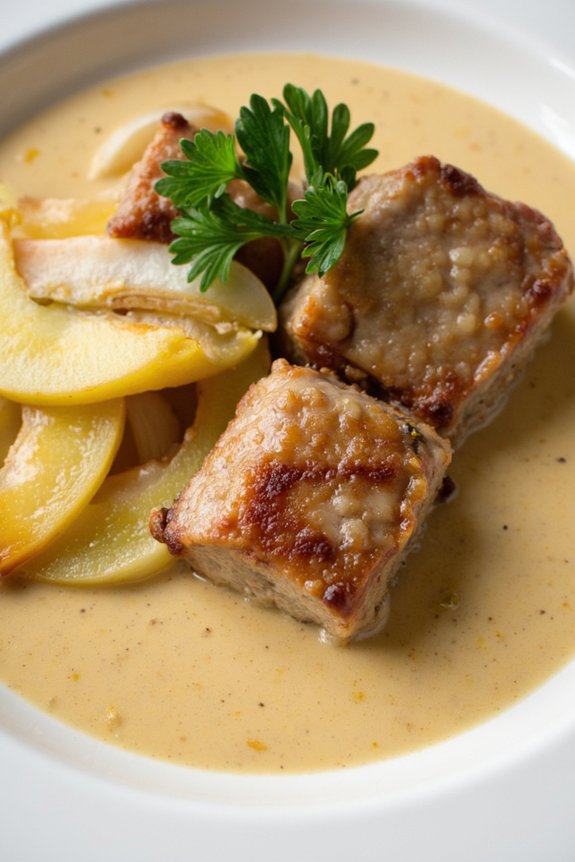
Porc À La Normande is a classic French dish that showcases the rich culinary heritage of the Normandy region. This comforting and hearty recipe combines tender pork with a luscious sauce made from apples, Calvados (an apple brandy from Normandy), and cream, resulting in a beautifully balanced blend of flavors. The dish is perfect for a cozy family dinner or a special occasion, offering a taste of rustic elegance with every bite.
The key to mastering Porc À La Normande is using high-quality ingredients. The pork should be succulent, the apples crisp and slightly tart, and the cream velvety and rich. Calvados adds a unique depth of flavor, enhancing the sweetness of the apples and the savory notes of the pork. This dish is typically served with mashed potatoes or crusty bread to soak up the delicious sauce, completing a meal that’s both satisfying and sophisticated.
Ingredients for 4-6 servings:
- 2 pounds pork loin, cut into 1-inch cubes
- 2 tablespoons unsalted butter
- 2 tablespoons olive oil
- 2 large onions, thinly sliced
- 4 cloves garlic, minced
- 2 large tart apples, peeled, cored, and sliced
- 1/2 cup Calvados or apple brandy
- 1 cup chicken stock
- 1 cup heavy cream
- Salt and pepper, to taste
- 1 teaspoon dried thyme
- 2 tablespoons fresh parsley, chopped (for garnish)
Cooking Instructions:
- Prepare the Pork: Season the pork cubes with salt and pepper. Heat the butter and olive oil in a large skillet or Dutch oven over medium-high heat. Once hot, add the pork cubes in batches to avoid overcrowding. Brown the pork on all sides, removing them from the skillet and setting aside once browned.
- Sauté the Aromatics: In the same skillet, add the onions and garlic. Sauté until the onions are soft and translucent, about 5 minutes. Make sure to scrape up any browned bits from the bottom of the skillet to incorporate them into the sauce.
- Cook the Apples: Add the apple slices to the skillet and cook for about 3 minutes, or until they start to soften. This step allows the apples to absorb the flavors of the onions and garlic.
- Deglaze with Calvados: Carefully pour the Calvados into the skillet, using a wooden spoon to stir and scrape up any remaining bits from the bottom of the skillet. Allow the alcohol to cook off for about 2 minutes.
- Simmer the Pork: Return the browned pork cubes to the skillet. Add the chicken stock, thyme, and a pinch more salt and pepper. Bring the mixture to a simmer, cover, and let it cook for about 30 minutes, or until the pork is tender.
- Finish with Cream: Once the pork is tender, reduce the heat to low and stir in the heavy cream. Allow the sauce to simmer gently for another 5-10 minutes, or until it thickens to your desired consistency.
- Garnish and Serve: Taste and adjust the seasoning as needed. Garnish with fresh parsley before serving.
Extra Tips:
When preparing Porc À La Normande, consider using a mix of apple varieties for added complexity in flavor. Additionally, if you don’t have Calvados, a good quality apple cider can be used as a substitute to retain the dish’s characteristic apple notes.
Be sure to let the sauce simmer gently after adding the cream to prevent it from curdling. Finally, remember to serve this dish with sides that can soak up the sauce, enhancing the overall dining experience.
Pork Chops With Apple Cider Glaze

Pork Chops With Apple Cider Glaze is a delightful dish that combines the rich, savory flavor of pork with the sweet and tangy notes of apple cider. This fusion of flavors creates a perfect harmony, making it an ideal main course for both casual dinners and special occasions. The apple cider glaze not only enhances the taste but also adds a beautiful glossy finish to the pork chops, making them as visually appealing as they’re delicious.
When cooked to perfection, the pork chops are juicy and tender, with the glaze providing a subtle caramelization that brings out their natural flavors. This dish is deeply rooted in French culinary tradition, where the combination of pork and apples is a classic pairing. The apple cider glaze is made with a blend of apple cider, Dijon mustard, and fresh herbs, which provide a complex layer of flavors that perfectly complements the pork.
Whether you’re a seasoned chef or a home cook looking to impress, this recipe will guide you through creating a meal that’s both elegant and satisfying. The following recipe is designed to serve 4-6 people, making it ideal for family gatherings or dinner parties.
Ingredients (Serving Size: 4-6 people):
- 4-6 bone-in pork chops (about 1-inch thick)
- Salt and freshly ground black pepper
- 2 tablespoons olive oil
- 1 cup apple cider
- 2 tablespoons Dijon mustard
- 2 tablespoons apple cider vinegar
- 1 tablespoon brown sugar
- 1 tablespoon unsalted butter
- 1 teaspoon fresh thyme leaves
- 1 teaspoon fresh rosemary, chopped
Cooking Instructions:
- Prepare the Pork Chops: Begin by seasoning the pork chops generously with salt and freshly ground black pepper on both sides. Allow them to sit at room temperature for about 15 minutes. This helps the seasoning penetrate the meat and improves flavor and tenderness.
- Sear the Pork Chops: In a large skillet, heat the olive oil over medium-high heat. Once the oil is hot, add the pork chops. Sear them for about 4-5 minutes on each side, or until they’re golden brown and have a crust. Remove the chops from the skillet and set them aside.
- Make the Apple Cider Glaze: In the same skillet, reduce the heat to medium and pour in the apple cider, using a wooden spoon to scrape up any browned bits from the bottom of the pan. Stir in the Dijon mustard, apple cider vinegar, brown sugar, thyme, and rosemary. Allow the mixture to simmer for about 5-7 minutes, or until it has reduced by half and thickened slightly.
- Finish Cooking the Pork Chops: Return the pork chops to the skillet, ensuring they’re coated in the glaze. Allow them to cook for an additional 5-7 minutes, basting occasionally with the glaze, until they reach an internal temperature of 145°F (63°C).
- Rest and Serve: Remove the pork chops from the heat and add the butter to the glaze, stirring until it melts and incorporates into the sauce. Let the pork chops rest for a few minutes before serving, which allows the juices to redistribute, ensuring the meat remains tender and juicy.
Extra Tips:
For the best flavor, choose pork chops that are well-marbled with fat, as this will help keep them moist during cooking. If you prefer a thicker glaze, you can simmer it a bit longer until it reaches your desired consistency.
Feel free to experiment with additional herbs or spices, such as sage or a touch of cayenne pepper, for a different flavor profile. Finally, serving the pork chops with a side of roasted vegetables or a creamy mashed potato will complement the dish beautifully, balancing the sweetness of the glaze with earthy or creamy textures.
Saucisse De Toulouse With Lentils

Saucisse de Toulouse with Lentils is a classic French dish that embodies rustic comfort and hearty flavors. This dish combines the richness of Toulouse sausages, a traditional French sausage made from pork, with the earthy goodness of lentils, resulting in a meal that’s both satisfying and nourishing. The sausages are known for their robust, savory flavors, which pair perfectly with the subtle, nutty taste of lentils. Together, they create a dish that isn’t only delicious but also a great way to warm up on a chilly day.
This recipe is perfect for serving 4-6 people, making it ideal for a family dinner or a small gathering. The dish is relatively simple to prepare, allowing the quality of the ingredients to shine through. Saucisse de Toulouse with Lentils is a dish that won’t only fill your stomach but also fill your home with the comforting aroma of French cuisine. With just a few fresh ingredients and some simple steps, you can bring a taste of France to your table.
Ingredients (Serves 4-6):
- 6 Toulouse sausages
- 2 cups green lentils
- 1 large onion, finely chopped
- 2 cloves garlic, minced
- 2 carrots, diced
- 2 stalks celery, diced
- 1 bouquet garni (a bundle of herbs like thyme, bay leaf, and parsley)
- 4 cups chicken or vegetable stock
- 2 tablespoons olive oil
- Salt and pepper to taste
Cooking Instructions:
- Prepare the Lentils: Begin by rinsing the green lentils under cold water and set them aside. This helps remove any debris or dust from the lentils.
- Cook the Sausages: In a large skillet or Dutch oven, heat the olive oil over medium heat. Add the Toulouse sausages and cook until they’re browned on all sides, about 8-10 minutes. Remove the sausages from the skillet and set them aside.
- Sauté the Vegetables: In the same skillet, add the chopped onion, garlic, carrots, and celery. Sauté the vegetables until they’re softened, about 5-7 minutes.
- Combine Ingredients: Add the rinsed lentils to the skillet with the vegetables. Stir well to combine all ingredients and make sure the lentils are well-coated with the flavors from the sautéed vegetables.
- Simmer the Lentils: Pour in the chicken or vegetable stock and add the bouquet garni. Increase the heat to bring the mixture to a boil, then reduce the heat to low. Cover the skillet and let it simmer for about 25-30 minutes, or until the lentils are tender.
- Add the Sausages: Once the lentils are tender, return the sausages to the skillet. Cover and let the mixture simmer for an additional 10-15 minutes, allowing the sausages to heat through and the flavors to meld together.
- Season and Serve: Remove the bouquet garni and season the dish with salt and pepper to taste. Serve the sausages alongside the lentils on a platter, garnished with fresh parsley if desired.
Extra Tips: For an even richer flavor, consider using a splash of red wine in the lentils while they simmer. This will add depth to the dish. Additionally, if you prefer a bit of spice, you can add a pinch of red pepper flakes when sautéing the vegetables. Be sure to taste and adjust seasoning as needed, especially if using a low-sodium stock. Finally, be mindful of the cooking time for the lentils, as overcooked lentils can become mushy and lose their distinct texture.
Pork and Prune Terrine

Pork and Prune Terrine is a classic French dish that brings together the robust flavors of pork with the sweet, rich notes of prunes. Traditionally served as an appetizer or a sophisticated snack, this terrine is perfect for festive occasions or a special dinner party. The combination of pork, prunes, and aromatic spices creates a harmonious blend of flavors that’s both rustic and elegant.
With its intricate layers and complex taste, this terrine is bound to impress your guests and transport them to the charming countryside of France.
Preparing a Pork and Prune Terrine requires patience and attention to detail, but the result is well worth the effort. The key to a successful terrine lies in the balance of flavors and the right texture. The pork provides a hearty base, while the prunes add sweetness and moisture. Herbs like thyme and bay leaves lend their aromatic qualities, enhancing the overall taste.
This recipe will guide you through the process, guaranteeing that your terrine turns out perfectly every time.
Ingredients for 4-6 people:
- 600g pork shoulder, minced
- 200g pork belly, minced
- 150g prunes, pitted and chopped
- 2 shallots, finely chopped
- 2 cloves garlic, minced
- 1 tablespoon fresh thyme leaves
- 2 bay leaves
- 100ml brandy
- 2 eggs
- 100ml double cream
- Salt and pepper to taste
- Butter for greasing
Cooking Instructions:
- Prepare the Ingredients: Begin by preheating your oven to 160°C (320°F). Grease a terrine mold or a loaf tin with butter to prevent sticking.
- Marinate the Prunes: In a small bowl, combine the chopped prunes with brandy. Allow them to soak while you prepare the remaining ingredients. This will help the prunes absorb the brandy and become more flavorful.
- Mix the Meat: In a large bowl, combine the minced pork shoulder and pork belly. Add the finely chopped shallots, minced garlic, thyme leaves, eggs, and double cream. Mix thoroughly to guarantee all ingredients are well incorporated.
- Season the Mixture: Season the meat mixture with salt and pepper according to your taste. Mix again to distribute the seasoning evenly throughout the mixture.
- Layer the Terrine: Remove the prunes from the brandy and add them to the meat mixture. Stir gently to integrate the prunes. Place one bay leaf at the bottom of the terrine mold. Then, carefully layer the meat mixture into the mold, pressing down firmly to remove any air pockets.
- Bake the Terrine: Cover the terrine with a lid or aluminum foil. Place the terrine mold into a larger baking dish and add enough hot water to the dish to come halfway up the sides of the terrine mold. This water bath will help the terrine cook evenly. Bake in the preheated oven for 1.5 hours.
- Cool and Chill: Once cooked, remove the terrine from the oven and allow it to cool to room temperature. Afterward, refrigerate the terrine for at least 24 hours to let the flavors meld and the texture firm up.
Extra Tips:
When preparing the Pork and Prune Terrine, patience is essential. Allowing the terrine to chill for a full 24 hours enhances the flavors and guarantees that the terrine slices cleanly without crumbling.
If you prefer a smoother texture, consider processing a portion of the meat mixture in a food processor before combining it with the rest. Additionally, serving the terrine with crusty bread or a simple green salad can complement its rich flavors beautifully.
Slow-Cooked Pork Belly With Herbs
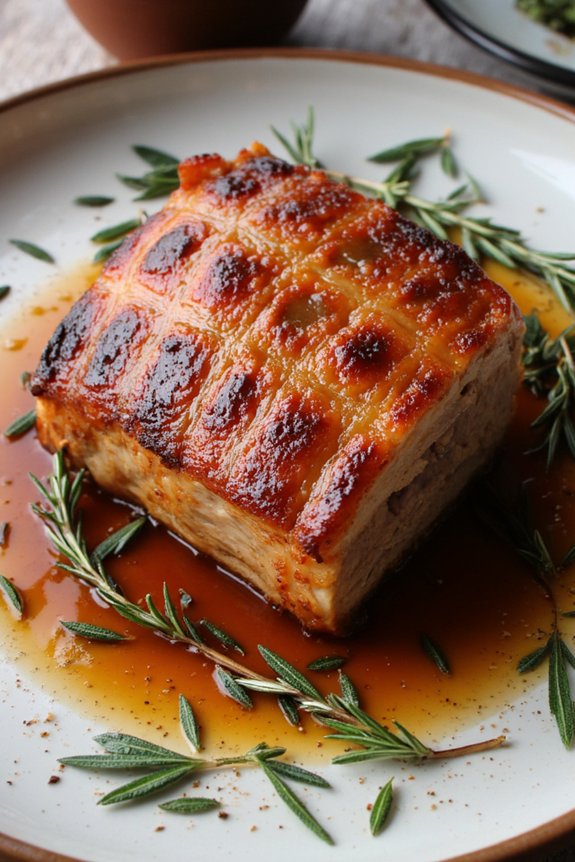
Slow-cooked pork belly with herbs is a classic French dish that brings out the rich flavors of pork, enhanced by a subtle infusion of fragrant herbs. The key to this recipe is the slow cooking process, which guarantees that the pork belly becomes tender and succulent, with a beautifully crispy skin.
This dish is perfect for a cozy family dinner or a special occasion, as it not only tastes delicious but also fills the home with an irresistible aroma that will have everyone gathering around the table.
The preparation is relatively simple, relying on high-quality ingredients to do most of the work. By using fresh herbs such as thyme, rosemary, and sage, the natural flavors of the pork are complemented perfectly. The result is a dish that’s both hearty and refined, offering a taste of traditional French cuisine in every bite.
This recipe serves 4-6 people, making it an ideal choice for a small gathering or a family meal.
Ingredients:
- 3 lbs pork belly
- 2 tablespoons olive oil
- 4 cloves garlic, minced
- 1 tablespoon fresh thyme leaves
- 1 tablespoon fresh rosemary, chopped
- 1 tablespoon fresh sage, chopped
- Salt and pepper to taste
- 1 cup chicken stock
- 2 tablespoons apple cider vinegar
Instructions:
- Preheat the Oven: Begin by preheating your oven to 325°F (160°C). This moderate temperature is essential for slow-cooking the pork belly to achieve a tender texture.
- Prepare the Pork Belly: Score the skin of the pork belly with a sharp knife in a crisscross pattern. This helps the skin crisp up during cooking. Season generously with salt and pepper on both sides.
- Brown the Pork Belly: Heat the olive oil in a large ovenproof skillet or Dutch oven over medium-high heat. Place the pork belly skin-side down and sear until golden brown, about 5 minutes. Flip and sear the other side for another 5 minutes.
- Add the Aromatics: Add the minced garlic, thyme, rosemary, and sage to the skillet. Stir for about 1 minute until the herbs are fragrant.
- Deglaze the Pan: Pour in the chicken stock and apple cider vinegar, scraping up any browned bits from the bottom of the pan. This adds depth to the flavor of the sauce.
- Slow Cook the Pork Belly: Cover the skillet with a lid or aluminum foil and transfer it to the preheated oven. Allow the pork belly to cook for 2.5 to 3 hours, or until it’s tender and the skin is crispy.
- Rest and Serve: Remove the skillet from the oven and let the pork belly rest for 10 minutes before slicing. This resting time allows the juices to redistribute, guaranteeing a juicy final product. Slice and serve the pork belly with the herb-infused jus from the skillet.
Extra Tips:
For the best results, choose pork belly with a good balance of meat and fat, as the fat will render down during cooking, keeping the meat moist.
If you prefer extra crispy skin, you can finish the cooking process by placing the pork belly under the broiler for a few minutes. Be sure to monitor it closely to prevent burning.
Pair this dish with a side of roasted vegetables or creamy mashed potatoes to complement the rich flavors of the pork.
Braised Pork Shoulder in White Wine
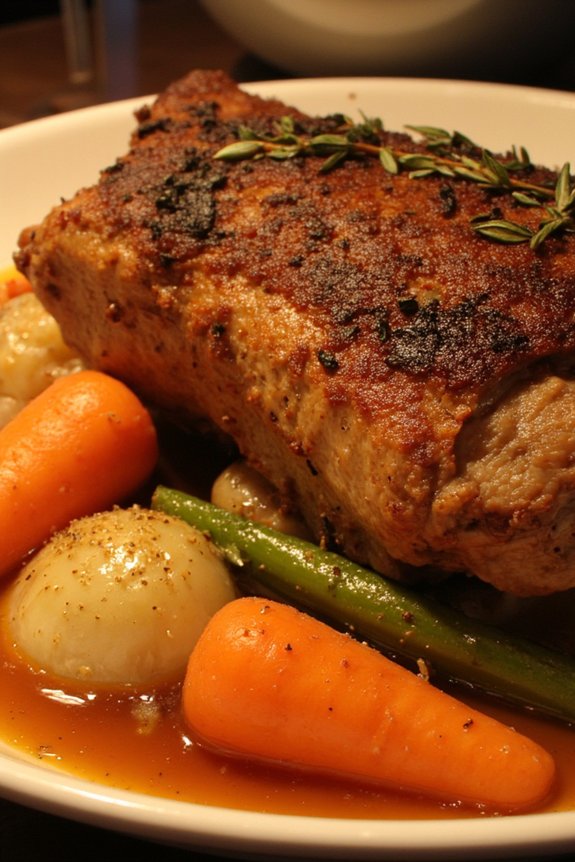
Braised Pork Shoulder in White Wine is a classic French dish that combines the rich, tender flavor of pork shoulder with the aromatic complexity of white wine and herbs. This dish is perfect for a cozy family dinner or a gathering with friends, providing a warm and comforting meal that’s both impressive and satisfying.
The slow-cooking process allows the pork shoulder to become incredibly tender, absorbing the fragrant notes of garlic, thyme, and bay leaves, all beautifully balanced by the acidity of the white wine.
This recipe is designed to serve 4-6 people, making it ideal for a small dinner party or a hearty family meal. Served with a side of creamy mashed potatoes or crusty bread, this braised pork shoulder dish is sure to delight everyone at the table.
The simplicity of the ingredients, combined with the depth of flavor achieved through braising, makes this a go-to recipe for anyone looking to explore the delights of French cuisine.
Ingredients (serves 4-6):
- 3-4 lb pork shoulder, bone-in
- Salt and freshly ground black pepper
- 2 tablespoons olive oil
- 2 onions, chopped
- 4 cloves garlic, minced
- 2 carrots, sliced
- 1 cup dry white wine
- 2 cups chicken or vegetable broth
- 2 bay leaves
- 1 tablespoon fresh thyme leaves (or 1 teaspoon dried thyme)
- 1 tablespoon Dijon mustard
Cooking Instructions:
- Prepare the Pork Shoulder: Season the pork shoulder generously with salt and freshly ground black pepper on all sides. This will enhance the flavor as it cooks.
- Sear the Pork: In a large Dutch oven or heavy pot, heat the olive oil over medium-high heat. Add the pork shoulder and sear on all sides until golden brown, about 4-5 minutes per side. Remove the pork from the pot and set it aside.
- Sauté the Vegetables: In the same pot, add the chopped onions, minced garlic, and sliced carrots. Sauté for about 5 minutes until the onions are translucent and the vegetables start to soften.
- Deglaze with Wine: Pour in the white wine and bring to a simmer, scraping up any brown bits from the bottom of the pot. This deglazing will add depth to the sauce.
- Add Broth and Herbs: Return the pork shoulder to the pot. Add the chicken or vegetable broth, bay leaves, thyme, and Dijon mustard. Stir to combine and bring the mixture to a gentle simmer.
- Braise: Cover the pot with a lid and transfer it to a preheated oven at 325°F (160°C). Braise for 2.5 to 3 hours, or until the pork is tender and easily pulls apart with a fork.
- Serve: Once cooked, remove the pork from the oven and let it rest for 10 minutes before slicing. Serve with the braised vegetables and sauce from the pot.
Extra Tips:
When selecting a white wine for this recipe, opt for a dry variety such as Sauvignon Blanc or Chardonnay, as these will provide the best balance of acidity and flavor.
If you prefer a thicker sauce, remove the pork once cooked and reduce the liquid on the stove over medium-high heat until it reaches your desired consistency.
For added depth of flavor, you can also add a splash of balsamic vinegar or a few sprigs of fresh rosemary during the final stages of cooking.
Pork and Fennel Gratin

Pork and Fennel Gratin is a delightful French-inspired dish that combines the rich, savory flavors of pork with the subtle sweetness of fennel. This gratin is perfect for a cozy dinner with family or friends, offering a comforting yet sophisticated taste experience.
The dish is layered with thinly sliced potatoes, tender pork, and fennel, all smothered in a creamy sauce and topped with a golden, cheesy crust. The combination of flavors and textures makes this dish a standout, offering a delicious balance of creaminess, savory notes from the pork, and the unique, slightly anise-like flavor of fennel.
To create this Pork and Fennel Gratin, you’ll need a few simple ingredients that are easily accessible. The preparation involves layering the ingredients and baking them to perfection, resulting in a dish that’s both visually appealing and tantalizing to the palate.
This recipe is designed to serve 4-6 people, making it perfect for a small gathering or as a hearty family meal. Whether you’re a seasoned cook or a novice in the kitchen, you’ll find that this dish is both straightforward to prepare and incredibly rewarding.
Ingredients (Serves 4-6):
- 1 1/2 pounds pork tenderloin, sliced into thin medallions
- 2 large fennel bulbs, thinly sliced
- 4 large potatoes, thinly sliced
- 1 large onion, thinly sliced
- 3 cloves garlic, minced
- 1 cup heavy cream
- 1 cup chicken broth
- 1 cup grated Gruyère cheese
- 2 tablespoons olive oil
- 1 teaspoon fresh thyme leaves
- Salt and pepper to taste
Cooking Instructions:
- Preheat the Oven: Preheat your oven to 375°F (190°C) to guarantee it’s ready for baking the gratin.
- Prepare the Pork: In a large skillet, heat the olive oil over medium-high heat. Add the pork medallions, season with salt and pepper, and sear them on both sides until browned. Remove from heat and set aside.
- Sauté the Vegetables: In the same skillet, add the sliced onion, fennel, and garlic. Sauté until the vegetables are tender and slightly caramelized, about 5-7 minutes.
- Assemble the Gratin: In a large baking dish, layer half of the sliced potatoes at the bottom. Add a layer of half the sautéed fennel and onion mixture, followed by half of the pork medallions. Repeat the layers with the remaining ingredients.
- Prepare the Sauce: In a bowl, mix the heavy cream, chicken broth, and fresh thyme. Season with salt and pepper. Pour this mixture evenly over the layered ingredients in the baking dish.
- Top with Cheese: Sprinkle the grated Gruyère cheese evenly over the top of the dish.
- Bake the Gratin: Cover the baking dish with foil and bake in the preheated oven for 45 minutes. Remove the foil and continue baking for an additional 15-20 minutes, or until the cheese is golden brown and bubbling.
- Rest and Serve: Allow the gratin to rest for about 5 minutes before serving. This will help the layers set and make serving easier.
Extra Tips:
When preparing the Pork and Fennel Gratin, be sure to slice the potatoes and fennel as thinly as possible to guarantee they cook evenly and become tender. A mandoline slicer can be very helpful for this task.
Additionally, if Gruyère cheese isn’t available, you can substitute it with another melting cheese like Swiss or Emmental. For an extra burst of flavor, consider adding a dash of nutmeg to the cream mixture or sprinkling some breadcrumbs on top of the cheese for a crunchy crust.
Enjoy this gratin with a side of green salad for a well-rounded meal.
