

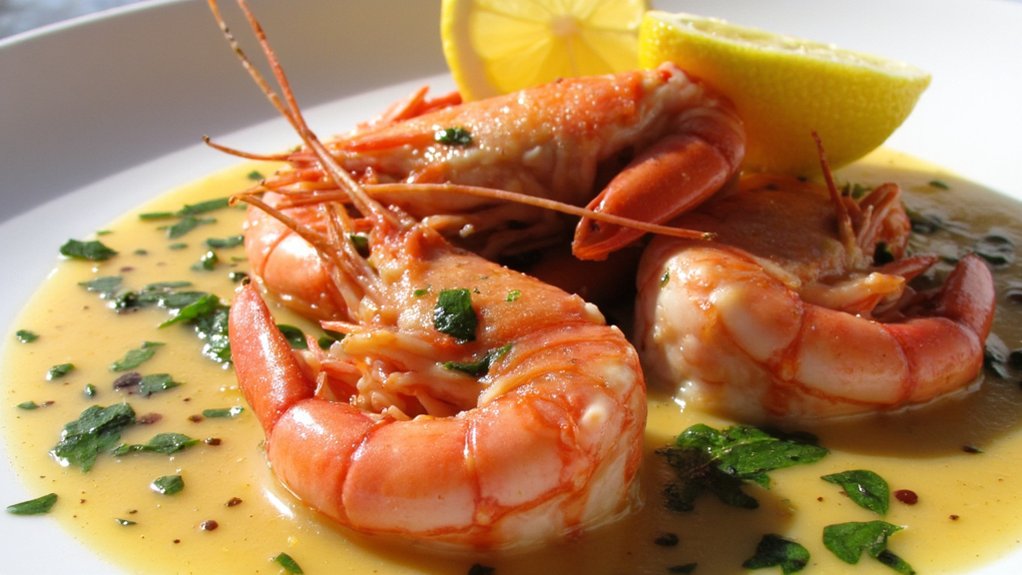
Strolling through the vibrant markets of Marseille, the aroma of fresh seafood mixed with fragrant herbs was irresistible. The French Mediterranean offers a treasure trove of culinary delights. Picture enjoying a warm bowl of bouillabaisse bursting with the sea’s bounty. Or savoring the delicate taste of sole meunière kissed with lemon butter. These exquisite dishes each have their own charm and are sure to transport your taste buds.
Bouillabaisse: A Provençal Seafood Stew
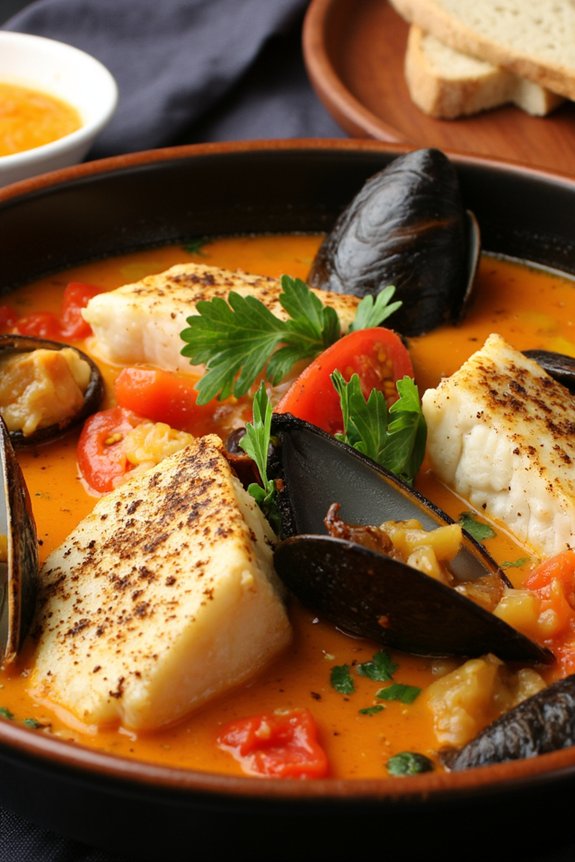
Bouillabaisse is a traditional Provençal seafood stew that originates from the port city of Marseille, France. This dish is renowned for its rich, aromatic broth made with a variety of fish and shellfish, infused with the distinct flavors of saffron, herbs, and spices.
Originally, bouillabaisse was considered a humble meal made by fishermen using unsold and bony fish. However, over time, it has evolved into a celebrated culinary delight, often enjoyed on special occasions. The key to an authentic bouillabaisse lies in its unique combination of seafood, herbs, and the slow cooking process that allows the flavors to meld together beautifully.
Creating a bouillabaisse requires a thoughtful selection of fresh seafood, vibrant vegetables, and a blend of aromatic herbs and spices. This dish is perfect for a gathering, as it serves 4-6 people, offering a hearty and satisfying meal that captures the essence of the Mediterranean.
The preparation involves a careful balance of ingredients and a patient cooking process to guarantee the development of its signature deep and savory broth. The result is a flavorful stew that embodies the spirit of southern France, complete with a medley of textures and tastes from the sea.
Ingredients (Serves 4-6):
- 2 pounds of mixed fish (such as red snapper, sea bass, or halibut), cleaned and cut into chunks
- 1 pound of shellfish (such as mussels, clams, or shrimp), cleaned
- 2 tablespoons olive oil
- 1 large onion, finely chopped
- 2 leeks (white and light green parts only), thinly sliced
- 3 cloves garlic, minced
- 1 fennel bulb, thinly sliced
- 4 large ripe tomatoes, peeled, seeded, and chopped
- 1 teaspoon saffron threads
- 1 teaspoon dried thyme
- 1 teaspoon dried rosemary
- 2 bay leaves
- 1 orange peel, finely grated
- 6 cups fish stock or water
- Salt and freshly ground black pepper, to taste
- 1/2 cup white wine
- 1 small bunch of parsley, chopped, for garnish
- Rouille sauce and crusty bread, for serving
Cooking Instructions:
- Prepare the Base: In a large pot, heat the olive oil over medium heat. Add the chopped onion, leeks, and fennel, and sauté until they’re soft and translucent, about 5-7 minutes. Add the garlic and cook for an additional 1-2 minutes, until fragrant.
- Add Tomatoes and Spices: Stir in the chopped tomatoes, saffron threads, thyme, rosemary, bay leaves, and orange peel. Cook for about 5 minutes, allowing the tomatoes to break down and the spices to blend.
- Simmer the Broth: Pour in the fish stock (or water) and white wine. Season with salt and pepper. Bring the mixture to a boil, then reduce the heat to low and let it simmer uncovered for about 30 minutes to allow the flavors to develop.
- Add the Seafood: Add the fish chunks to the pot, followed by the shellfish. Gently stir to combine. Cover the pot and simmer for an additional 15-20 minutes, or until the fish is cooked through and the shellfish have opened. Discard any unopened shellfish.
- Serve the Bouillabaisse: Remove the bay leaves. Ladle the bouillabaisse into bowls, garnishing with chopped parsley. Serve hot with rouille sauce and crusty bread on the side to soak up the flavorful broth.
Extra Tips:
When preparing bouillabaisse, it’s crucial to use the freshest seafood available to enhance the flavor of the stew. Be sure to clean and debeard the shellfish thoroughly before cooking.
To make the dish even more authentic, consider adding a splash of Pernod or pastis for a subtle anise flavor. Additionally, preparing the rouille—a garlic and saffron mayonnaise—can elevate the dish, providing a creamy and tangy complement to the stew.
Bouillabaisse is best enjoyed immediately, but if you have leftovers, the flavors will continue to develop overnight, making for an even richer stew the next day.
Moules Marinières: Classic French Mussels
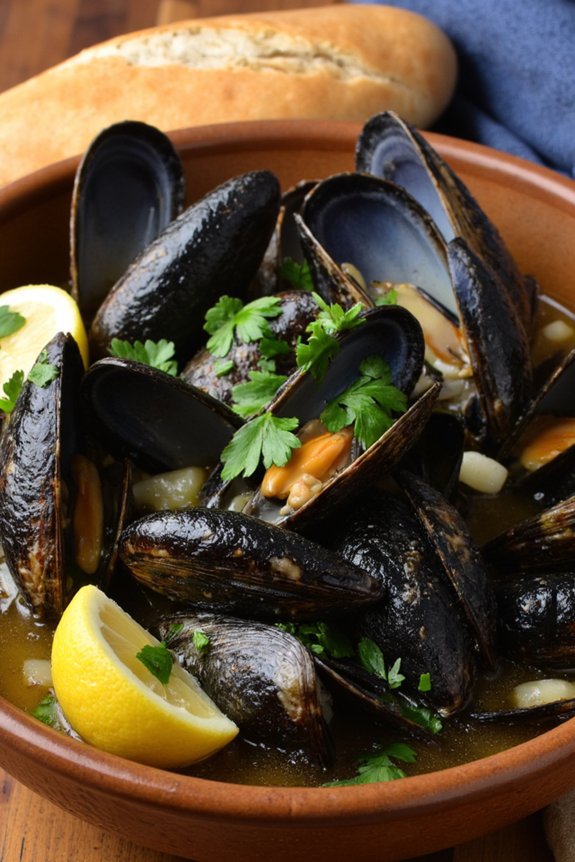
Moules Marinières, a quintessentially French dish, celebrates the simplicity and elegance of fresh seafood. This classic recipe highlights mussels cooked in a fragrant broth of white wine, garlic, and herbs, creating a dish that’s both comforting and sophisticated.
Often served with crusty bread to soak up the flavorful broth, Moules Marinières is perfect for a light dinner or an impressive appetizer. With its roots in coastal regions of France, this dish captures the essence of the sea and the artistry of French cuisine.
Preparing Moules Marinières at home is surprisingly straightforward, making it accessible even for novice cooks. The key to success lies in selecting the freshest mussels and allowing the natural flavors to shine through minimal yet impactful ingredients.
Whether you’re hosting a dinner party or enjoying a quiet meal at home, this recipe for 4-6 people is sure to delight your taste buds and transport you to a seaside bistro in France.
Ingredients (Serves 4-6):
- 4 pounds fresh mussels
- 2 tablespoons unsalted butter
- 2 shallots, finely chopped
- 4 garlic cloves, minced
- 1 cup dry white wine
- 1/2 cup chicken or fish stock
- 1 bay leaf
- 4 sprigs of fresh thyme
- 1/4 cup heavy cream
- Salt and freshly ground black pepper to taste
- 2 tablespoons chopped fresh parsley
- Lemon wedges for serving
Instructions:
- Prepare the Mussels: Begin by cleaning the mussels thoroughly under cold running water. Scrub the shells to remove any grit and confirm they’re tightly closed. Discard any mussels that remain open or have broken shells.
- Sauté the Aromatics: In a large, heavy-bottomed pot, melt the butter over medium heat. Add the finely chopped shallots and minced garlic, sautéing them for 2-3 minutes until they become translucent and fragrant.
- Create the Broth: Pour in the white wine and chicken or fish stock, then add the bay leaf and thyme sprigs. Bring the mixture to a gentle boil, allowing the flavors to meld together for about 5 minutes.
- Cook the Mussels: Add the cleaned mussels to the pot, cover with a tight-fitting lid, and increase the heat to high. Steam the mussels for 5-7 minutes, shaking the pot occasionally, until all the mussels have opened. Discard any mussels that remain closed after cooking.
- Finish the Dish: Reduce the heat to low and stir in the heavy cream. Season with salt and freshly ground black pepper to taste. Remove the bay leaf and thyme sprigs, then sprinkle the chopped parsley over the mussels.
- Serve: Transfer the mussels and broth to serving bowls, garnishing with lemon wedges. Serve immediately with crusty bread to soak up the delicious broth.
Extra Tips:
For the best results, verify your mussels are as fresh as possible, ideally purchasing them on the day you plan to cook. The broth’s flavor greatly depends on the quality of the wine, so choose a dry white wine that you’d enjoy drinking.
If you prefer a richer sauce, you can increase the amount of cream slightly. Remember that mussels cook quickly, so keep an eye on them to prevent overcooking, which can make them tough. Enjoy this dish with a chilled glass of the same white wine used in the recipe for a harmonious dining experience.
Sole Meunière: Lemon-Butter Sole
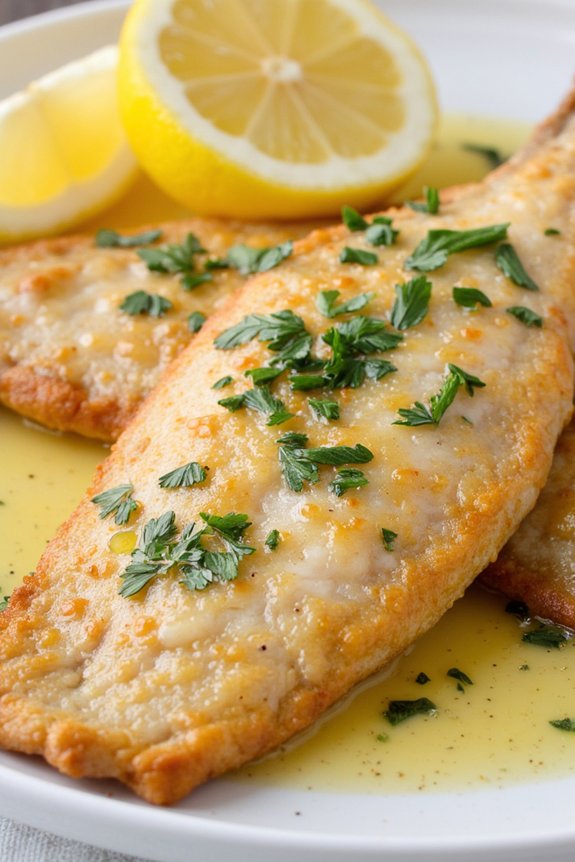
Sole Meunière: Lemon-Butter Sole is a classic French seafood dish that showcases the delicate flavor of sole fish, complemented by a rich and tangy lemon-butter sauce. This dish is perfect for those who appreciate simple yet elegant meals that allow the natural flavors of the ingredients to shine through.
Traditionally, Sole Meunière is prepared using fresh sole fillets, which are lightly dredged in flour, pan-fried in butter, and finished with a splash of fresh lemon juice and parsley. The result is a tender, flaky fish with a crispy exterior, bathed in a luscious sauce that elevates the dish to a new level of deliciousness.
Ideal for a dinner party or a special family meal, Sole Meunière isn’t only exquisite in taste but also straightforward to prepare, making it accessible to cooks of all skill levels. The combination of butter and lemon in the sauce creates a sublime balance of richness and acidity, enhancing the mild taste of the sole.
When served with a side of steamed vegetables or a simple green salad, this dish becomes a complete and satisfying meal. Follow this recipe to serve 4-6 people and bring a touch of French culinary flair to your table.
Ingredients
- 4-6 sole fillets
- 1 cup all-purpose flour
- Salt and pepper, to taste
- 6 tablespoons unsalted butter
- 3 tablespoons olive oil
- Juice of 2 lemons
- 2 tablespoons fresh parsley, chopped
- Lemon wedges, for garnish
Cooking Instructions
- Prepare the Fish: Pat the sole fillets dry with paper towels to remove any excess moisture. Season both sides with salt and pepper.
- Coat with Flour: Place the flour in a shallow dish. Dredge each fillet in the flour, ensuring both sides are evenly coated. Shake off any excess flour.
- Heat the Pan: In a large skillet, heat 3 tablespoons of butter and the olive oil over medium-high heat until the butter has melted and starts to bubble.
- Cook the Fillets: Carefully place the floured fillets into the skillet, ensuring they don’t overlap. Cook for 2-3 minutes on each side, or until the fillets are golden brown and the fish is opaque and flakes easily with a fork.
- Make the Sauce: Remove the cooked fillets from the skillet and place them on a serving platter. Reduce the heat to low and add the remaining 3 tablespoons of butter to the skillet. Once melted, add the lemon juice and parsley, stirring to combine. Cook for another minute until the sauce is well blended.
- Serve: Pour the lemon-butter sauce over the sole fillets on the platter. Garnish with lemon wedges and additional parsley, if desired.
Extra Tips
When making Sole Meunière, it’s important to use fresh sole fillets for the best texture and flavor. If fresh sole is unavailable, fresh flounder or plaice can be substituted.
Be cautious not to overcook the fish, as it cooks quickly and can become dry if left on the heat for too long. To prevent the fillets from sticking to the pan, make sure the skillet is adequately heated before adding the fish.
This dish pairs beautifully with a crisp white wine, such as a Sauvignon Blanc or Chardonnay, which complements the lemon and butter sauce perfectly.
Loup De Mer Au Fenouil: Sea Bass With Fennel
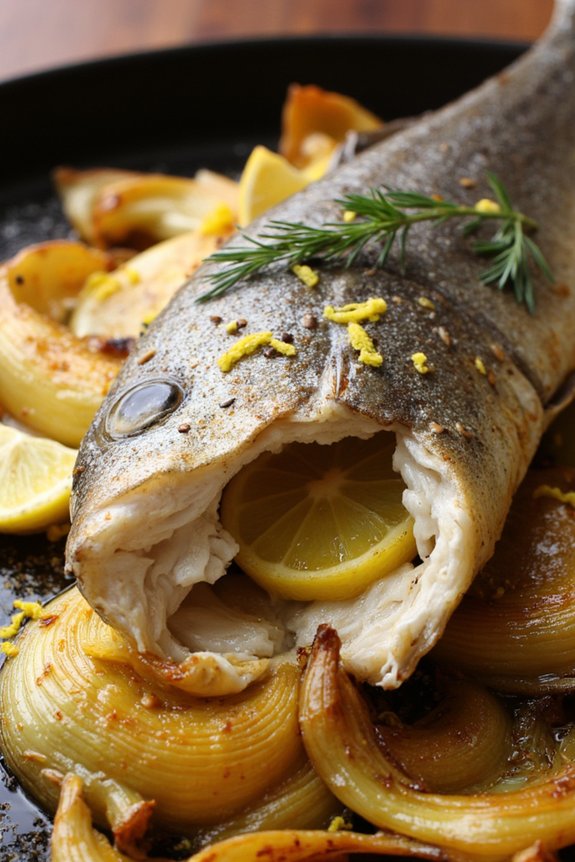
Loup De Mer Au Fenouil, or Sea Bass with Fennel, is a classic French dish that beautifully marries the delicate flavor of sea bass with the subtle anise-like notes of fennel. This dish is celebrated for its simplicity and elegance, making it a perfect choice for a sophisticated dinner party or a special family meal.
The combination of fresh sea bass, aromatic herbs, and the slight crunch of fennel creates a harmonious balance that’s both invigorating and satisfying. This recipe draws inspiration from the coastal regions of France, where seafood is a staple. The inclusion of fennel adds a distinctive flavor profile that enhances the natural richness of the sea bass.
By roasting the fish alongside fennel and other aromatic ingredients, the flavors meld together, resulting in a dish that’s both flavorful and visually appealing. The following recipe serves 4-6 people, guaranteeing everyone at your table gets to enjoy this delightful culinary experience.
Ingredients for 4-6 servings:
- 2 whole sea bass (about 1.5 pounds each), cleaned and scaled
- 2 large fennel bulbs, sliced thinly
- 1 lemon, sliced
- 4 cloves garlic, minced
- 1/4 cup olive oil
- 1/2 cup dry white wine
- Salt and freshly ground black pepper to taste
- 2 teaspoons fennel seeds
- A handful of fresh dill, chopped
- A handful of fresh parsley, chopped
- Zest of 1 lemon
Cooking Instructions:
- Prepare the Oven: Preheat your oven to 400°F (200°C). This will guarantee that it’s hot enough to roast the fish evenly and thoroughly.
- Prepare the Fish: Pat the sea bass dry with paper towels, then season the inside and outside with salt and pepper. Stuff the cavity of each fish with lemon slices, minced garlic, and half of the dill and parsley.
- Prepare the Fennel: In a large baking dish, spread the sliced fennel evenly. Drizzle with olive oil, sprinkle with fennel seeds, and season with salt and pepper. Toss to coat the fennel slices thoroughly.
- Assemble the Dish: Place the prepared sea bass on top of the fennel in the baking dish. Pour the white wine over the fish and fennel. This will help to keep the fish moist while adding a subtle depth of flavor.
- Roast the Fish: Place the baking dish in the preheated oven and roast for 25-30 minutes, or until the fish is cooked through and the fennel is tender. The fish should flake easily with a fork.
- Finish and Serve: Once cooked, remove the sea bass from the oven. Sprinkle the lemon zest and remaining dill and parsley over the top. Allow the fish to rest for a few minutes before serving. This will help the flavors to settle and intensify.
Extra Tips:
When selecting sea bass, choose fish that have clear eyes and firm flesh to guarantee freshness. If you can’t find whole sea bass, fillets can be used as an alternative, though cooking times may vary.
For an added burst of flavor, consider adding a splash of Pernod or pastis to the wine before roasting, which will enhance the fennel notes. Serve the dish with a side of crusty bread or a light salad to complement the rich flavors.
Coquilles Saint-Jacques: Scallops in White Wine Sauce
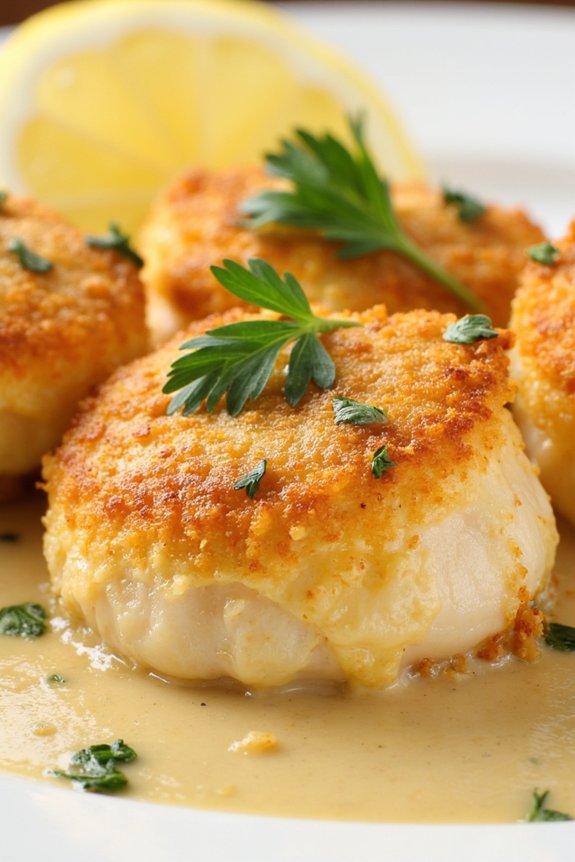
Coquilles Saint-Jacques, a classic French dish, showcases the delicate sweetness of scallops enhanced by a rich, velvety white wine sauce. This dish is perfect for a special occasion or when you want to impress your guests with a sophisticated seafood meal. The luscious sauce, made with a combination of white wine, cream, and shallots, envelops the tender scallops, creating a harmonious blend of flavors that epitomizes French culinary elegance.
Traditionally served in scallop shells, this dish is both visually appealing and delightfully satisfying. The origins of Coquilles Saint-Jacques date back to medieval France, where it was often prepared as a celebratory meal. Today, it remains a timeless favorite, celebrated for its luxurious taste and exquisite presentation.
Preparing Coquilles Saint-Jacques involves simple techniques that allow the fresh ingredients to shine. When cooked to perfection, the scallops retain their moisture and tenderness, while the sauce provides a perfect balance of acidity and creaminess. Whether you’re a seasoned cook or a beginner, this recipe is approachable and promised to deliver a stunning result.
Ingredients (Serving Size: 4-6 people)
- 1 1/2 pounds fresh scallops
- 1 cup dry white wine
- 2 tablespoons butter
- 2 shallots, finely chopped
- 1 cup heavy cream
- 1 tablespoon all-purpose flour
- Salt and freshly ground black pepper
- 1/4 cup grated Gruyère cheese
- 2 tablespoons breadcrumbs
- 1 tablespoon fresh parsley, chopped
- Lemon wedges for serving
Cooking Instructions
- Prepare the Scallops: Rinse the scallops under cold water and pat them dry with paper towels. Confirm they’re free from any grit or sand. Season them with salt and pepper on both sides.
- Sauté the Shallots: In a large skillet, melt the butter over medium heat. Add the chopped shallots and sauté until they become translucent and fragrant, approximately 2-3 minutes.
- Cook the Scallops: Add the scallops to the skillet with the shallots. Cook each side for about 2 minutes, or until they’re golden brown. Remove the scallops from the skillet and set aside.
- Make the Sauce: In the same skillet, add the flour and stir to form a roux. Gradually pour in the white wine, stirring constantly to avoid lumps. Let the mixture simmer for 2-3 minutes to reduce slightly.
- Add the Cream: Slowly stir in the heavy cream, continuing to mix until the sauce is smooth and thickened. Taste and adjust seasoning with salt and pepper as needed.
- Combine and Assemble: Return the scallops to the skillet, gently folding them into the sauce. Divide the mixture evenly into individual scallop shells or small gratin dishes.
- Top with Cheese and Breadcrumbs: Sprinkle the grated Gruyère cheese and breadcrumbs over the top of each portion.
- Bake: Preheat your oven to 375°F (190°C). Place the filled shells or dishes on a baking sheet and bake for 10-15 minutes, or until the cheese is melted and golden brown.
- Garnish and Serve: Remove from the oven, sprinkle with chopped parsley, and serve immediately with lemon wedges on the side.
Extra Tips
When selecting scallops, opt for “dry” scallops, which aren’t treated with preservatives and will sear beautifully. Be cautious not to overcook the scallops; they should be just opaque in the center to maintain their tender texture.
If using frozen scallops, confirm they’re fully thawed and well-drained before cooking. For added flavor, consider incorporating a pinch of nutmeg into the sauce. This dish pairs beautifully with a crisp white wine, such as a Sauvignon Blanc, enhancing the overall dining experience.
Brandade De Morue: Creamy Salt Cod Purée
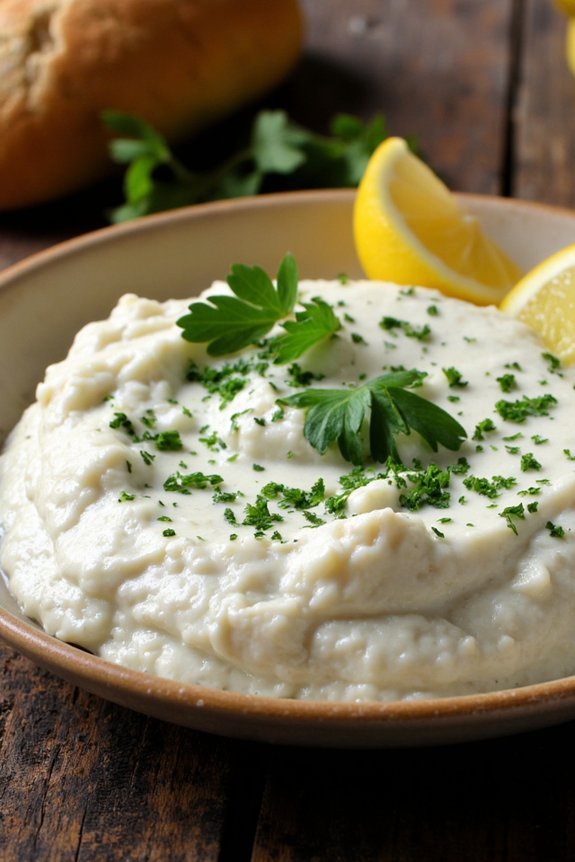
Brandade De Morue, a classic French dish, is a creamy purée made from salt cod, potatoes, garlic, and olive oil. Originating from Provence, this dish harmonizes the flavors of the sea with the earthiness of potatoes and the richness of olive oil. Traditionally served as an appetizer or a main dish, Brandade De Morue is perfect for those who appreciate the delicate flavors of Mediterranean cuisine. The creamy texture and savory taste make it a comforting and indulgent treat.
The key to making a successful Brandade De Morue is to use high-quality ingredients, particularly the salt cod, which should be soaked and properly desalted. This dish isn’t only delicious but also a great way to introduce seafood to those who might be hesitant. Its velvety texture and subtle flavors can be paired with crusty bread or served with a side salad.
Whether you’re a seasoned cook or trying your hand at French cuisine for the first time, this recipe will guide you through creating a memorable culinary experience.
Ingredients (Serves 4-6):
- 500g salt cod
- 500g potatoes
- 4 cloves garlic
- 250ml olive oil
- 250ml milk
- Salt and pepper to taste
- A pinch of nutmeg
- Fresh parsley for garnish
- Lemon wedges for serving
Instructions:
- Soak the Salt Cod: Begin by soaking the salt cod in cold water for at least 24 hours, changing the water every 6-8 hours. This process is essential to remove excess salt and rehydrate the fish.
- Prepare the Potatoes: Peel and cut the potatoes into chunks. Boil them in salted water until tender, about 15-20 minutes. Drain and set aside.
- Cook the Salt Cod: After soaking, place the salt cod in a pot with enough water to cover it. Bring to a gentle simmer and cook for about 10-15 minutes until the fish is cooked through. Remove from the pot, let it cool slightly, and flake it into pieces, discarding any skin and bones.
- Infuse the Milk: In a separate saucepan, gently heat the milk with the peeled garlic cloves until the garlic is soft. This will infuse the milk with garlic flavor.
- Blend the Ingredients: In a blender or food processor, combine the flaked salt cod, cooked potatoes, and olive oil. Slowly add the warm garlic-infused milk while blending until you achieve a smooth, creamy consistency.
- Season the Purée: Taste and season the mixture with salt, pepper, and a pinch of nutmeg. Blend again briefly to incorporate the spices.
- Heat and Serve: Transfer the mixture to a saucepan and heat gently over low heat, stirring constantly until warmed through. Garnish with fresh parsley and serve with lemon wedges on the side.
Extra Tips: When preparing Brandade De Morue, patience is key. Confirm the salt cod is well-desalted to avoid an overly salty dish. Using a high-quality olive oil will enhance the flavor profile considerably, and blending the mixture thoroughly will result in a smoother consistency.
If the purée seems too thick, you can add a little more milk or olive oil to reach your desired texture. Finally, serving the brandade with a squeeze of lemon juice will brighten the flavors and complement the rich taste beautifully.
Homard À L’américaine: Lobster in Tomato Sauce
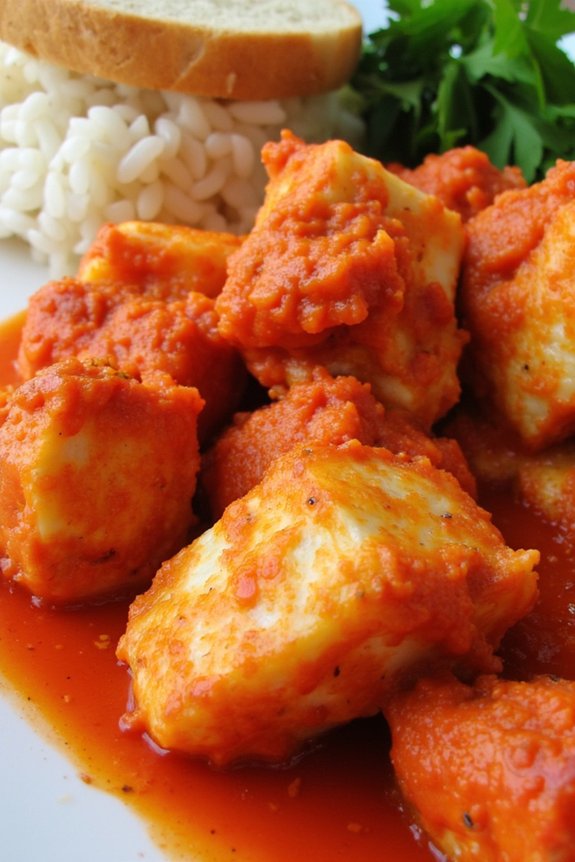
Homard À L’américaine, also known as Lobster in Tomato Sauce, is a classic French seafood dish that brings together the rich flavors of lobster with a savory tomato-based sauce. This dish is a celebration of bold flavors, combining the sweetness of lobster with the tangy and aromatic notes of tomatoes, garlic, and herbs.
Traditionally, this dish is served with crusty bread or rice, making it a perfect centerpiece for a special dinner gathering.
The origins of Homard À L’américaine are somewhat debated, with some attributing it to a French chef who was inspired by American ingredients, while others claim it was created by a French chef in America. Regardless of its exact beginnings, the dish has become a beloved part of French cuisine.
To prepare this dish for 4-6 people, you’ll need a few key ingredients to create the succulent and flavorful sauce that coats the lobster perfectly.
Ingredients (Serves 4-6):
- 3 live lobsters (about 1.5 pounds each)
- 4 tablespoons olive oil
- 2 shallots, finely chopped
- 4 cloves garlic, minced
- 1 cup dry white wine
- 1 can (14 oz) crushed tomatoes
- 2 tablespoons tomato paste
- 1 teaspoon sugar
- 1 teaspoon dried thyme
- 1 bay leaf
- 1/4 teaspoon cayenne pepper
- Salt and pepper to taste
- 1/4 cup cognac or brandy
- 2 tablespoons unsalted butter
- Chopped fresh parsley for garnish
Cooking Instructions:
1. Prepare the Lobsters: Start by placing the live lobsters in the freezer for about 15 minutes to sedate them. Boil a large pot of salted water and plunge the lobsters in, cooking for about 5-7 minutes until they’re bright red. Remove and let them cool.
Once cooled, split the lobsters lengthwise, remove the meat, and chop it into large chunks. Reserve the shells and set the meat aside.
2. Sauté Aromatics: In a large skillet, heat the olive oil over medium heat. Add the shallots and garlic, sautéing until they become translucent and aromatic, about 3 minutes.
3. Deglaze with Wine: Pour in the dry white wine to deglaze the skillet, scraping up any browned bits. Allow it to simmer for about 2 minutes to reduce slightly.
4. Create the Sauce: Add the crushed tomatoes, tomato paste, sugar, thyme, bay leaf, cayenne pepper, salt, and pepper. Stir to combine and let the mixture simmer on low heat for 15-20 minutes, allowing the flavors to meld.
5. Flambé with Cognac: Carefully add the cognac or brandy to the sauce and ignite with a match to burn off the alcohol. (Confirm safety by removing the pan from direct heat when doing this step.)
6. Incorporate Lobster: Stir in the lobster meat and let it cook in the sauce for about 5 minutes, just until heated through.
7. Finish with Butter: Stir in the unsalted butter for a rich finish and adjust seasoning with additional salt and pepper, if needed.
8. Serve: Garnish with chopped fresh parsley and serve hot with crusty bread or rice.
Extra Tips:
When working with live lobsters, confirm that your cutting board is stable and your knife is sharp to make splitting the lobsters easier and safer.
It’s important to not overcook the lobster meat, as it can become tough; adding it towards the end of cooking will keep it tender.
For added depth of flavor, you can incorporate lobster shells into the sauce while it simmers, then remove them before serving. This dish pairs well with a crisp white wine, like Sauvignon Blanc, to balance the richness of the sauce.
Salade Niçoise: Tuna and Anchovy Salad
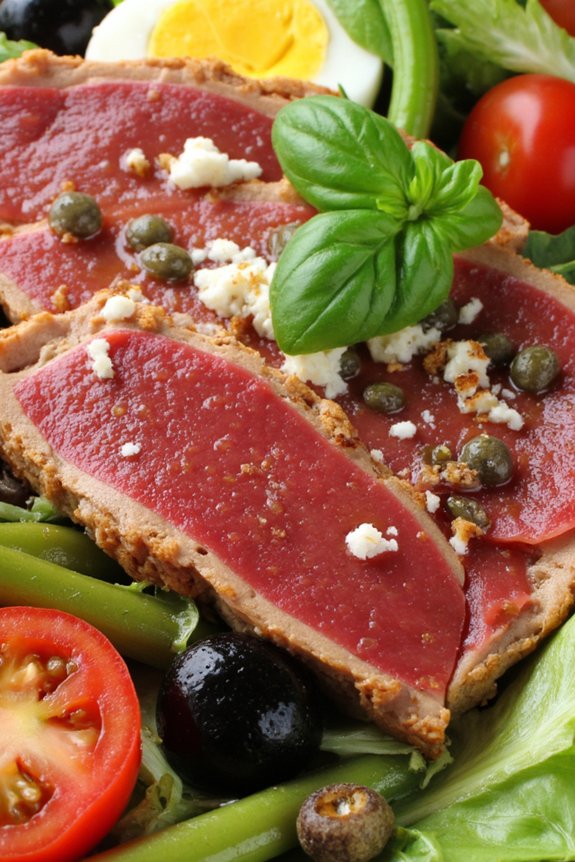
Salade Niçoise is a quintessential French seafood salad that hails from the sunny region of Nice. This vibrant dish is known for its robust flavors and colorful presentation, combining fresh vegetables, tuna, and anchovies with a delightful vinaigrette. Traditionally, Salade Niçoise isn’t tossed but rather arranged artfully on a platter, allowing each ingredient to shine. It’s a versatile and satisfying meal, perfect for a light lunch or a delightful starter to a larger meal.
The combination of tender greens, salty anchovies, and rich tuna creates a harmonious blend of flavors that pays homage to the Mediterranean. The origins of Salade Niçoise are rooted in the availability of fresh produce and seafood in the Côte d’Azur. This salad has evolved over time, with variations that include boiled eggs, potatoes, and green beans, but the essence remains the same—an emphasis on freshness and simplicity.
To make an authentic Salade Niçoise, it’s important to use high-quality ingredients, particularly when it comes to the seafood and olive oil. This recipe for 4-6 people captures the authentic taste of the French Riviera and is a delightful way to bring a taste of France into your home.
Ingredients (Serves 4-6)
- 2 cups mixed salad greens (such as romaine, butter lettuce, or arugula)
- 12 ounces fresh tuna steak or 2 cans of high-quality tuna in olive oil
- 1 cup cherry tomatoes, halved
- 1 small red onion, thinly sliced
- 1 cup small new potatoes, boiled and halved
- 1/2 cup green beans, trimmed and blanched
- 4 hard-boiled eggs, peeled and quartered
- 6-8 anchovy fillets
- 1/2 cup black olives (such as Niçoise or Kalamata)
- 2 tablespoons capers
- 1/3 cup extra virgin olive oil
- 2 tablespoons red wine vinegar
- 1 tablespoon Dijon mustard
- Salt and freshly ground black pepper, to taste
- Fresh basil leaves, for garnish
Cooking Instructions
- Prepare the Dressing: In a small bowl, whisk together the olive oil, red wine vinegar, Dijon mustard, salt, and pepper until emulsified. Adjust seasoning to taste and set aside.
- Cook the Tuna: If using fresh tuna steak, season it with salt and pepper. Heat a non-stick skillet over medium-high heat and sear the tuna for about 2-3 minutes on each side until cooked to your liking. Remove from heat and let it rest before slicing. If using canned tuna, drain and set aside.
- Prepare Vegetables: Boil the new potatoes in salted water until fork-tender, about 10-15 minutes. Drain and let cool, then halve. Blanch the green beans in boiling water for 2-3 minutes until bright green and tender-crisp. Drain and place in an ice bath to stop cooking.
- Assemble the Salad: Arrange the mixed greens on a large platter. Artfully place the potatoes, green beans, cherry tomatoes, red onion slices, and hard-boiled eggs around the greens. Add the tuna, breaking it into chunks if using fresh, or flaking it if using canned.
- Add Finishing Touches: Scatter the anchovy fillets, black olives, and capers over the top of the salad. Drizzle the prepared dressing evenly over the salad.
- Garnish and Serve: Garnish with fresh basil leaves for an aromatic touch. Serve immediately, allowing diners to enjoy the distinct flavors of each component.
Extra Tips
When making Salade Niçoise, it’s vital to balance the flavors and textures of the ingredients. Use fresh, high-quality produce and seafood for the best results. If you prefer a milder taste, consider substituting the anchovies with lightly salted sardines.
For a more traditional touch, try adding some thinly sliced radishes or bell peppers. Finally, make sure that the dressing is well-emulsified before drizzling, as this will guarantee even coverage and enhance the overall flavor of the dish.
Crevettes À L’ail: Garlic Shrimp
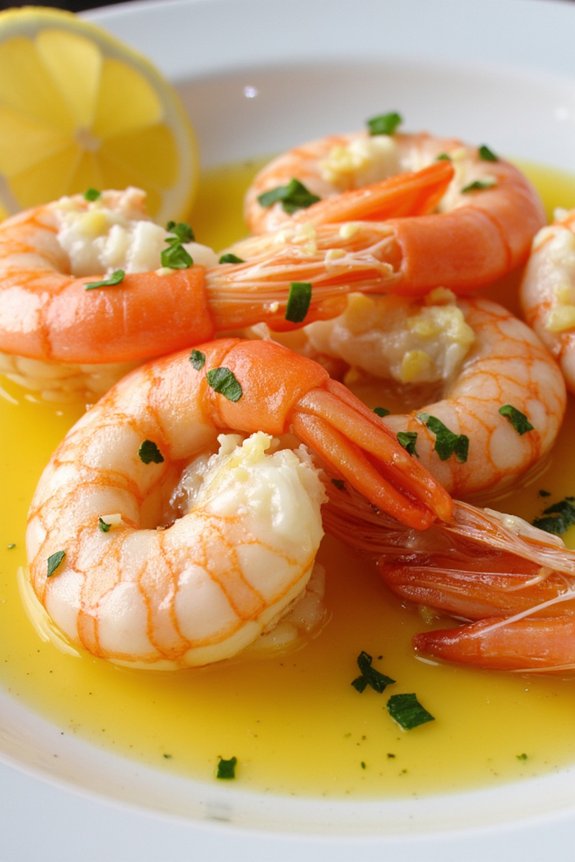
Crevettes À L’ail, or Garlic Shrimp, is a classic French dish that marries the rich flavors of garlic and butter with the tender sweetness of shrimp. This dish is perfect for a quick and elegant dinner, offering a taste of the French coast in every bite. Fresh shrimp are sautéed in a mixture of aromatic garlic, fresh herbs, and a touch of white wine to create a succulent and flavorful dish that’s certain to impress your family and guests.
The simplicity of Crevettes À L’ail belies its sophistication, making it an ideal choice for both weeknight dinners and special occasions. Traditionally served with a side of crusty French bread or a light salad, Crevettes À L’ail is delightful and satisfying.
The key to this dish is using high-quality ingredients. Fresh shrimp and good quality butter are essential, as is the use of fresh garlic rather than pre-minced or powdered. The garlic infuses the shrimp with a robust flavor, while the herbs and wine add depth and complexity. This dish serves 4-6 people, making it perfect for a small gathering or a family meal.
Ingredients:
- 2 pounds large shrimp, peeled and deveined
- 4 tablespoons unsalted butter
- 6 cloves garlic, minced
- 1/4 cup dry white wine
- 2 tablespoons fresh lemon juice
- 2 tablespoons olive oil
- 1/4 cup fresh parsley, chopped
- Salt and pepper to taste
- Lemon wedges for serving
Instructions:
- Prepare the Shrimp: Begin by rinsing the shrimp under cold water and patting them dry with paper towels. Confirm they’re peeled and deveined for the best texture.
- Heat the Butter and Oil: In a large skillet, heat the butter and olive oil over medium heat. Allow the butter to melt completely and become slightly frothy, but not browned.
- Sauté the Garlic: Add the minced garlic to the skillet and sauté for about 1 minute until fragrant, being careful not to let it burn.
- Cook the Shrimp: Add the shrimp to the skillet in a single layer. Season with salt and pepper to taste. Cook for 2-3 minutes on one side until they start to turn pink.
- Add Wine and Lemon Juice: Flip the shrimp and immediately add the white wine and lemon juice. Let it simmer for another 2-3 minutes until the shrimp are fully cooked and opaque.
- Finish with Parsley: Remove the skillet from heat and stir in the chopped parsley. The residual heat will help to keep the herbs fresh and vibrant.
- Serve: Transfer the shrimp to a serving platter and serve immediately with lemon wedges on the side for extra brightness.
Extra Tips:
For the best results, use fresh shrimp if possible, as they’ll provide a sweeter and more succulent flavor than frozen ones. If you do use frozen shrimp, make sure they’re fully thawed and patted dry before cooking to prevent excess water from diluting the flavors.
Adjust the amount of garlic to your personal preference if you enjoy a stronger garlic taste. Pair the dish with a chilled glass of the same white wine used in cooking to complement the flavors. Finally, don’t overcook the shrimp, as they can become tough and rubbery—once they turn pink and opaque, they’re ready.
Langoustines À La Provençale: Langoustines With Herbs and Garlic
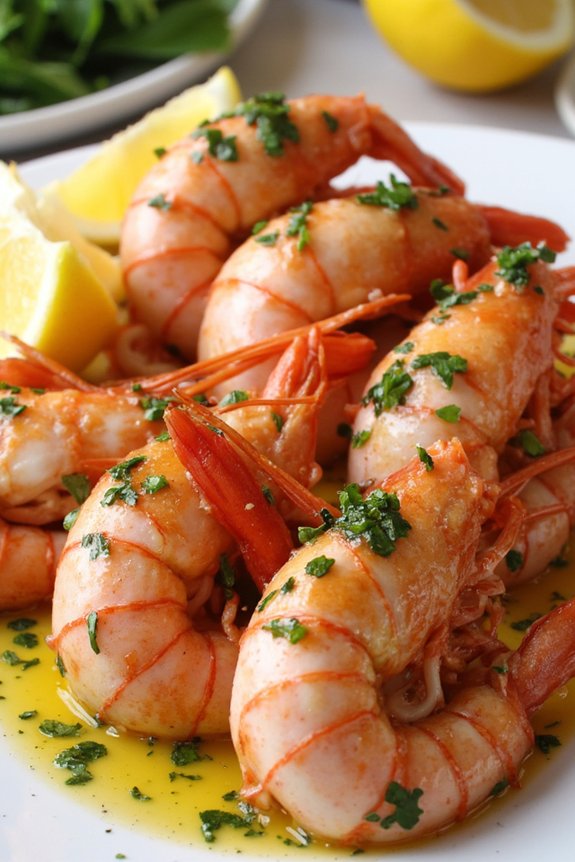
Langoustines À La Provençale: Langoustines With Herbs and Garlic is a classic seafood dish that embodies the vibrant flavors of the Provence region in France. This dish highlights the delicate sweetness of langoustines, a type of shellfish similar to small lobsters, enhanced by a medley of fresh herbs and garlic. The dish is elegantly simple yet packed with flavor, making it a delightful choice for both casual dinners and special occasions.
When prepared correctly, the langoustines are tender and juicy, perfectly complemented by the aromatic herb and garlic sauce. In Provence, this dish is often enjoyed as part of a leisurely meal, accompanied by a crisp white wine and a fresh baguette to soak up the savory sauce. The key to mastering Langoustines À La Provençale lies in the quality of the ingredients and the attention to cooking times, guaranteeing that the langoustines remain succulent.
This recipe serves 4-6 people and is perfect for sharing with family and friends. Whether you’re hosting a dinner party or simply indulging in a gourmet meal at home, this recipe is sure to impress.
Ingredients:
- 12-18 fresh langoustines
- 4 cloves of garlic, minced
- 1/2 cup olive oil
- 1/4 cup dry white wine
- 2 tablespoons lemon juice
- 2 tablespoons fresh parsley, chopped
- 2 tablespoons fresh basil, chopped
- 1 tablespoon fresh thyme, chopped
- Salt and pepper to taste
- Lemon wedges for serving
Instructions:
- Prepare the Langoustines: Rinse the langoustines under cold water to clean them. Pat them dry with a paper towel. Using kitchen scissors, carefully cut along the back of each langoustine to expose the flesh, which will help them cook evenly and absorb the flavors.
- Make the Herb and Garlic Sauce: In a large bowl, combine the minced garlic, olive oil, white wine, lemon juice, parsley, basil, and thyme. Season the mixture with salt and pepper to taste. Mix well until all the ingredients are fully incorporated.
- Marinate the Langoustines: Place the langoustines in the bowl with the sauce, guaranteeing they’re well-coated. Cover the bowl with plastic wrap and marinate in the refrigerator for at least 30 minutes to allow the flavors to infuse.
- Cook the Langoustines: Preheat a large skillet over medium-high heat. Once hot, add the marinated langoustines to the skillet along with the marinade. Cook the langoustines for 3-4 minutes on each side, or until they turn a bright pink and are cooked through. Be careful not to overcook them, as this can make the meat tough.
- Serve: Arrange the cooked langoustines on a serving platter. Pour any remaining sauce from the skillet over the langoustines. Garnish with additional fresh herbs if desired. Serve with lemon wedges on the side for an extra burst of freshness.
Extra Tips:
For the best flavor, use the freshest langoustines you can find, as their quality greatly impacts the dish’s outcome. When cooking, guarantee your skillet is hot before adding the langoustines to achieve a nice sear, which enhances their flavor.
If you don’t have access to fresh herbs, dried herbs can be used in smaller quantities, but fresh is always preferable. Finally, keep an eye on the cooking time; langoustines cook quickly and can become rubbery if overdone. Enjoy this dish with a chilled glass of white wine to enhance the Provençal experience.
